
Drone Footage Captures Boat Speeding Above Gray Whale Mother and Calf in California
Updated Jan. 30 2026, 12:57 a.m. ET

Mother gray whale with her calf in the water
A mother gray whale and her calf were peacefully going about their life until a speeding boat almost drove over them. The incident captured in shocking drone footage off Palos Verdes Estates, California, was dramatic and frightening, to say the least. It was also a scary reminder of the growing dangers of increased human activities in California waters. Fortunately, neither the mother nor the calf was harmed during the incident. The footage was posted by Mauricio Tassara, an independent drone operator (empty_drone) on Instagram, and the netizens heaved a sigh of relief as the whales narrowly escaped collision with a speeding boat. "A fortunate outcome in a serious issue. This cow–calf pair was observed off Palos Verdes Estates, California, and thankfully the calf showed no visible injuries," the caption read.
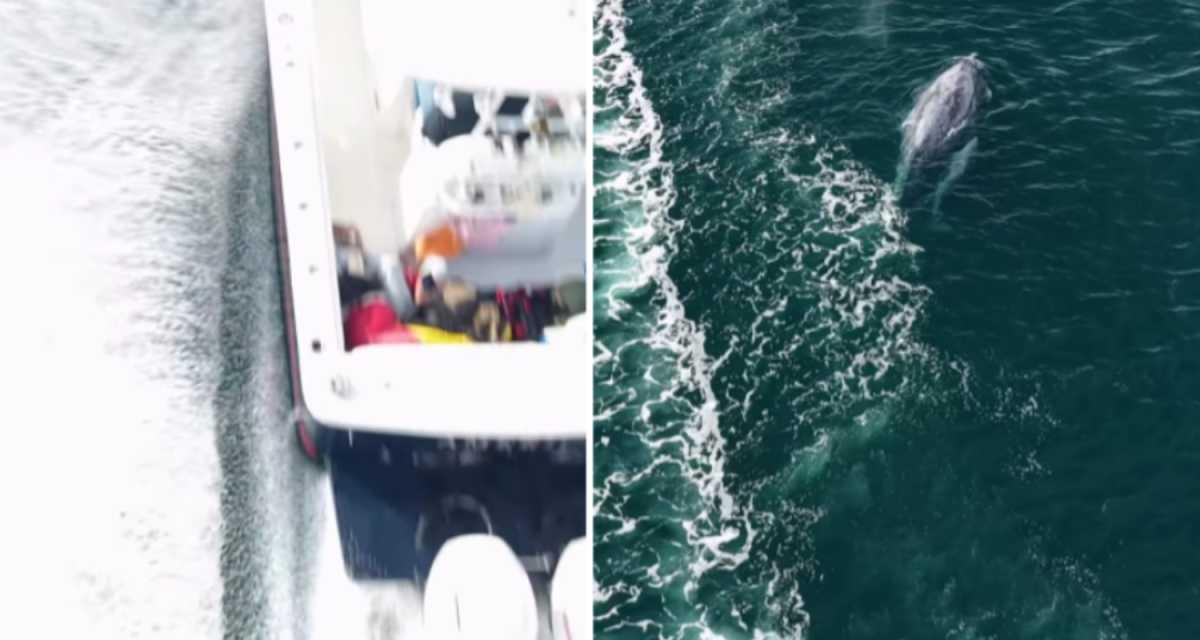
(L) A speeding jet ski; (R) Mother gray whale and calf escape after the speeding boat passes
"Thank goodness they are both okay. This was terrifying to watch," one social media user commented. However unfortunate these incidents might be, they are hard to detect beforehand. Boat operators can never foresee that a whale is rising over the water's surface. "Cow-calf pairs often surface quietly, calves stay very close to their mothers, and both can be difficult to detect—especially in glare, swell, or at speed," the caption explained. Alisa Schulman-Janiger, director of the ACS-LA Gray Whale Census and Behavior Project in Palos Verdes, shared insights into the incident, revealing that the behavior of the whales was unperturbed by the racing boat. Nevertheless, she admitted that it was a "scary" occurrence. In a lengthy Facebook post, Schulman-Janiger revealed that the mother whale surfaced and left large fluke prints as a trace.
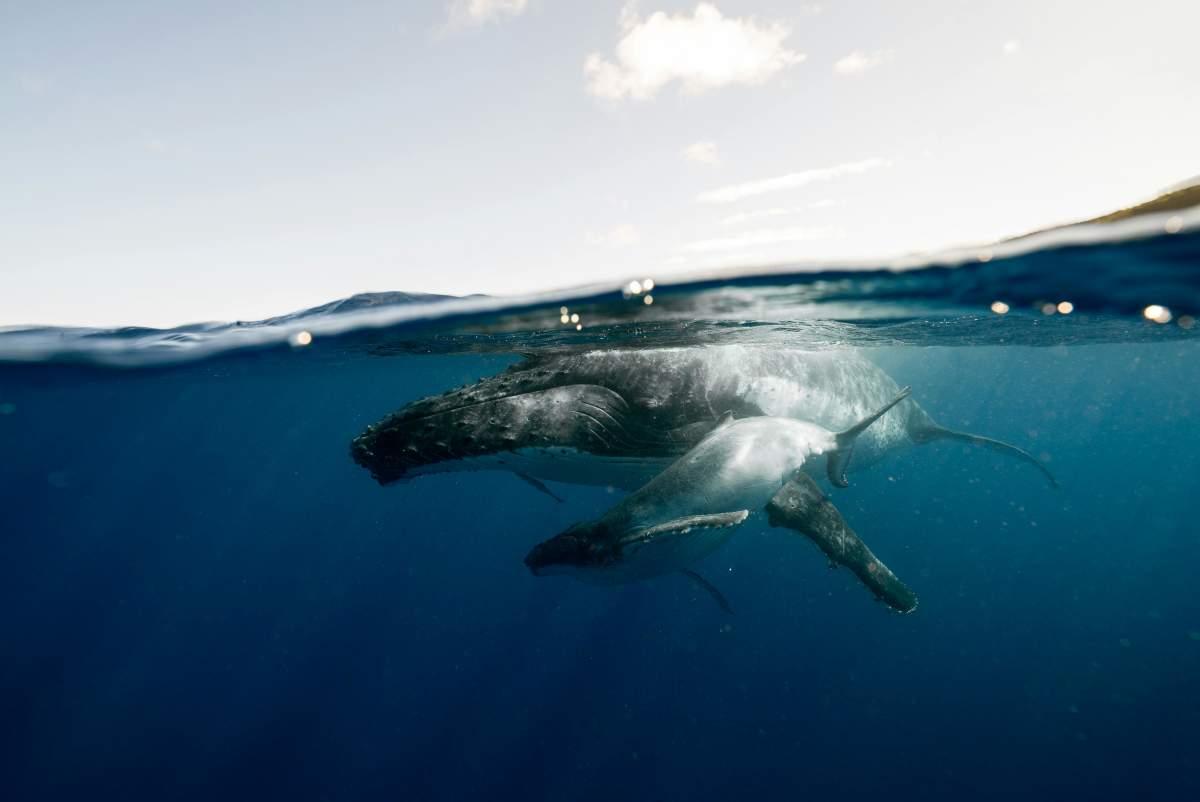
Two whales swimming alongside each other in the sea
The calf's fetal folds were indicative of how young the whale was. It continued to rest on the mother whale's back, releasing small blows that the experts were able to detect. In the drone footage, the speeding jet ski appeared to have slightly missed the mother-calf duo, but it actually approached within 30 feet of the whales. "But did not appear to alter their behavior," she added. "The mom and calf were deep enough that the boat and its propellers did not hit the whales," Schulman-Janiger wrote. However, if they were slightly closer to the surface, the boat would have definitely struck the whales. Later that day, the experts caught another mother-calf whale pair frolicking about in the ocean, but they were swimming quite close to the surface. "We spotted a small head but did not get a clear enough look to confirm that this was a calf (and not a small juvenile)," she added.
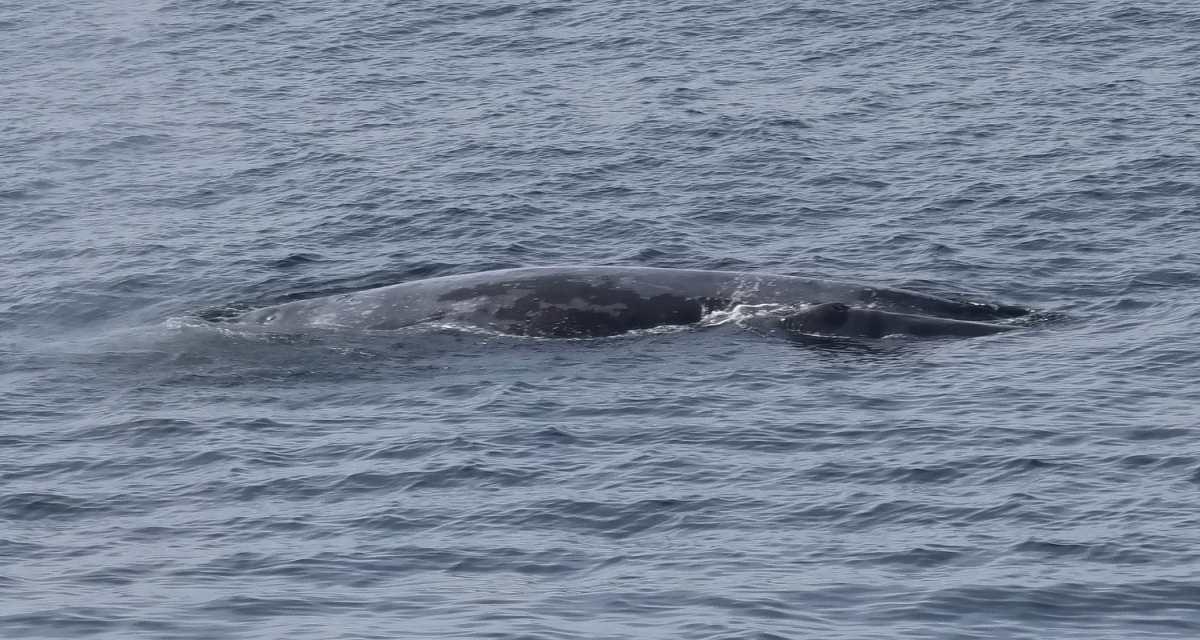
A close-up of a mother and baby gray whale surfacing off the coast of Palos Verdes Estates, California
Fortunately, no speeding boat passed when the latter pair was peering through the water surface. Since boat operators find it difficult to detect sea creatures surfacing, they must be cautious while driving. Gray whales often migrate through Southern California to reach calving and nursing areas along Mexico’s Baja California peninsula. So boats and jet skis might encounter these whales on the route unbeknownst to them. Speaking to FTW Outdoors, Schulman-Janiger revealed that gray whales in the region declined from 27,000 in 2016 to about just 13,000 as of today. In 2025, approximately 85 calves were born during the migration, which is quite low compared to previous numbers recorded by NOAA. Although the loss has been staggering, an increase in calf production this year was a positive sign. This season, 14 southbound cow-calf pairs were spotted, which is a huge growth from zero sightings last year.