
Scientists Find Surprising Mating Patterns in Arctic Whales that Stop Them from Going Extinct
Published Jan. 22 2026, 8:19 a.m. ET

Two beluga lovers rubbing their bodies half-submerged in ocean
On an extreme northwest patch of the planet, the icy waters of Alaska become witness to a romantic episode that plays out between late winter and early spring. A male beluga whale folds its forehead in a melon shape and approaches a female, who rolls her body on one side to acknowledge interest. They gaze into each other’s eyes and make trumpet-like sounds. That follows a boisterous routine of tail-slapping, rubbing, nodding, and flashing open mouths at each other. But unlike most humans, all this romance doesn’t mark a lifelong partnership.
In a study published in Frontiers in Marine Science, a team of biologists documented a surprising discovery they made about belugas. Unlike most humans and lovebirds, who tend to spend their entire lives with the same partner, belugas engage in “strategic sex,” mating with multiple partners over several years.

A diver standing with beluga whales
The study was conducted by researchers from Florida Atlantic University in collaboration with the Alaska Department of Fish and Game and the North Slope Borough Department of Wildlife Management in Alaska, led by Greg O’Corry-Crowe. Greg and his team were interested in understanding how belugas plan and prioritize their love lives, who mates with whom, and why it matters so much for their survival. And so, they set out to unravel the tantalizing tales of “beluga mating” by observing and genetically profiling 623 belugas in Alaska’s Bristol Bay to collect their skin and DNA samples.
The mating strategies of belugas are highly influenced by their aquatic mode of life and social circles. Extreme seasonality also imposes additional constraints on parental care, competition, and mate choice. Researchers used long-term genetic analysis and behavioral observations to study the belugas. Observations revealed a surprising sexual behavior pervading the elusive whales. Observers found that these whales indulge in “swinging singles” or “mate switching,” meaning both females and males mate with multiple partners through their lives, not just one.
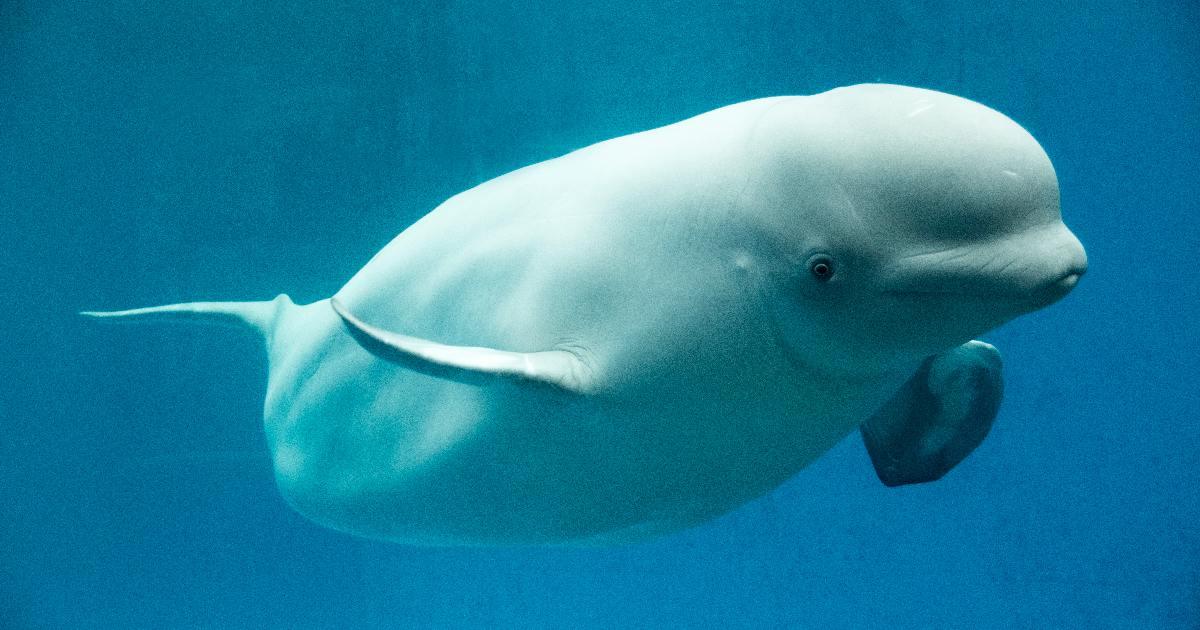
Beluga whale navigating deep water
But this polygamous behavior goes way beyond just the desire to quench their romantic appetite. For belugas, this tradition is also a “genetic insurance policy” they use to diversify their clan and breed children with a varied combination of genes. And so, despite having a small and isolated population, belugas manage to reproduce so many half-siblings. When scientists came across this observation, they understood the mystery behind why the beluga population has such a rich biodiversity.
The observation of rich genetic diversity was followed by several insights that revealed different sexual behaviors displayed by males and females as they got involved in the “polygynandrous mating system.” First, this system reduced parental investment of one sex, typically males. Also, the reproduction rate of males increased, with the number of sexually active males increasing relative to receptive females at one time.

Beluga in the sunlit golden waters of Canada
“What makes this study so thrilling is that it upends our long-standing assumptions about this Arctic species,” Greg exclaimed. From previous studies, they knew that belugas were polygynous, where males spend a lot of time competing for mates, and only a few dominant males parent most of the calves. But this research challenged the long-standing assumption. By following a polygamous mating system, belugas increase their operational sex ratio (OSR) towards males, which in turn leads to “increased male-male competition.”
Choosiness by females further intensifies the competition, fueling sexual conflict. This also influences the competitive ability in males, including their body size, weapons, and ornaments. To maximize reproductive success, females choose multiple quality males via sperm competition or as a bet-hedging strategy. Females, especially, Greg reflected, are highly influential in determining the battles of male-male competition, shaping reproductive success, and shaping the evolutionary trajectory for younger generations.