
Dolphin Defies Gravity to 'Walk on Water' With Its Tail, Stuns Viewers with Rare Display
Published Jan. 27 2026, 9:08 a.m. ET

Dolphin moving through water using its tail.
A dolphin zooming on its tail is not an everyday event. In footage shared by Monterey Bay Whale Watch on Instagram, an excited dolphin is seen moving across the ocean. However, instead of using its fins, it uses its tail to glide through the water. Dolphins are known to be graceful movers who can be impressively acrobatic and coordinated with their peers. This recent event was yet another example of their creative way of expression. “The Blackfin we saw this Northern Right Whale Dolphin tail walking!!! Such a cool and rare behavior to witness,” the caption read. People reacted to the incredible stunts of the dolphin and took to the comment section to react with one writing, "So cool!!! They are such beautiful dolphins!"
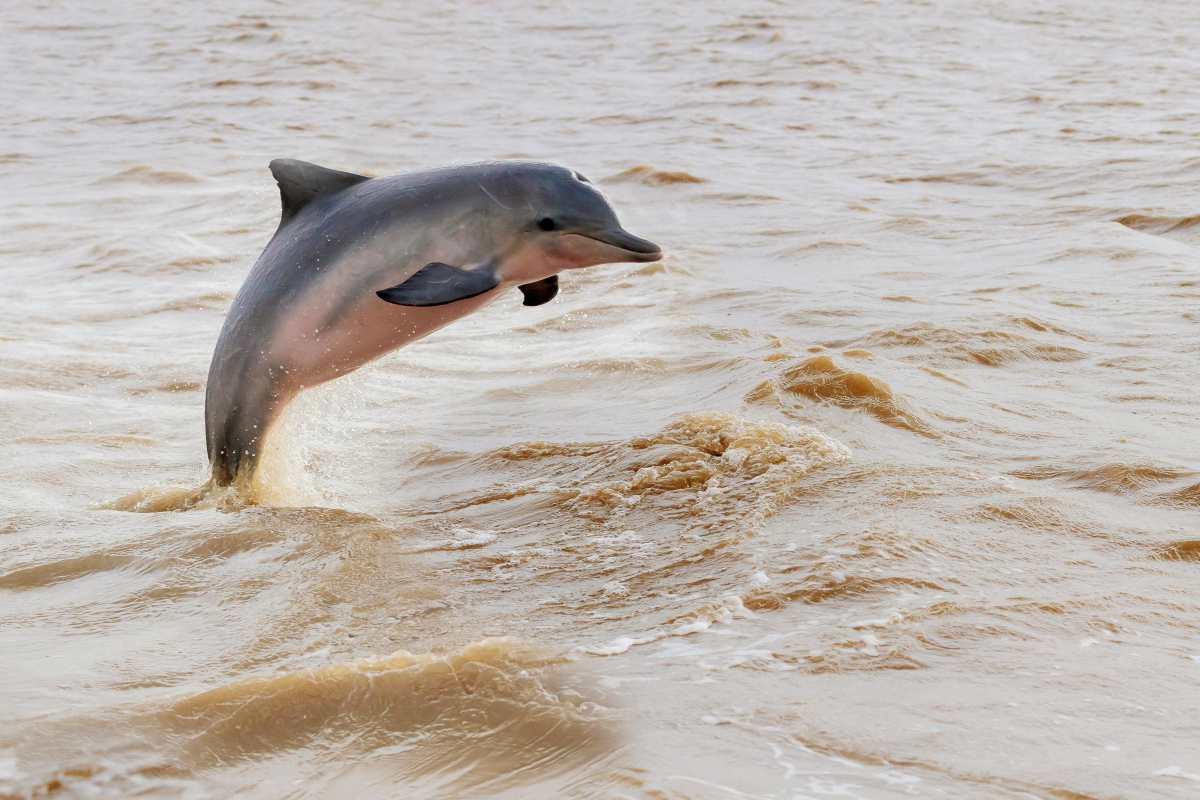
A dolphin jumping out of the water.
Another social media user was intrigued by the sight so much that they wished to visit the place one day, writing, “Wow, they are amazing!! Added to the dream list.” A third user pointed out how rare the sight was and added, “Totally cool cause its super rare for them to do it in the wild on their own!!” Someone highlight how, unlike wildlife sanctuaries, the dolphin was roaming “wild and free” in the ocean, making the sight more special. Dolphins are perceived as friendly sea creatures, and their curved mouths give them a “smile” on their face, selling their engaging nature even more. They are naturally social in behavior and communicate with squeaks, whistles, and clicks, according to National Geographic.
Their zooming on the sea surface was certainly one of their many recreational move, expressing sheer joy. “They often do repetitive leaps for fun or communication within the dolphin herd,” confirmed Nancy Black, a marine biologist and owner of Monterey Bay Whale Watch. She revealed that dolphin sightings at Monterey Bay, California, are frequent because a deep submarine canyon lies very close to the coastline. Even whale sightings in the area are quite common. However, Black admitted that the activity of the dolphin captured in the Monterey Bay footage was a rare occurrence. “I can’t express to you how uncommonly rare this behaviour is,” the wildlife guide added.
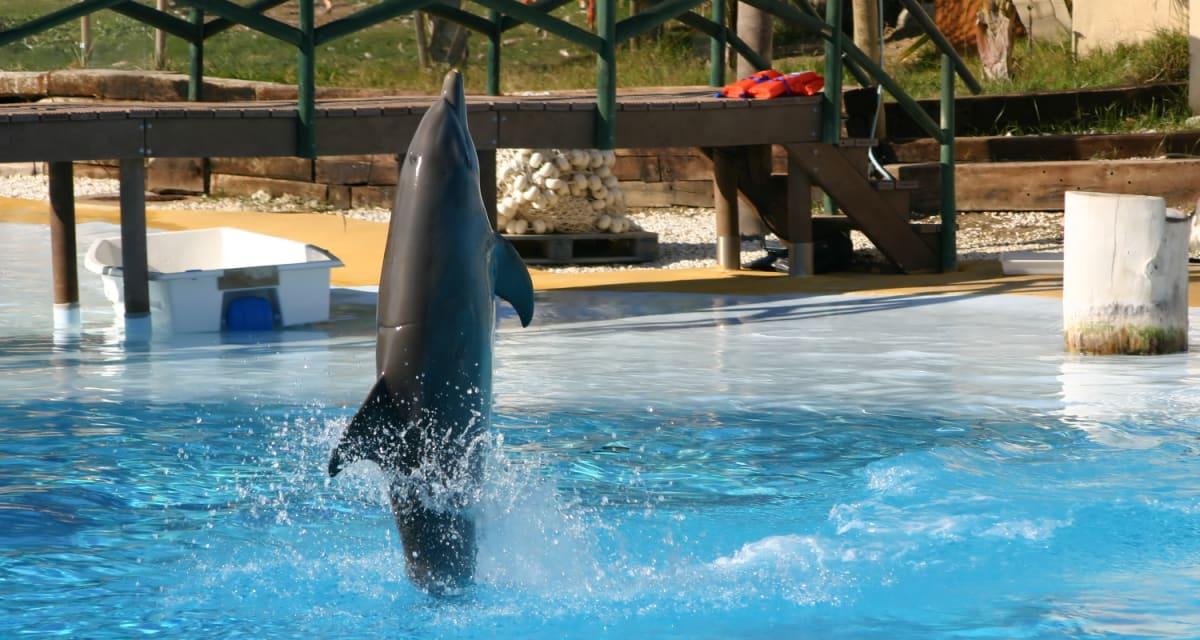
A dolphin standing on its tail.
Tail-walking is a behavioral trait where a dolphin forces the majority of its body to be vertical and perpendicular to the water surface, according to a study published in Biology Letters. The creature maintains balance in that position by rigorously pumping its tail. Over the years, this trait has never been consistent and has increased or decreased drastically. However, it originated way back in the wild after a wild female named Billie was temporarily kept with trained dolphins within a dolphin aquarium. Billie started tail-walking about seven years after her release in 1988. The same trait of tail-walking was later exhibited by another female dolphin named Wave. Eventually, several other dolphins in the community imitated the behavior, making it prevalent again.
In human standards, this behavior can be perceived as a skill that dolphins can learn through social introduction. People may think of it as a lost art form that only becomes prevalent when one dolphin starts to ace it. Tail-walking certainly is not an inherent trait that the species depended on for its livelihood, hunting food, or anything else remotely important. It is an energetic activity they evidently enjoy, and certainly a move they can pull to attract notice.