
Oceans Absorbed a Record Amount of Heat in 2025 — and Experts Are Alarmed
Published Jan. 13 2026, 11:32 a.m. ET

A polar bear stands on melting sea ice.
The ocean was the warmest in 2025. A baffling new international analysis sheds light on the massive amount of environmental heat and energy that the ocean ends up absorbing, gradually rising in temperature. According to findings published in the journal Advances in Atmospheric Sciences, the heat absorbed in the ocean last year was about 23 Zetta Joules, which is an enormous amount, to say the least. This result was found through an elaborate and extensive research involving 50 scientists from 31 research institutions worldwide. Oceans act as an indicator for climate change as it absorbs maximum amount—about 90%—of the excess heat trapped by greenhouse gases. Therefore, the current statistics are a red alert indicating that the climate is deteriorating and needs to be paid attention to sooner rather than later.

Ocean reflecting sunlight.
Why is ocean temperature more reliable for tracking global warming than air temperature? The latter varies each year: temperature rises during El Niño and drops during the La Niña oscillation. In comparison, the ocean temperature is more stable and reliable and isn't disturbed by the rise and fall of the water level. Although the oceans don't warm or cool uniformly around the globe, recent data have revealed that about 16% of the global ocean area reaches record-high ocean heat content (OHC). Moreover, 33% were among the top three warmest global ocean areas experienced the hottest years ever recorded. The regions that attained their record-high OHC in 2025 included the tropical and South Atlantic and North Pacific Oceans, and the Southern Ocean.
Last year's sea surface temperature is ranked third in the highest recorded temperature, about 0.5 °C (about 1°F) above the average baseline temperature between 1981 and 2010. The sea surface temperature recorded in 2025 was still lower than that recorded in 2023 and 2024. Scientists believe that the shift from El Niño toward La Niña oscillation could have been the reason behind the slight drop in temperature. Although the surface temperature is comparatively lower, the overall ocean temperature is still dangerously high. But that doesn't imply that the drop in surface temperature has no significance. It equally matters as surface temperature determines evaporation rates, which increase when the ocean surface is warmer.
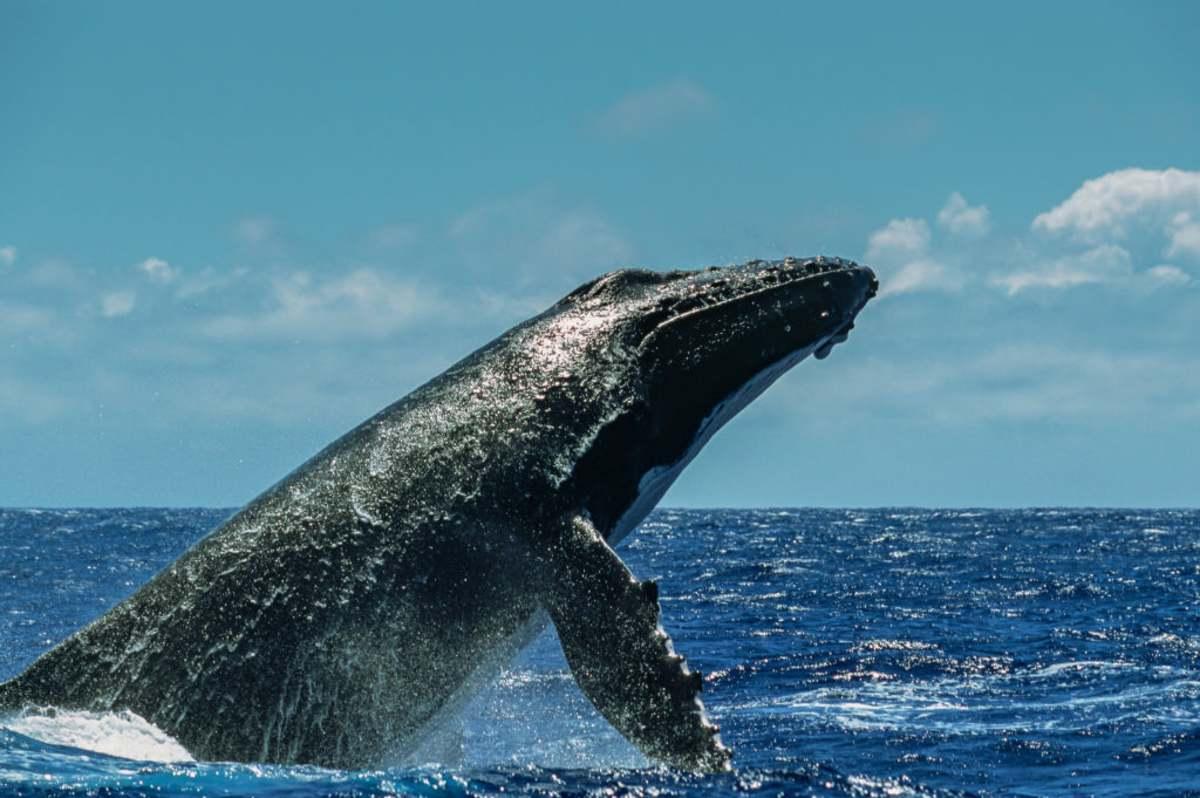
A Humpback whale on the ocean surface.
The rate of evaporation is inversely proportional to humidity, which in turn determines the intensity of rainfall. Overall, high ocean temperature also has several downsides, including a rise in sea level due to thermal expansion. Considering the melting of glaciers is already adding to the sea level rise, further expansion triggered by warmer ocean temperatures isn't a great sign for the environment, increasing the threat to people living in coastal regions. To sum up, the accumulation of heat in the ocean is one step closer to potentially catastrophic natural disasters.
The study’s corresponding author, Lijing Cheng, suggested the use of cartoon characters–sad shrimps and crabs–for the cover. “The idea comes from the ‘shrimp soldiers and crab generals’ guarding the underwater palace in Journey to the West,” Cheng said in a statement. “We reimagined them not as mighty guardians, but as vulnerable creatures whose armor – their shells and scales – is under attack by ocean warming, acidification, and other ocean environmental changes," Cheng added.