
Joshua Trees Are Blooming Early Across California’s Deserts — and Scientists are Worried
Published Jan. 26 2026, 7:19 a.m. ET

Majestic silhouettes of gnarly Joshua trees as they bloom in a landscape bathed in the orange and yellow hues of sunset
“Are Joshua trees confused?” Millions of residents in Southern California are asking this billion-dollar question. For these slow-growing desert trees, January is supposed to be a month of dormancy while the blooming happens in from February to April usually. This year, however, winter appears to be wrestling with spring. For an entirely mysterious reason, Joshua trees have bloomed early in Southern California this year. Residents across the region are sharing selfies and pictures of these erratic prophet blooms awakening earlier than their typical seasonal rhythm. In conversation with SFGate, biologist Jeremy Yoder reflected on the mystery, saying that it’s not good news.
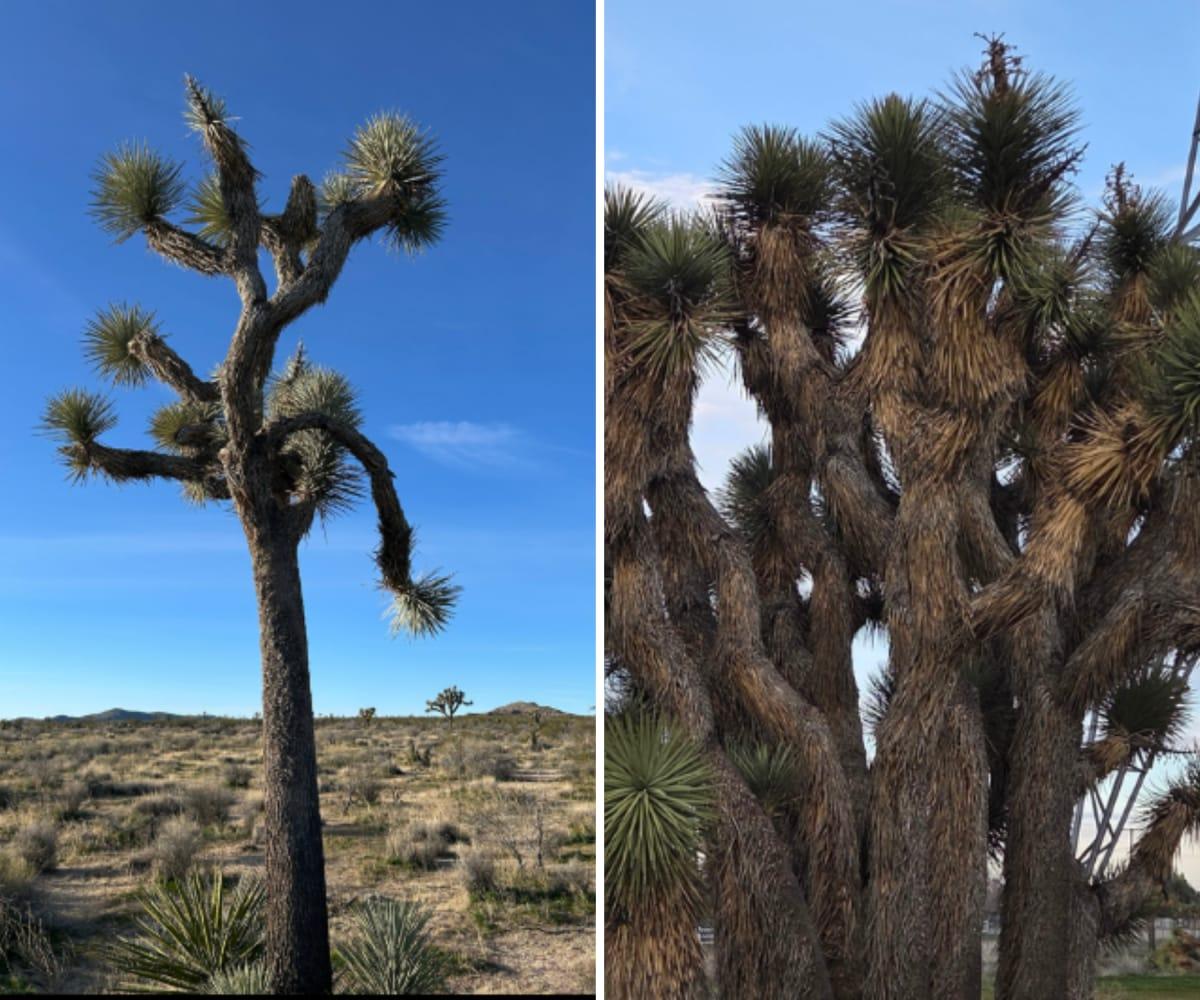
Joshua trees in Southern California are blooming way ahead of their typical bloom time as seen in pictures people snapped (Image Source: iNaturalist | (L) Shreya Sridhar, (R) Wendy Walker)
iNaturalist, a plant identification app, maintains a plant journal whose latest issue documented groves of Joshua trees people spotted across the southern portions of California. From El Dorado to Newberry Mountains to Antelope Valley Poppy Reserve, near Lancaster, California, the trees are unexpectedly sprouting with beauty. Dense, long clusters of yellow-white bell-shaped flowers and colorful fruits are popping and proliferating on dagger-like gnarled tangles of branches, peppered with Dr. Seuss-like spiky green leaf balls and blue-green leaves. Why so suddenly? Nobody knows for sure.
Yoder said the actual blooming time should have been February to April, but some of them showed blooms as early as October and November. For photographers and residents, this may sound exciting, but from a scientist’s point of view, this is bad news. The reason is Joshua trees are in an obligate mutual relationship with yucca moths which makes them completely dependent on each other for their survival.
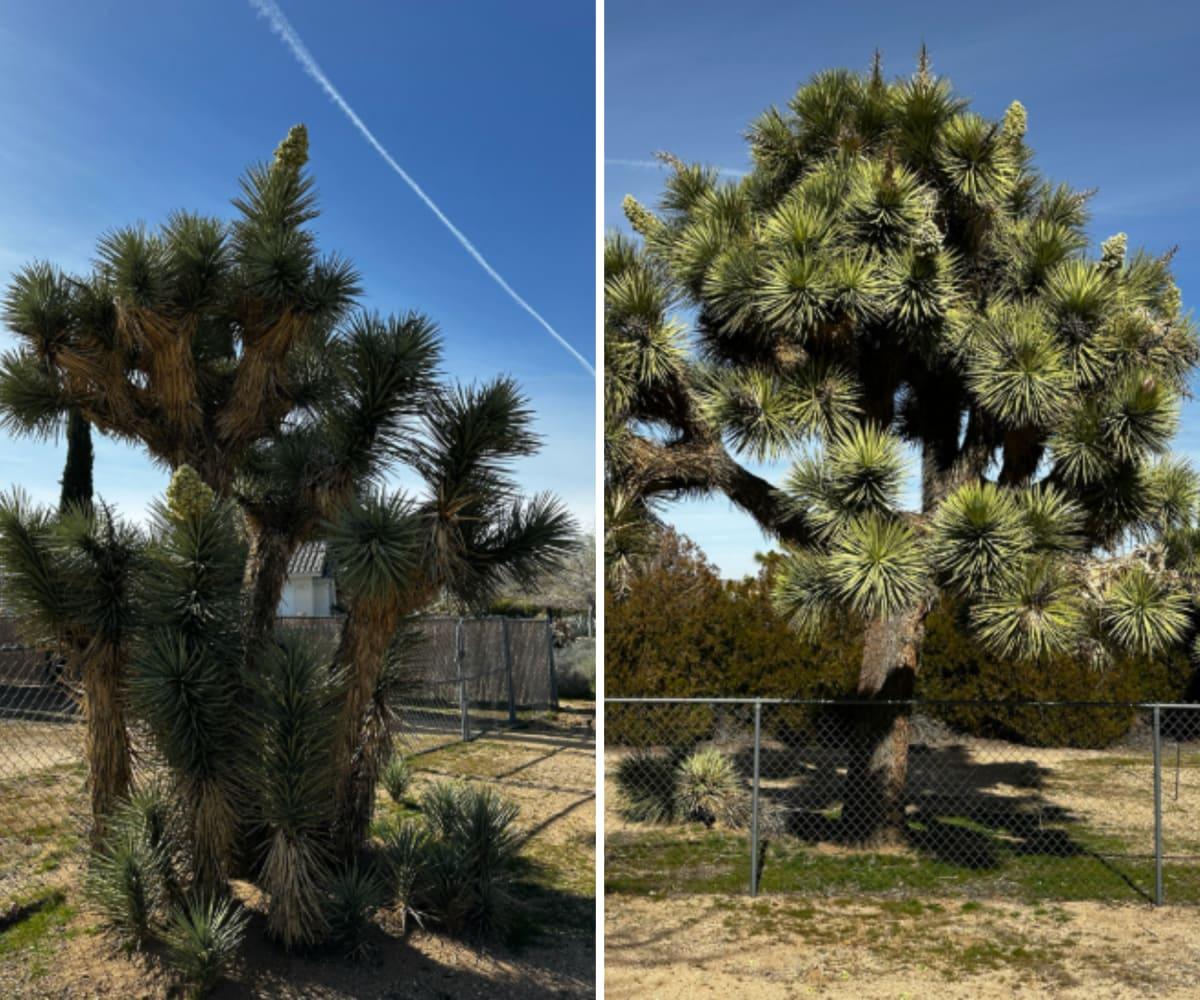
Joshua trees in Southern California are blooming way ahead of their typical bloom time as seen in pictures people snapped
The science of this relationship lies in the plant-insect synchrony locked into the physiology of the plant. Some plants are generalists. They allow different species of insects and pollinators to reproduce on them. But others, like a Joshua tree, have only one pollinator for reproduction. Female yuccas have specialized tentacles they use to collect pollen from the tree and deposit it on another flower. The timing is intricately linked and governed by its own clockwork. The moths have to get their eggs hatched within a small window of time when the plant blooms. At the final stage, the young moth chews its way out of the mature fruit, which then drops to the ground until next year’s bloom.
It’s a complex blend of heat, sun exposure, rain, and over climate that guides this blooming ritual. If the time of egg hatching doesn’t synchronize with the plant’s bloom timing, it can be a problem, especially for species like Joshua that have no other pollinator for reproduction. “The moths are totally dependent on the trees. The trees have no other pollinators because the moths are so good at their job,” Yoder said. “And so the real question when the trees flower super early like this is: Are the moths going to show up? And what I think we’re seeing so far is that they’re not.”
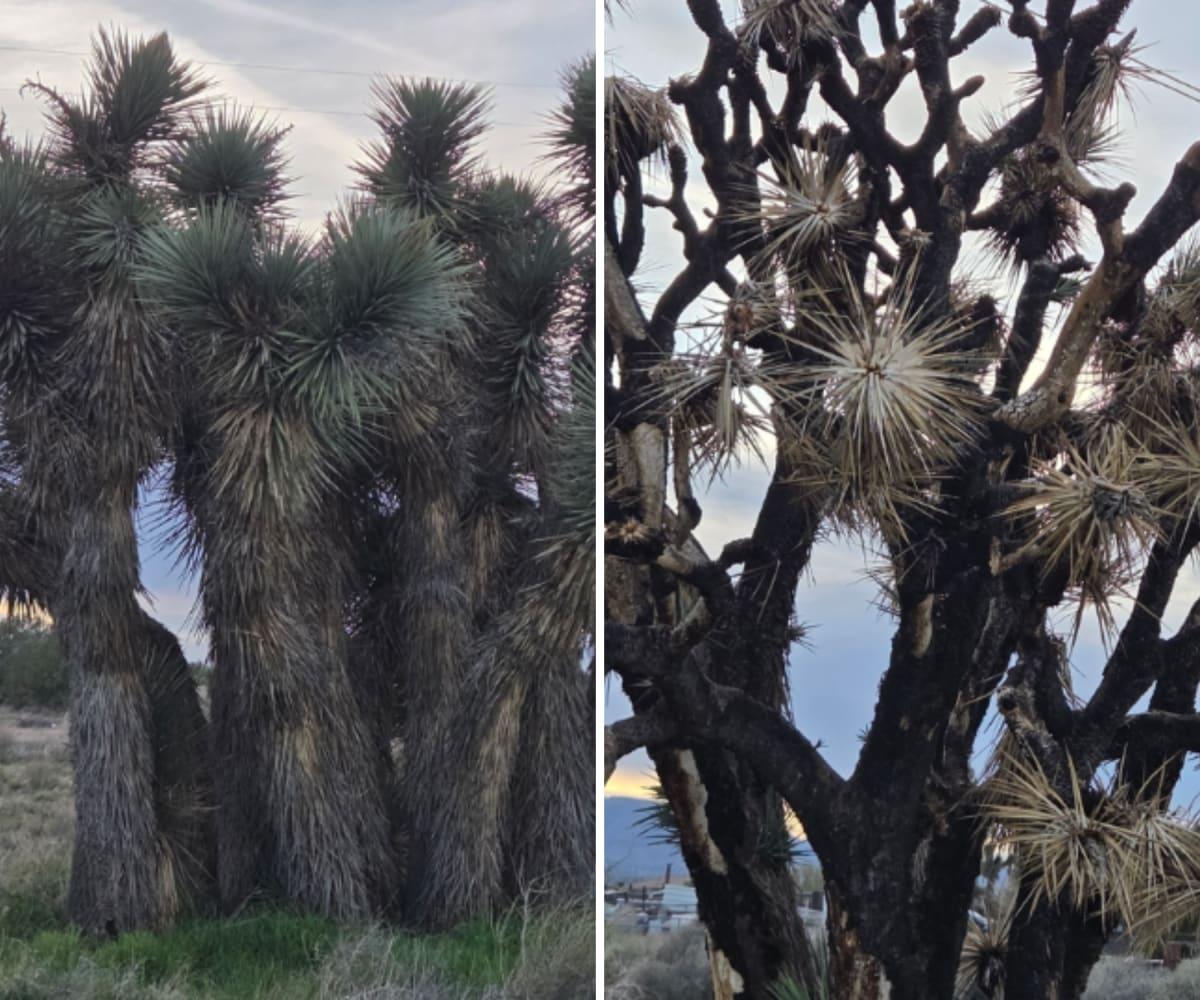
Joshua trees in Southern California are blooming way ahead of their typical bloom time as seen in pictures people snapped
Some believe that the exceptionally heavy rains this year triggered early blooming. Winter rain confused the plants into thinking it’s spring, and they bloomed, which is not a good thing, because pollinators aren’t out there yet for reproduction. And this could throw off the entire clockwork out of balance. The trees are spending energy and effort that might make them less resilient to stress, and that spent effort doesn’t result in new seeds and new Joshua trees to replenish the population,” Yoder contemplated. “But that’s the possibility. That’s what we don’t know.”
Meanwhile, the Yoder Lab is calling residents and locals to help them document the surprising early bloom by uploading photos of Joshua trees to iNaturalist. From the collected data points, scientists will extract the wealth of details about the blooms and try to decipher the Joshua tree mystery.