
A Gang of Killer Whales Has Been Attacking Ships — And They’ve Developed a New Language to Do So
Published Jan. 23 2026, 4:03 a.m. ET

A kayaker staring at killer whales.
Killer whales are cult-style predators. With military precision, coordinated teamwork, intelligent social structure, and highly developed culture, these monstrous mammals use a glaring playbook of tactics and strategies for attacks. Washing away sea lion pups with the waves, disorienting young fish with bubble clouds and tail slapping, paralyzing sharks into a coma and then killing them, and penetrating the caves where monk seals are resting and grabbing them for dinner are some strategies they use, per Advances in Marine Biology. Given that they are one of the deadliest apex predators of the ocean, these game plans, though horrifying, seem logical. Lately, however, the whales are displaying a behavior that is somewhat puzzling. Not fish or seals, not seabirds or pinnipeds, they are harassing boats, especially off the coast of Spain, in the Strait of Gibraltar. And that too while communicating using a newly identified language.
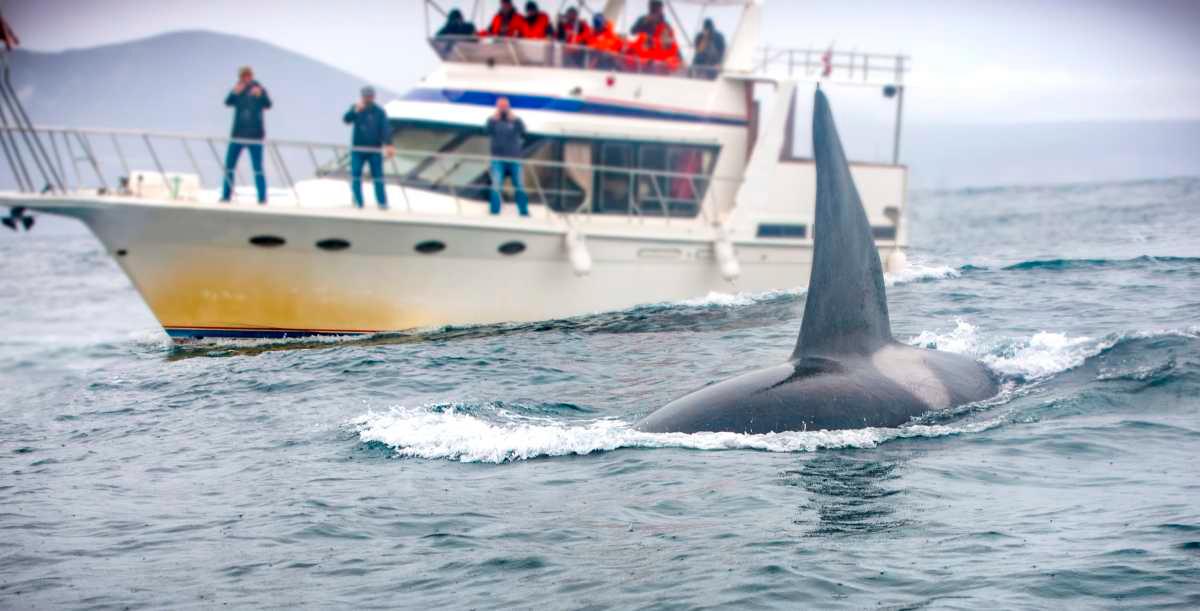
Killer whale prowling near a boat with tourists
In something that scientists call “interactions,” an orca approaches the boat and rams its school-bus-sized body right into it, leaving boats capsized, rudders broken, hulls scraped, sailors trapped, and travelers screaming for rescue. Why are they doing this to us? This is the question that’s clinging like an intrusive thought in everybody’s mind. Since 2020, orcas have become the suspect behind over 700 attacks. People are afraid to enter these waters. Every little splash, every little wave is a warning sign that a killer whale might be coming to get them, as a sailor said in a documentary. Is it curiosity, competition, or just entertainment?
Recent observations suggest that they may have developed a new communication strategy to coordinate, plan, and execute their attacks. About 15 orcas involved in the pod are under suspicion of an "orca uprising." But the primary culprit is their ferocious pod leader, matriarch White Gladis, as CBS8 also reported. Lately, it seems, the leader is engineering some upgrades to these attacking strategies, for she has added another tool to the list: a communication language scientists have never heard before. Vocalizations observed during the recent attacks differ from any of the previous recordings.
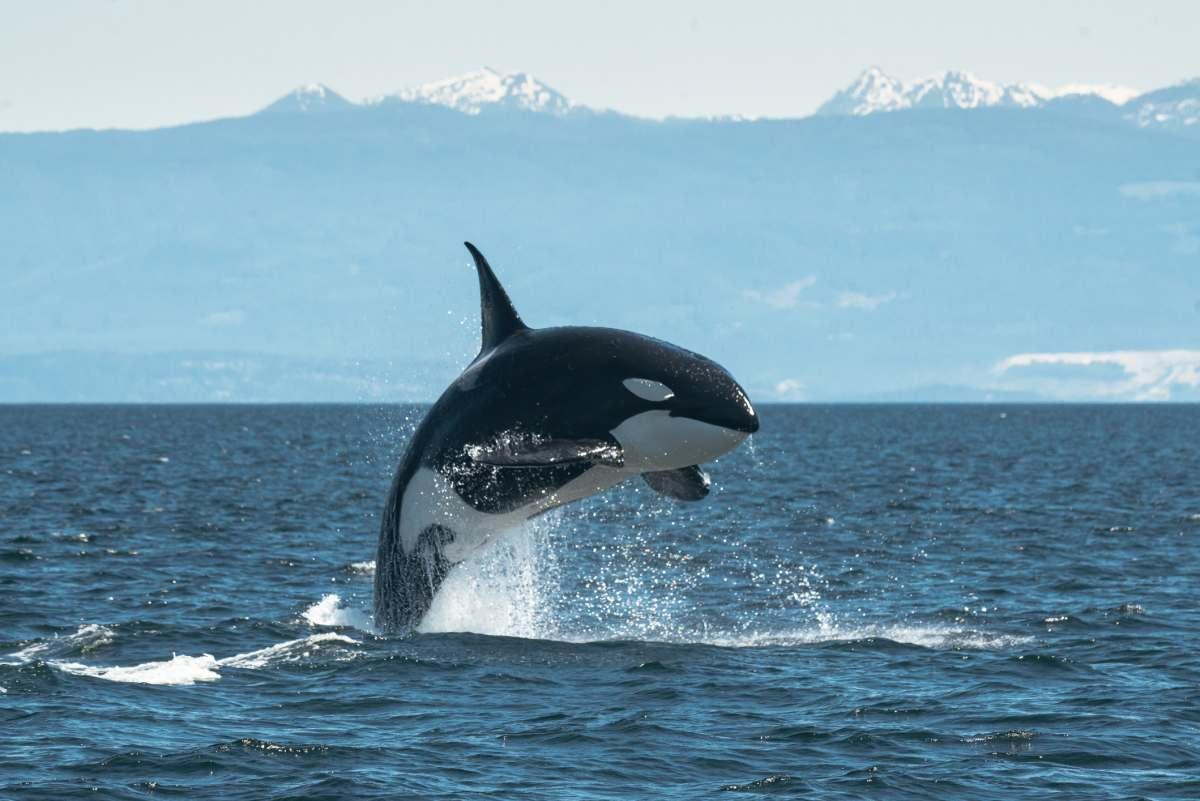
A killer whale is swimming in the ocean.
“Until now they were thought to be very silent,” marine biologist Renaud de Stephanis, president of research organization CIRCE, told The Times. Stephanis likened the variation of sound to that observed earlier in the difference between Arabic and Latin. They extracted these sound recordings from about 40 orcas residing along the Strait of Gibraltar and the Atlantic coast of the Iberian Peninsula. Most of the sounds were identified as a function of communication happening between Gladis and her loyal student whales. A research team led by Javier Almunia of the University of La Laguna spotted 4 separate call types, and none of them had ever been heard before.
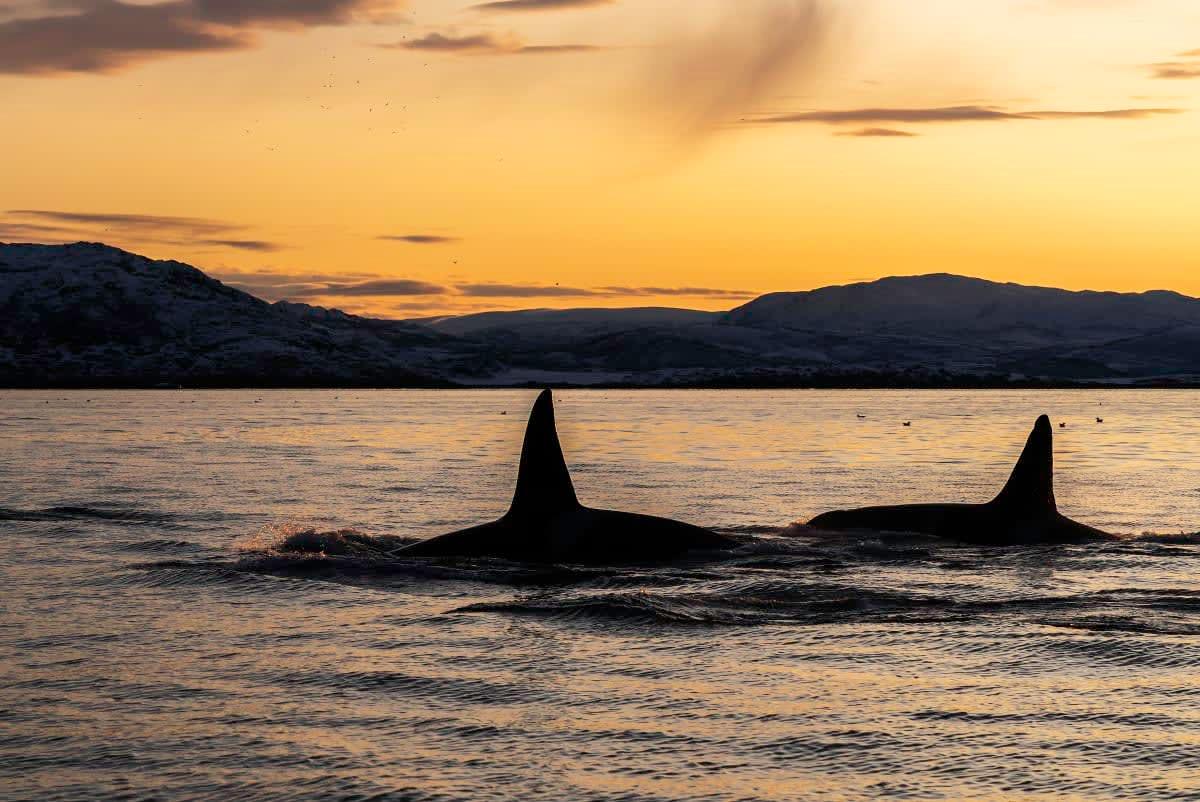
Pod of killer whales below an orange sunset sky
Some researchers believe that these attacks and strategies might not be an expression of aggression. Speaking to The Sun, tour guide Bernardo Queiroz said, “They are very curious and are not pretending to harm any person. Even if you fell into the water with them, they will not touch you." Thomas Le Coz, the captain of the Sea Shepherd France, also defended the killer whales by saying that they are "misunderstood." The entire attitude of the orca during an interaction is a “play attitude,” he asserted.
Some say orcas like White Gladis, who are launching the attacks, are deeply traumatized, but researchers believe it might not be the complete truth either. Neuroscientist Lori Marino told the BBC, "The idea of revenge is a great story, but there's no evidence for it." What looks like an attack is often "play behavior," she added.