
Migrating Humpbacks Teach Their Neighbors to Fish — And Help Revive a Whale Population
Published Jan. 21 2026, 9:36 a.m. ET

Aerial view of a humpback whale bubble netting a school of small fish
If the world of fish had a corporate company, humpback whales would probably be hired in the marketing department. They are the masters of deception and wangle, especially when it comes to the tactics they use for trapping young fish. After their long-distance migrations, when they are craving for a protein-rich meal, they use a tool humans won’t ever think of using in their wildest imaginations: Bubbles. The moment a humpback detects a lush school of small fish in the water, it divebombs underneath the school and starts encircling it. As it circles the fish, groaning and moaning its sinister songs, it releases trails of bubbles that carve a foamy curtain around the fish, tricking them into believing that they have been trapped. Before the disorientated fish can realize the truth, the humpback lunges right at them with its mouth wide open and gobbles them up.
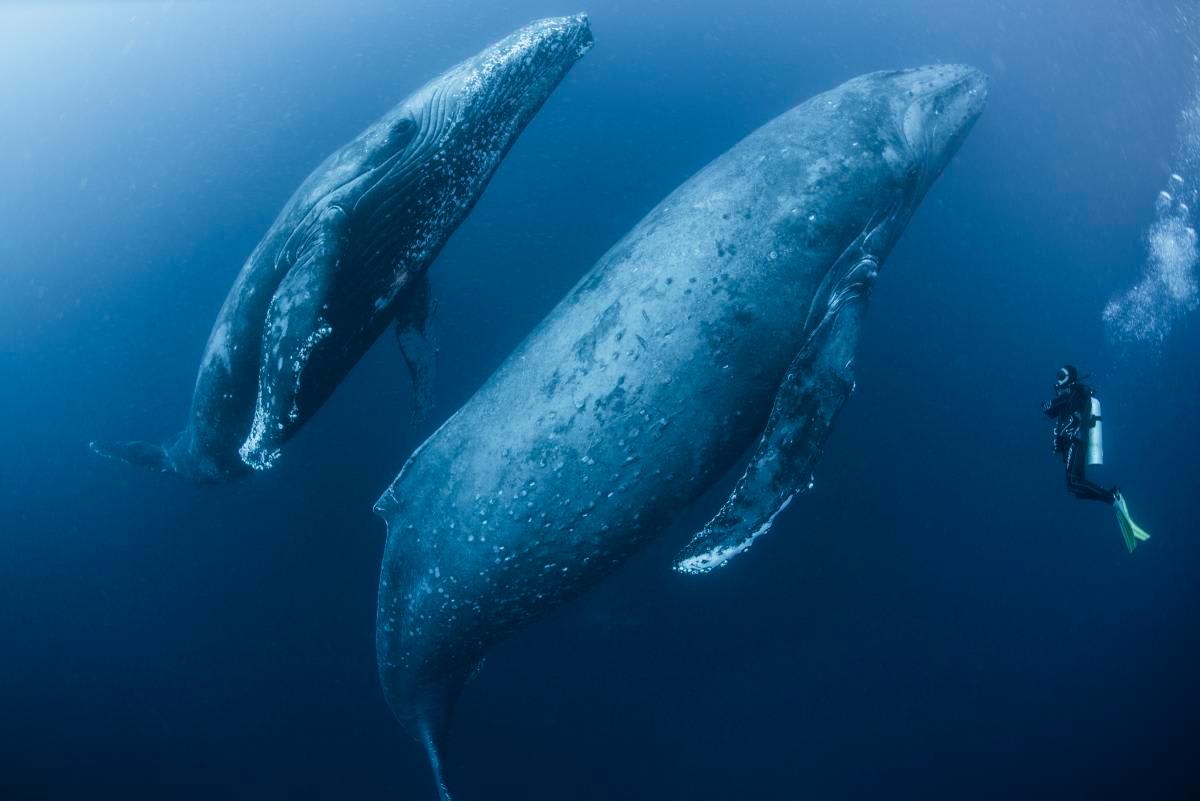
Scuba diver approaches humpback whales
When scientists first observed the cunning tactic, they registered it with the name “bubble netting” in their books. In a new study published in the Proceedings of the Royal Society B, scientists reflected that bubble netting is much more than just a hunting strategy. For whales, it’s a cultural tradition and a precious code of their military program. The research was conducted by scientists from the Sea Mammal Research Unit (SMRU) at the University of St. Andrews.
The research delved into the concept of “learned behaviors” that exist amongst the community of humpback whales, bubble net feeding being one of them. Learned behaviors, researchers noted, influence little details of their everyday life, from migratory routes to traditional feeding areas, from group cohesion to individual survival, and others. These behaviors are also a part of their social learning curriculum, something like school teachers or parents training their young ones. Social learning, researchers described, govern both the observations of a behavior as well as interactions with other animals.
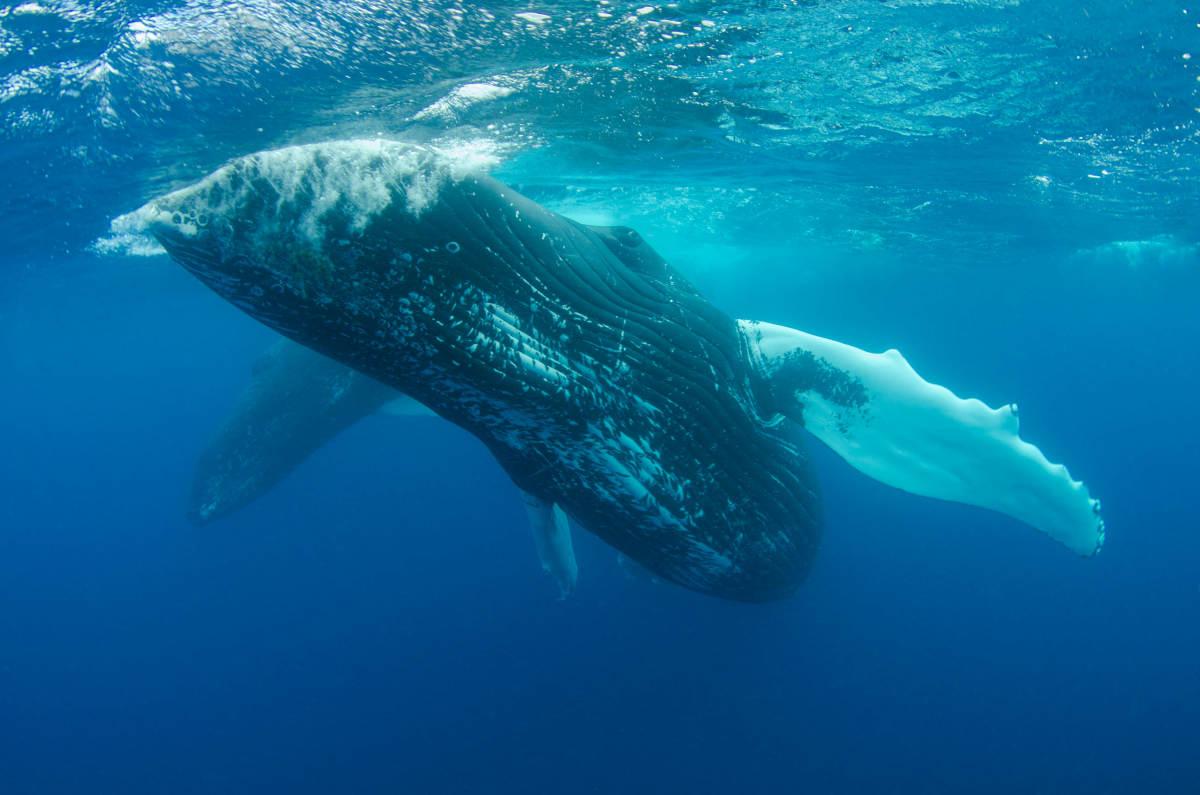
Whale swims in deep blue waters
The bubble netting tactic, specifically, has been mostly observed in the waters of Alaska. Now that a large population of humpback whales is spreading in the Canadian Pacific, researchers wondered whether they could have brought the strategy to Canadian waters as well. From earlier studies, they knew that humpback is the only baleen whale that has exhibited good evidence of widespread social learning.
The species has been recorded frequently, to be employing techniques like lobtail feeding, trap feeding, lunge feeding, flick feeding, and bottom feeding apart from bubble netting. While investigating the wealth of details this technique demonstrates, lead author Dr. Eadin O’Mahony said that it isn’t just a foraging trick. It’s a form of “shared knowledge that strengthens the resilience of the entire population.” It is not enough, she asserted, to protect the population from loss, but also necessary to prevent cultural loss and safeguard the traditional method of bubble netting concentrated across a particular area. The conservation benefits that these methods can unlock could trigger a ripple through the local waters.
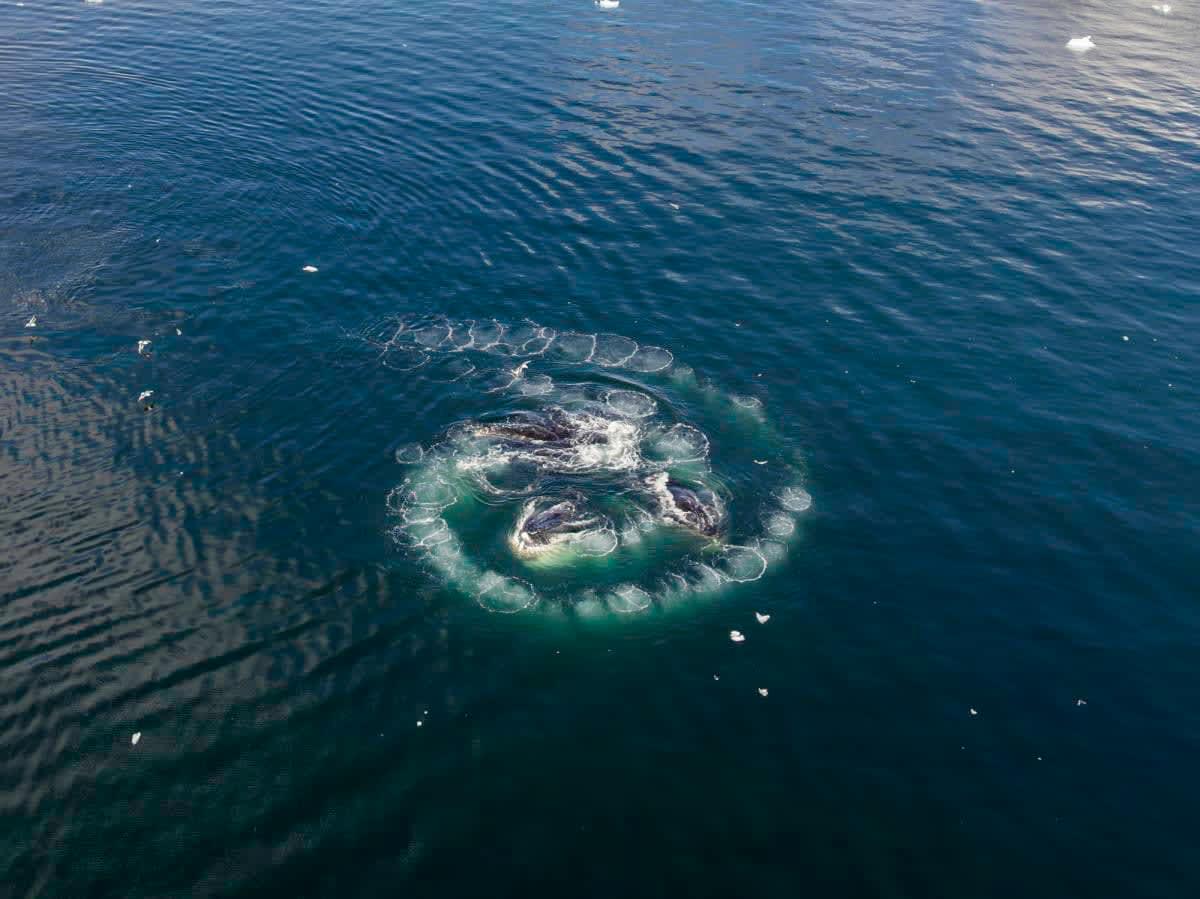
Aerial view of a humpback whale bubble netting a school of small fish
During the study, conducted in Gitga'at First Nation territory, scientists collected humpback whale photo-identifications and behavioral observations between 2004 and 2023. A total of 7485 photo-identifications were collected during 4053 encounters through 20 years of the study. Of the 250 whales encountered on five or more occasions, 97% were encountered in multiple years. Bubble netting was observed in 254 individuals on 635 occasions. This study comes as a dazzling need of the hour as whales are getting skinner, BBC said.