
Scientists Lowered a Camera into Antarctica's 'Doomsday Glacier' and Found Hidden Structures Below
Published Feb. 9 2026, 4:53 a.m. ET

(L) Camera's view inside a borehole drilled into Thwaites Glacier; (R) Ice structures captured underneath.
The Thwaites Glacier might be a ticking time bomb for humanity, but it's also a constant subject of intrigue. Also known as the "Doomsday Glacier," its collapse can trigger a rapid global sea level rise, with catastrophic consequences. Ambitious researchers from the British Antarctic Survey (BAS) and the Korea Polar Research Institute (KOPRI) decided to drill a borehole in one of the glacier's remote regions and drop a camera down it. To their surprise, the camera captured stunning icy structures hidden deep beneath the Thwaites surface. The internal crevices within the borehole drilled by the scientists contained structures never before seen underneath the Antarctic surface. Since the warming ocean is one of the main factors triggering its meltdown, the international team of researchers thought it crucial to study what's going on beneath the glacier.
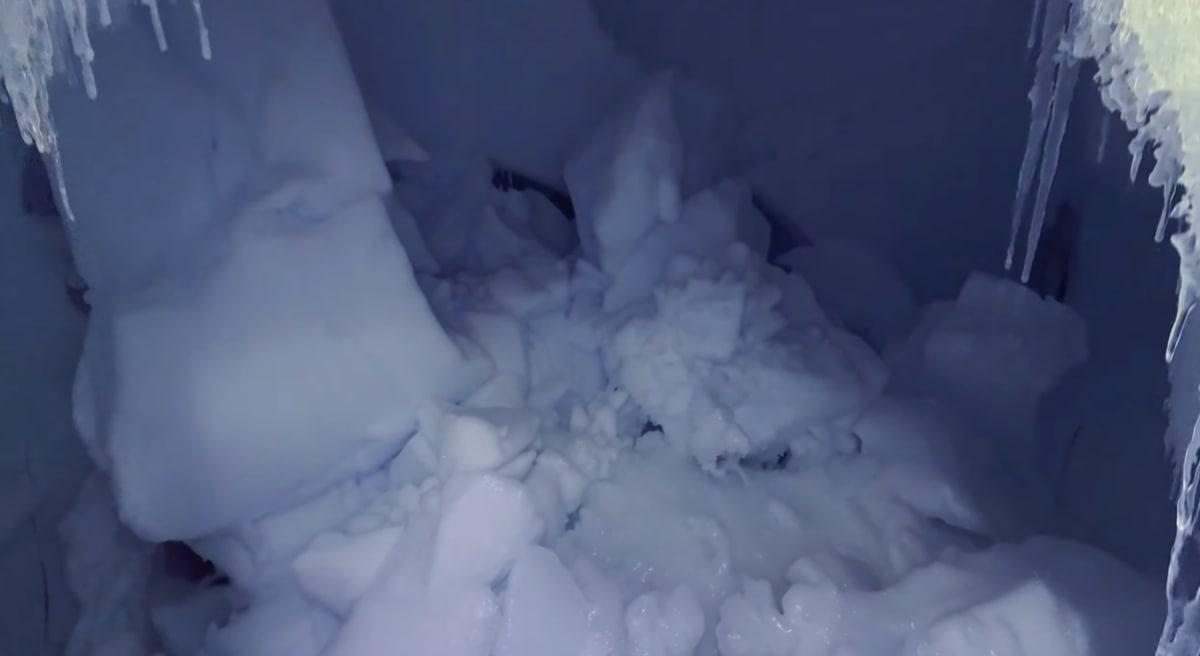
Icy landscape uncovered from within the crevices of a borehole drilled by scientists in Antarctica.
The instruments used in the research were built to provide measurements of ocean conditions beneath the fast-moving main trunk of the glacier. The researchers camped at the glacier site for weeks to conduct the experiment. Through a hot water drilling system with water heated to about 80°C (176°F), they drilled a borehole about 3,300 feet long and 11 inches wide below the surface. Experiments in Antarctica are never without their challenges. This time, scientists had to push through harsh weather and fast-shifting ice. They attempted their best to maintain the borehole for 48 hours till it froze over, but challenges like strong winds, crevasses, and shifting ice made this task gruesome. “Failure is always an option when you are pushing at the limits of scientific exploration,” said Peter Davis, BAS oceanographer and member of the drilling team.
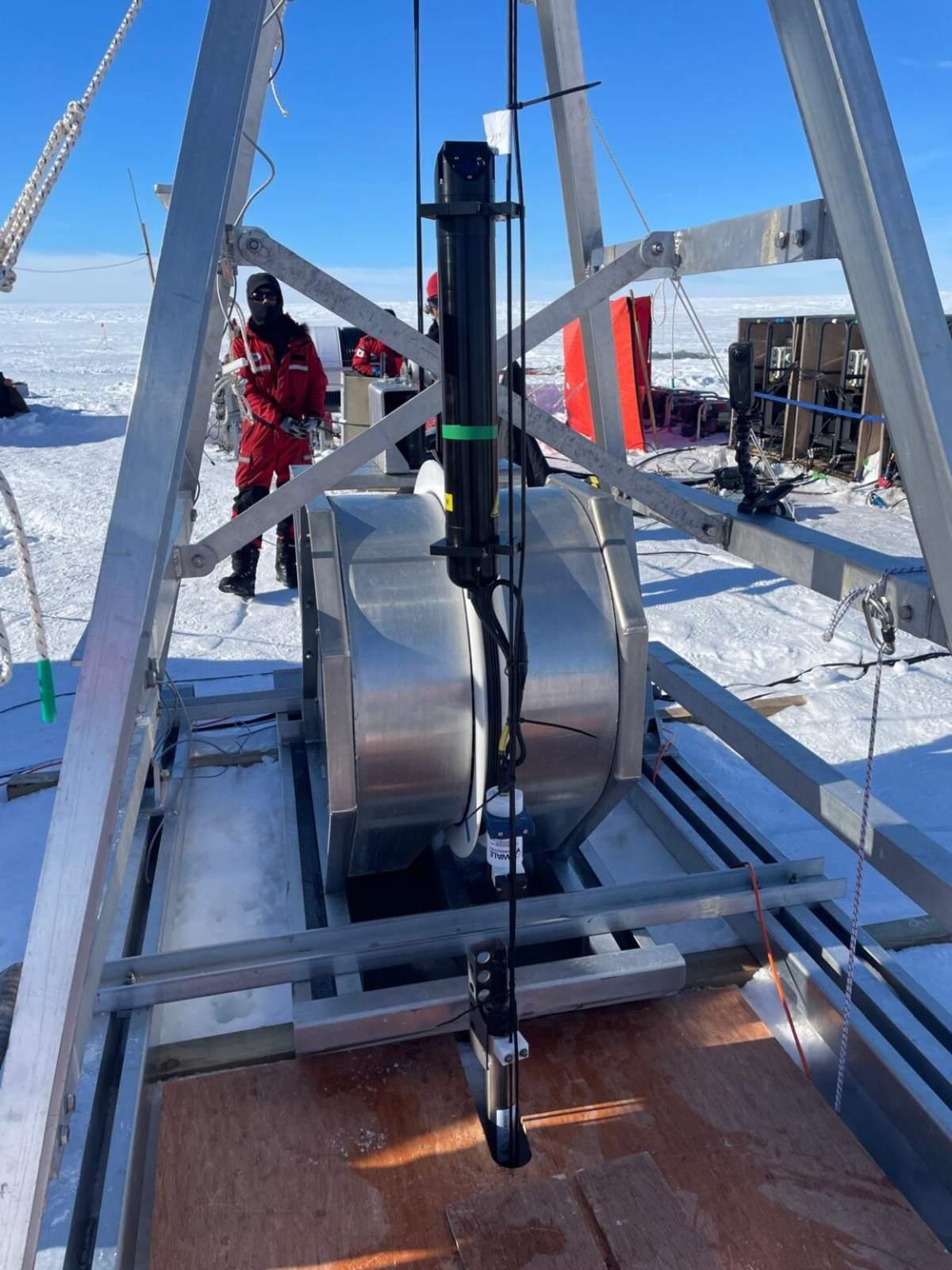
The hot water drilling rig used in the experiment.
Although the team managed to deploy instruments down the borehole, it warped before they could retrieve all the equipment. Much to everyone's disappointment, the experiment fumbled at the final step when they attempted to lower a mooring system that would have remained beneath the surface for years and sent data back via satellite. Unfortunately, the equipment never made it to its destination and got stuck midway through the descent.
The rapid ice shifts over 30 feet per day and is constantly changing its shape. The team knew the chances of failure, but fumbling at the very last step was especially disappointing. There was not enough hot water supply to drill another borehole, nor were the weather conditions in favor of another experiment. Moreover, the research vessel "Araon" had begun its departure from the Antarctic land. Overall, all signs forced the team to cease further experiments and go back with whatever information they attained.
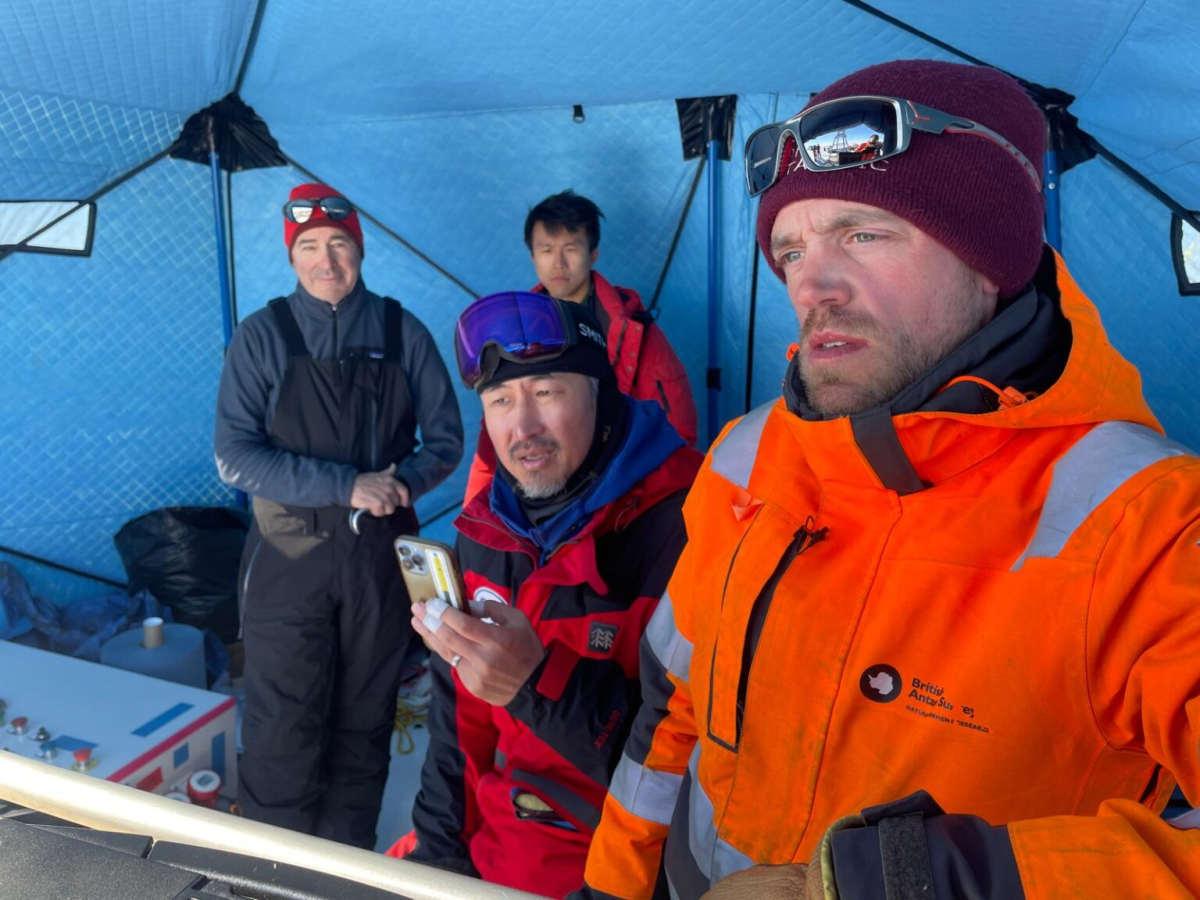
The BAS and KOPRI team await news from the sensors deployed down the borehole on Thwaites Glacier
“Fieldwork in Antarctica always comes with risk,” said Dr. Keith Makinson, BAS oceanographer and drilling engineer. “You have a very small window in which everything has to come together. While this outcome is deeply disappointing, the data we did recover are scientifically valuable and will help shape future efforts," he added. The experiment recorded the first-ever measurements from beneath the glacier's main trunk, and that's a big enough feat. “We know heat beneath Thwaites Glacier is driving ice loss. These observations are an important step forward, even though we are disappointed the full deployment could not be achieved," Davis added.
The BAS and KOPRI teams are yet to analyze the data that the team recorded during the experiment. Chief scientist Professor Won Sang Lee of South Korea revealed that the research helped them confirm that the experiment site is the "right place" for further explorations. "What we have learned here strengthens the case for returning," he said.