
Scientists Warn Ocean Melting is Worsening Antarctic Ice Loss — May Push Sea Levels by 15 Meters
Published Jan. 19 2026, 8:53 a.m. ET

Dr Ben Galton-Fenzi (pictured) estimates Antarctica’s ice shelves
Due to rising temperatures, the ice shelf of Antarctica is melting, which will evidently affect the global sea level. However, experts are not most worried about what is happening on the surface of the ice. The real concern is far below, which is almost 1.3 miles (2 kilometers) beneath. In new research led by Dr Ben Galton-Fenzi, a senior scientist at the Australian Antarctic Division, said, “We need to know because the ocean-driven mass loss is one of the biggest uncertainties in Antarctica ice sheet projections and, therefore, in global sea level rise.” Understanding what is happening beneath the ice shelves is very important for the scientists studying Antarctica.
Future sea levels around the world depend on when Antarctica’s ice shelves melt. The region has around 70 ice shelves, and it stretches across the continent’s massive ice sheet out over the ocean. Covering over 0.6 million square miles (1.5 million square kilometers), they float on the sea, so if they melt on their own, they do not directly raise global sea levels. However, the real threat is from below as warmer ocean water melts the shelves from underneath. If this happens, it will weaken and break the shelves, which will allow the ice sheets to slide more quickly into the ocean. This could lead to the rise of global sea levels by 15 meters, given that they melt completely.
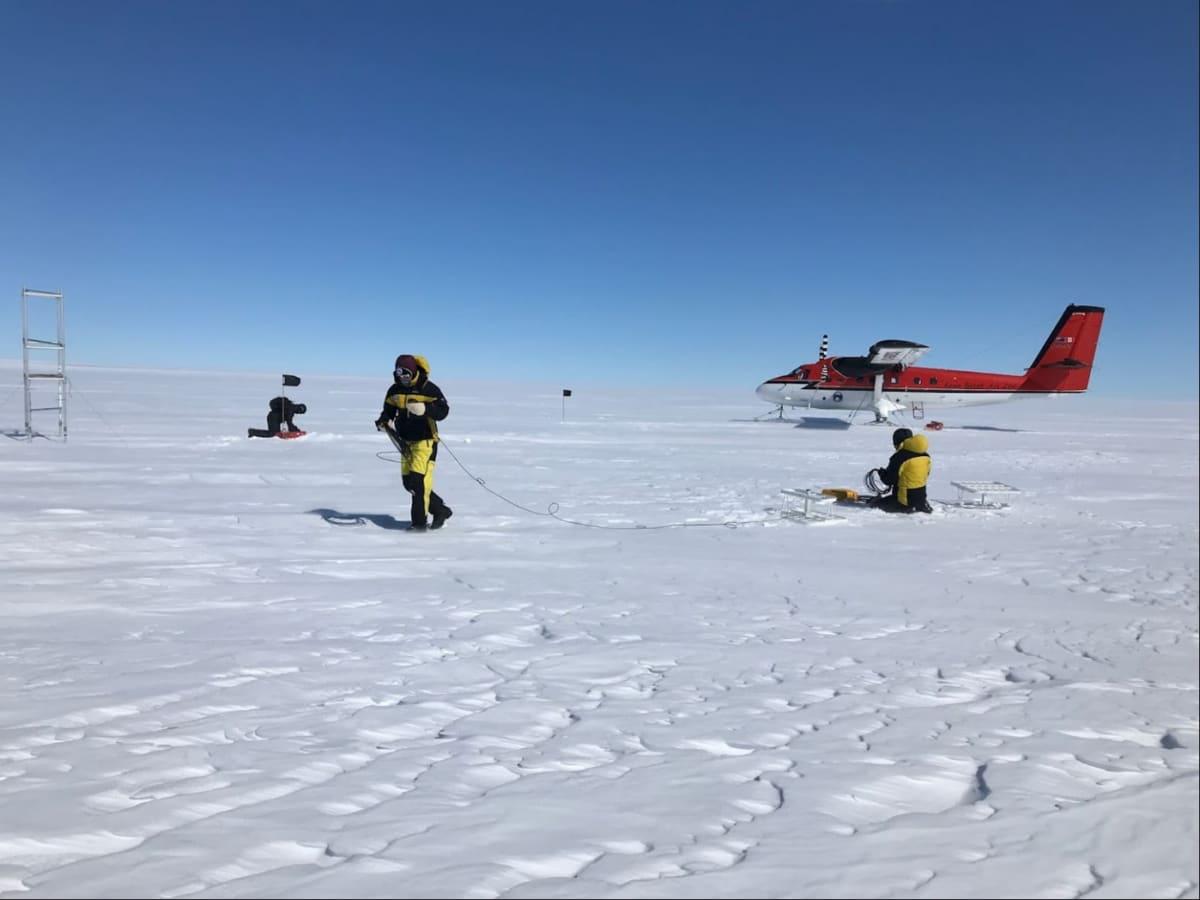
Researchers setting up instruments at Totten glacier
Galton-Fenzi and his team combined results from nine different scientific models to estimate Antarctica’s melting ice shelves. The result revealed that the region has been losing about 843 billion tons of ice every year in recent decades due to melting from below. In simple words, it is like 843 giant ice cubes, and each has the length, width, and depth of approximately 0.6 miles (1 kilometer). With 10 years of data, it will help scientists in predicting Antarctica’s future and sea-level rise. However, ice shelves also gain ice from snowfall, but a study shows that it is not enough, and the region continues to lose ice.
“Knowing the role of the ocean in driving the mass loss and how that feeds back into the flow of the ice into the ocean is a key problem that a lot of nations are working on. We do know with very high confidence what the sign of the change will be. The ice sheets will keep losing mass. It is how fast and how much is where the uncertainty is,” Galton-Fenzi said. Since the ice loss in Antarctica is happening under the ice shelves, it is difficult for scientists to get access to those areas. So, they heavily rely on computer models, which can also be unreliable at times.
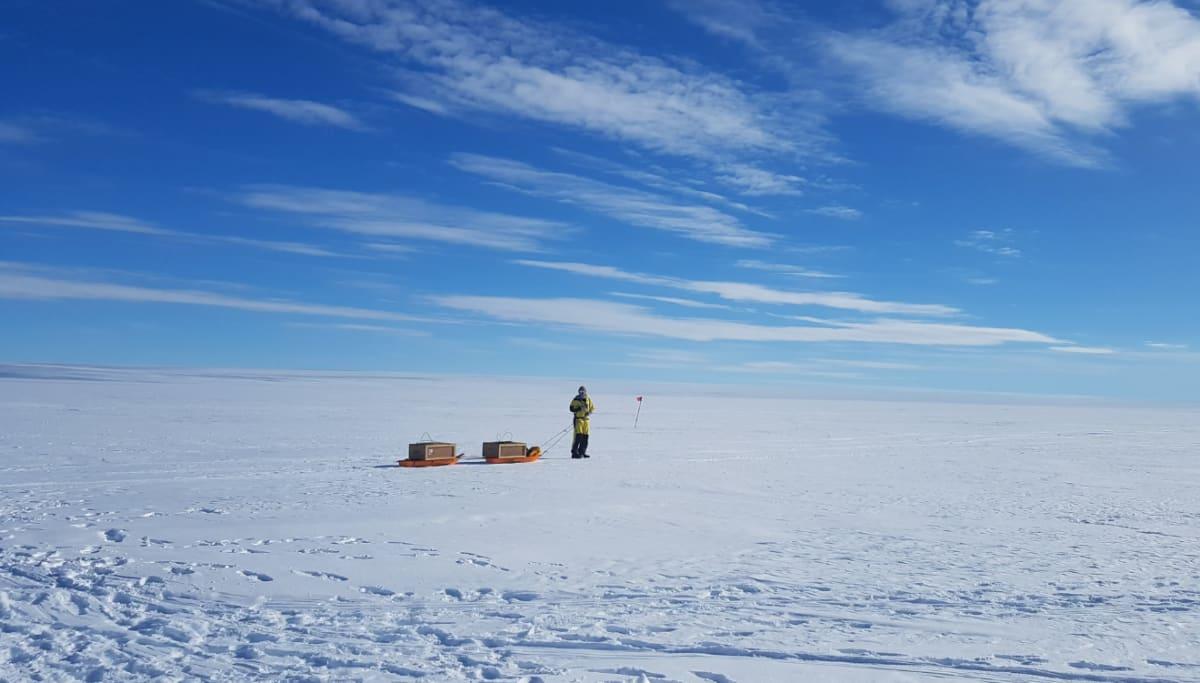
A scientist is studying the Antarctic ice shelf
It raises uncertainty with a lack of enough data, and it makes it hard to rule out some of the most serious global impacts, including changes to coastlines or sea levels. Dr Sue Cook, a glaciologist at the University of Tasmania, has raised another ‘urgent’ question. What would happen to the ocean’s ecosystem if more meltwater from the ice shelves flows into it? Cook said, “That could disrupt some of the very large scale ocean currents, but we really don’t know if it will happen or not. So the models can help us to look into the future. This ocean conveyor belt is what helps the climate to stay relatively stable. If it gets disrupted, then the consequences could be dramatic.” The rising temperatures and melting ice shelves can have dire consequences indeed.