
Scientists Drill Deeper Than Ever into the Ocean. Reveal What Made Japan’s 2011 Earthquake Worse
Published Feb. 5 2026, 10:45 a.m. ET

The vessel that conducted the world's deepest scientific ocean drilling.
The catastrophic 2011 earthquake that killed thousands of people may have been amplified by a soft layer of slippery clay. There can be many factors contributing to an earthquake, and a recent study brought another one to light. The study, titled "Extreme plate boundary localization promotes shallow earthquake slip at the Japan Trench," published in Science Advances, claims that an 80-100-foot-wide layer of clay exacerbated the 2011 earthquake. The disaster that struck the world more than a decade ago, which started beneath the Pacific Ocean, is ranked as the fourth most powerful earthquake recorded by modern instruments. In the aftermath, it triggered a massive tsunami that swept across Japan's coastline and impacted the country's nuclear power plants.
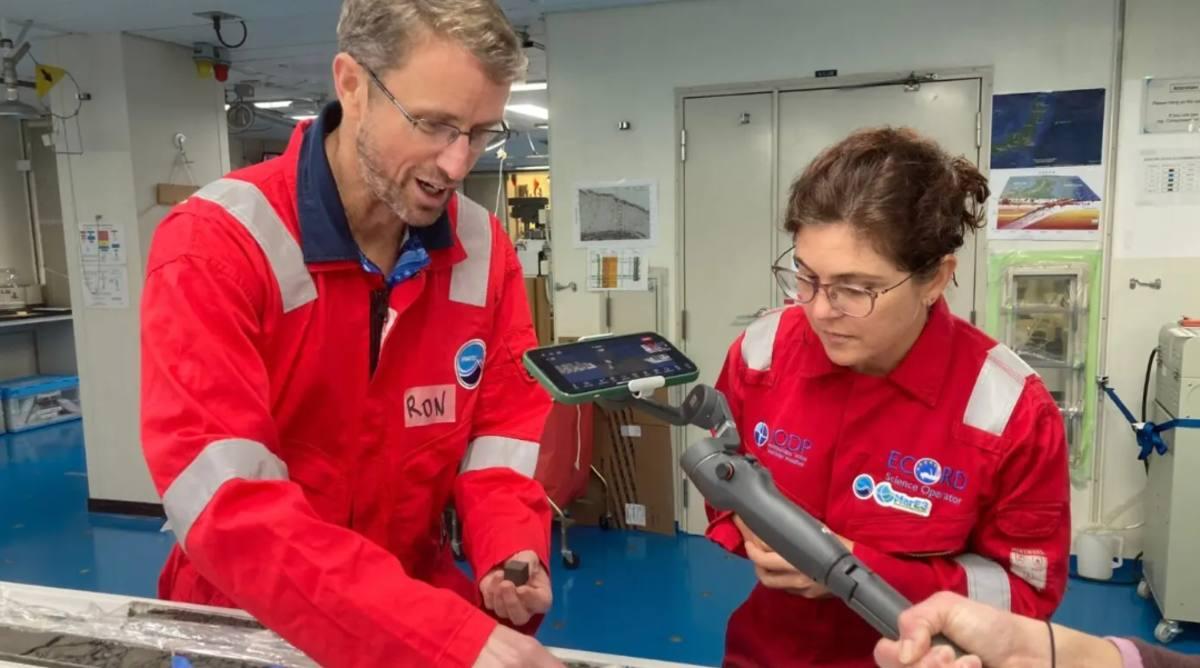
Associate Professor Ron Hackney (left) inspecting core samples extracted from beneath the seafloor.
Almost 15 years since the earthquake, and scientists are still intrigued by its impact. To satiate their curiosity, a team of geologists entered the Japan Trench while aboard the drilling vessel Chikyu in 2024. They went on the expedition to determine the cause behind the rupture of the Tōhoku-oki fault, triggering the earthquake. Drilling about 25,938 feet deep below the sea surface, the research set a Guinness World Record for the deepest scientific ocean drilling ever done. They analyzed the fault zone and extracted samples from within and around the area for further study. That's how the slippery clay was found to be the secret culprit behind the 2011 earthquake. The layer of clay was not more than a few meters thick and was extremely weak, tender, and slippery.
Australian National University (ANU) geophysicist Associate Professor Ron Hackney found the consistency of the sediment to be "surprising and unusual." Hackney revealed that this is the first study to interlink loose sand in the fault zone with ancient sediments deposited on the seafloor. “This work helps explain why the 2011 earthquake behaved so differently from what many of our models predicted,” Hackney, who is also Director of the Australian and New Zealand International Scientific Drilling Consortium (ANZIC), said in a statement.
This discovery doesn't just explain the devastating natural disaster of 2011 but can potentially prevent such catastrophes from happening again. Understanding the surface sediments of the vault will help scientists figure out the size and extent of a tsunami it might trigger when ruptured.
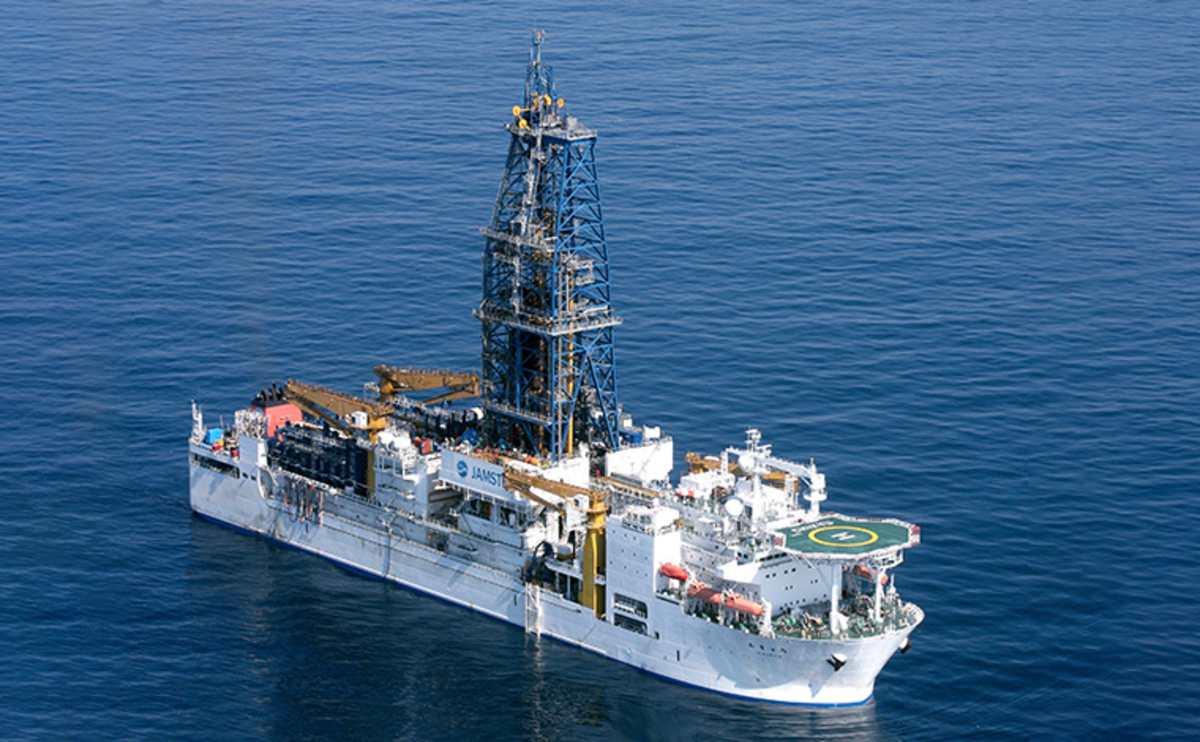
The Deep-sea Scientific Drilling Vessel CHIKYU.
“This clay-rich ancient mud formed from microscopic particles that slowly settled on the seafloor beneath the Pacific Ocean over time—a process that took place over 130 million years—as the Pacific tectonic plate slowly moved west to ultimately be forced under Japan,” said Hackney. “The fault zone formed in that weak layer of clay as those sediments slowly slid under Japan, moving roughly 10 centimeters [around 4 inches] a year," he revealed. Hackney explained that because the clay layer is pressed between rocks, it acted like a natural "tear line," causing the fault to form. The impact of the 2011 earthquake was larger than usual because it was the result of years of pressure build-up. When the pressure was released, the slippery clay provided little to no resistance, allowing the degree of disaster to escalate.
“The rupture plane was just a centimeter [about 0.4 inches] or so thick, yet it allowed between 50 and 70 meters [164 to 229 feet] of movement on the fault and caused the seafloor off Japan to rise abruptly by several meters during the earthquake," Hackley said. “There are indications that the sediments being drawn towards and under Sumatra may also contain a weak clay layer," he suggested.