
A Deadly Epidemic Has Reached Antarctica. Native birds Are Its First Victims
Published Feb. 6 2026, 11:06 a.m. ET

Scientists evaluate skua carcasses at Beak Island in Antarctica in March 2024.
Avian flu has claimed its first wildlife victim in Antarctica, and the alarming findings have been published in the journal Scientific Reports. During a 2024 survey, scientists found that over 50 skuas died due to highly pathogenic avian influenza virus H5N1. All these deaths happened in the summers of 2023 and 2024. In the past, scientists had detected the virus in two dead skuas and one kelp gull but could not verify the reason. It is the first time the team has conclusively determined that the virus caused the death.
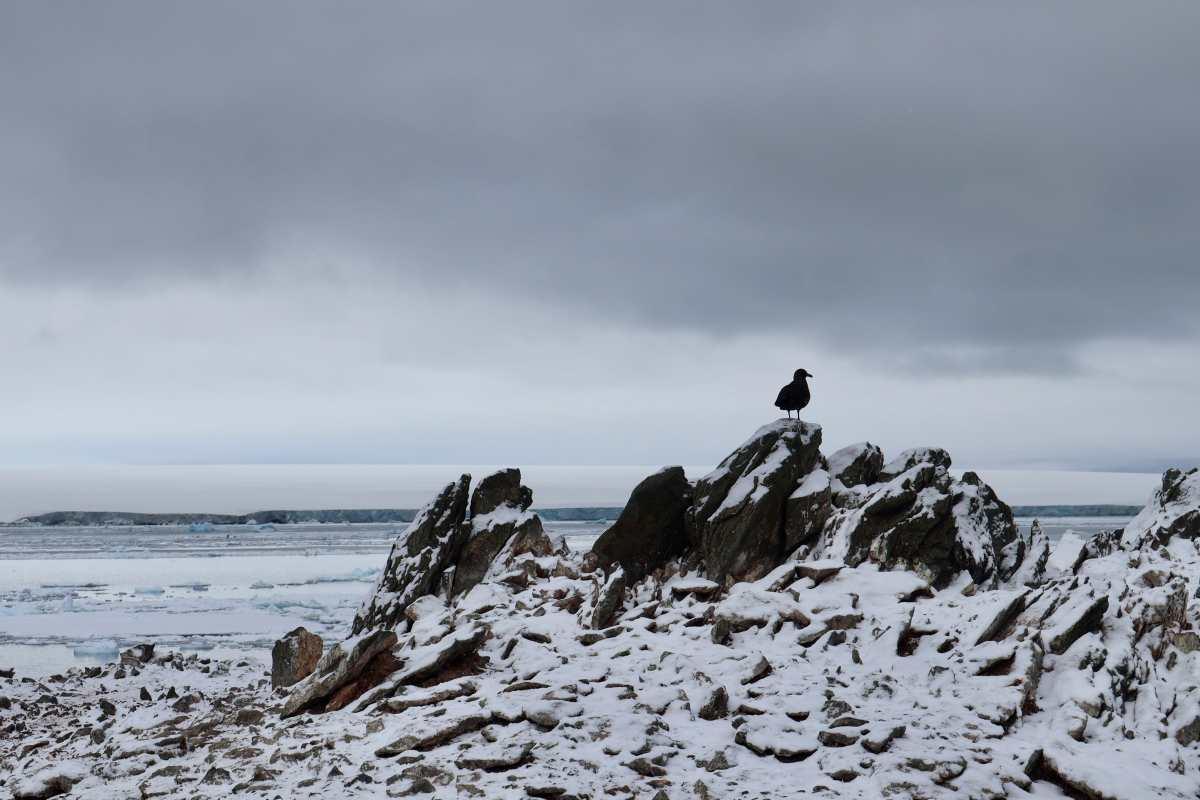
A skua perches on a cliff in Antarctica in March 2024.
The finding is valuable, as it sheds light on how skuas can spread the virus far and wide in Antarctica. Skuas are predatory birds that mostly live in polar and subpolar environments. They play the crucial role of scavengers in the continent’s ecosystem. Now this fact places the bird in a prime position to spread the virus throughout the ecosystem. Wildlife in Antarctica is already in a vulnerable position because of its extreme habitat and other exploitative factors. The issue of avian flu may disrupt this already weakened system like a pack of cards, with mass devastation.
The most recent census recognized 800 breeding pairs of skuas on the continent. At present, it is difficult to determine how the sustenance of this species has been impacted by the loss of 50 specimens. Researchers further note that the virus leads to intense suffering in these birds. It first attacks the brain, resulting in neurological symptoms such as abdominal stretching and a twisted neck. The birds suffering from it are often seen swimming or walking in circles. This causes them to either clash with an object or fall out of the air.
The 2024 research expedition in Antarctica commenced in March 2024, after the breeding season of penguins and skuas. Researchers examined the wildlife in ten locations spread across the South Shetland Islands, the Antarctic Peninsula, and the northern Weddell Sea. Every time the team came across dead or infected creatures, they gathered tissue samples and environmental samples to conduct necropsies along with further investigation. As the expedition progressed, it became obvious that skuas have been significantly affected by H5N1.
H5N1 was detected in skuas at three locations, namely Hope Bay, Devil Island, and Beak Island. The study claims that the south polar skuas experience a mass die-off in Beak Island. “We diagnosed high pathogenicity avian influenza as the cause of death for nearly all of the dead skuas we found at Beak Island,” said first author Matteo Iervolino, a Ph.D. candidate at Erasmus MC in Rotterdam, The Netherlands, per UC Davis. “There, I could really see with my eyes the impact this virus can have on these populations.”
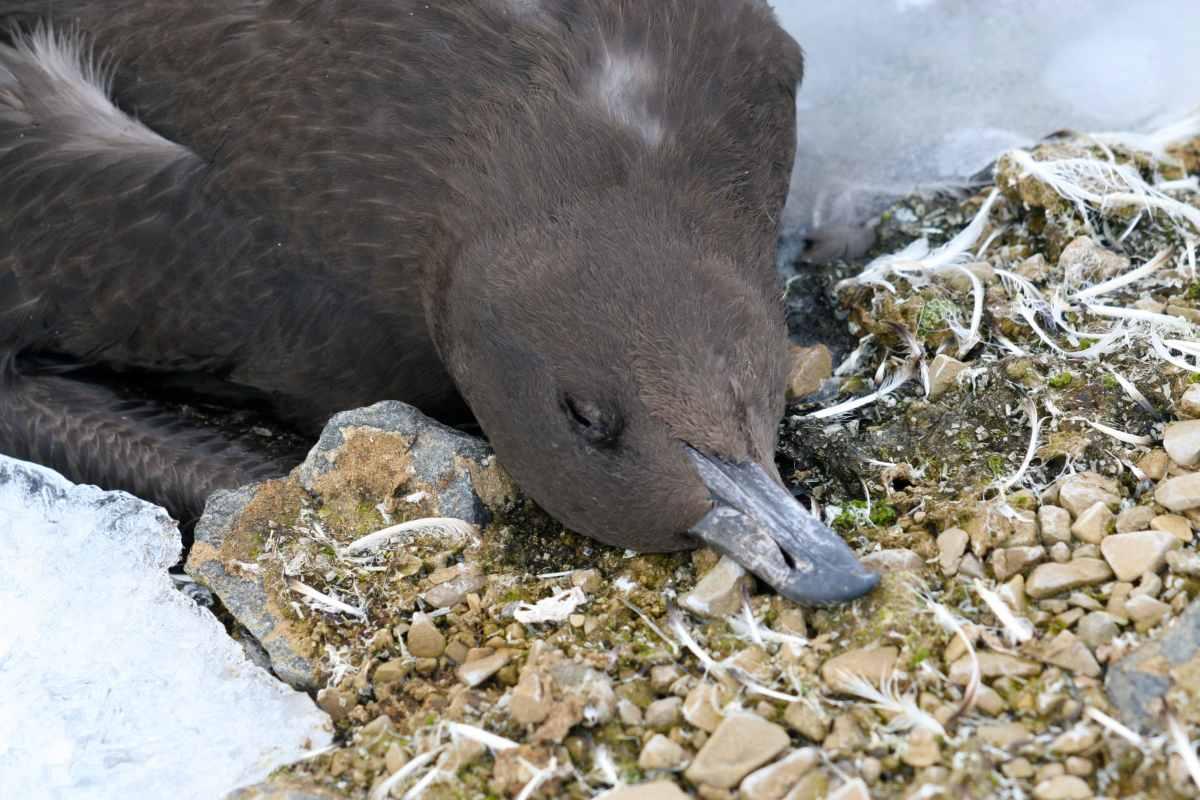
The cause of death for nearly all dead skuas found at Beak Island in March 2024 was avian influenza
Researchers assert that humans are partly responsible for the devastation avian influenza is causing on the continent and other places. The virus was first detected in 1996 on a domestic goose farm in southeast China. For years, humans either ignored the virus or failed to control it in the poultry industry. “We let the virus slip out through our fingers when it first emerged in the poultry industry,” shared corresponding senior author Thijs Kuiken, a professor at Erasmus MC. “Once it got into wild bird populations, we lost the ability to control this virus. Now it’s established in wild bird populations in all the continental regions of the world except Oceania.”
Eventually, the virus spread to Europe, the Middle East, Africa, North America, South America, and finally Antarctica. The virus lineage that caused the deaths of skuas has already killed many sea lions and elephant seals in Argentina. It has also severely hampered the lives of minks, foxes, otters, dairy cows, and other mammals, as well as birds across continents. To date, it has killed around 1,000 humans. It is vital to monitor avian flu and introduce solutions, according to scientists. “Everything points toward this virus spreading further,” Kuiken said. “If nobody is watching, we won’t know what is happening.”