
Scientists Just Found a Weird Form of Water That’s Both Solid and Liquid at the Same Time
Published Jan. 20 2026, 10:00 a.m. ET

Crystals switching between liquid and solid state of matter.
A recent finding solved a mystery that scientists have been looking for: what’s inside distant planets like Neptune and Uranus? They discovered that deep within these ice giant planets lies “superionic ice,” a term given to a form of water that’s neither liquid nor solid. How does that work? Evidently, oxygen atoms of the H2O are locked in while the hydrogen atoms roam free, creating a substance that cannot be defined as one single state of matter. Scientists used extremely powerful X-ray lasers to squeeze samples of water to high pressure, reaching 180 gigapascals, which is found in the ice giant planets, and heating them to thousands of degrees. The simulated atmospheric pressure is calculated to be 1.8 million times higher than that on Earth.
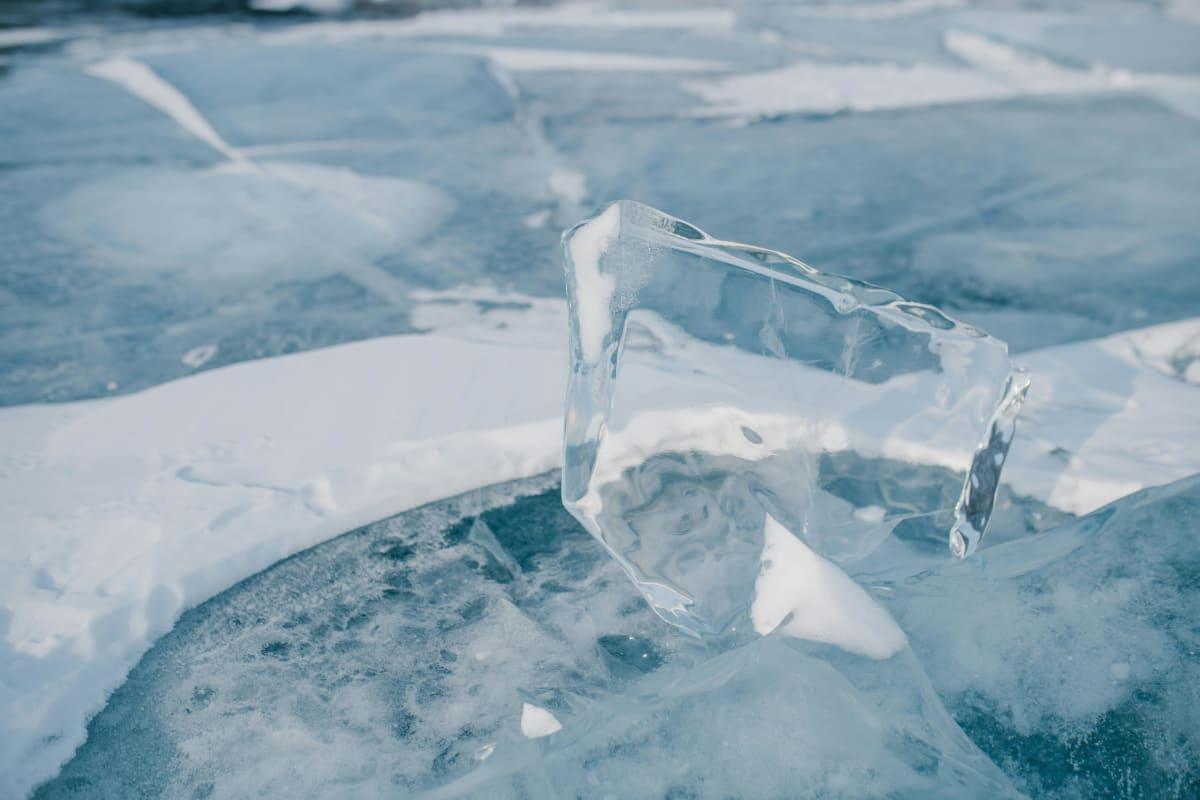
Close-up of water and ice
The findings, published in the journal Nature Communications, showed evidence for what theories had previously predicted. Researchers found that the oxygen atoms are linked in an irregular structure, almost like a crystal, unlike their usual orderly arrangement. But the crystal lattice is constantly shifting between solid and liquid-like properties, as if it cannot pick a side. The fact that researchers were able to observe “superionic ice” under atmospheric pressure, possibly mimicking that of the ice giant planets, is quite telling. It means that these planets indeed contain the bizarre substance within them that’s neither ice nor water, and atmospheric pressure plays a major role. It is ironic that these “ice giants” do not actually have ice.
That’s because the high pressure and temperature of Neptune and Uranus compress and crush water into an anomaly that’s known as the “superionic ice.” It explains why some observations about these planets have been odd and unusual, like the slightly tilted magnetic sphere that does not match the spinning axis of these planets. In the recent experiment, scientists observed diffraction patterns clearer than those in previous studies. They synchronized the X-ray emission to the laser-driven shock compression and found that each X-ray pulse lasted about 50 femtoseconds. One femtosecond is so small that stretching it to one conventional second would make it last for 32 million years.
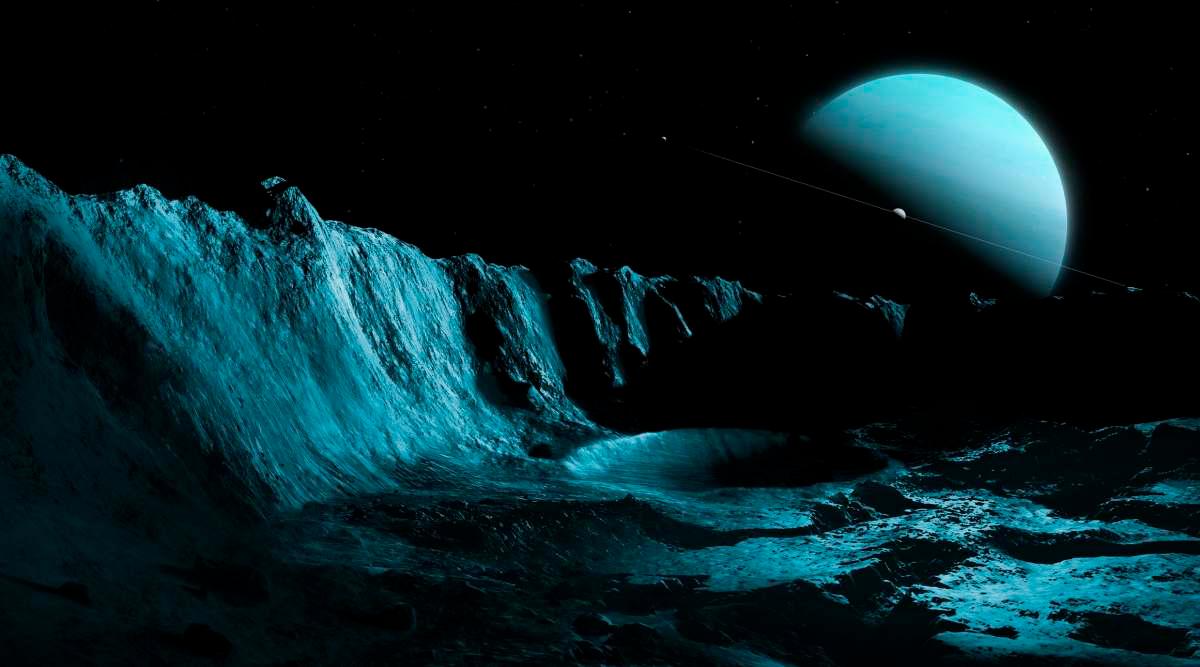
Uranus planet
They observed a diffraction pattern because the X-ray pulses lasted for such a short span. In such a short interval, it is difficult for molecules to move significantly during the measurement, making it more prominent. Imagine a spinning fan that looks blurry when it is rotating in moderate speed, but the blades appear still when the speed is too high. That’s exactly how scientists captured a clearer picture of the changing state of matter of the “superionic ice.” Although the molecules cannot make up their mind, a distinct pattern starts to form at one point where about 25 to 32% of the layers stack together. But the big question is: are these stacking patterns temporary or permanent? If they are fleeting, it won’t make much of a difference on the ice giants. However, if these structures are stable in can create changes in the long run.
The defects, if they persist, could change the planetary interiors like the movement of heat and electricity through the material. These changes would eventually impact the magnetic fields of these planets. The hydrogen atoms that are roaming free in the “superionic ice” tend to create magnetic fields through dynamo action, and any structure hindering this could change the shape and the field’s strength.