
Experts Tracked 8,000 Galaxies and Found Active Black Holes Where They Weren't Supposed to Be
Published Jan. 13 2026, 8:23 a.m. ET

This artist’s conception captures a snapshot of galaxy sizes and the frequency of black holes within them.
Black holes possess the powers of both a creator and a destroyer. Residing within the heart of some galaxies, a.k.a. Active Galactic Nuclei (AGN), they often notoriously eat up the stars that dare to come close. But despite this fiendish reputation, they boast of a handsome portfolio of tasks that they do to catalyze the evolution of galaxies, acting as invisible cosmic engineers. For years, scientists thought that powerful, active black holes were largely confined to the biggest galaxies. A new study presented in a press conference at the 247th meeting of the American Astronomical Society challenged this long-held belief.
Researchers from the Center for Astrophysics, Harvard & Smithsonian, and the University of North Carolina at Chapel Hill investigated more than 8,000 nearby galaxies and created the most comprehensive census to date that illustrates the rising frequency of active black holes, not just in bigger galaxies, but rather in dwarf galaxies and those similar in mass to the Milky Way. From earlier studies, they thought that every 1,000 dwarf galaxies host about 10 active black holes. But this study calls into question this understanding, hailed as fact. According to the new census, the number of black holes would lie somewhere between 20 and 50.
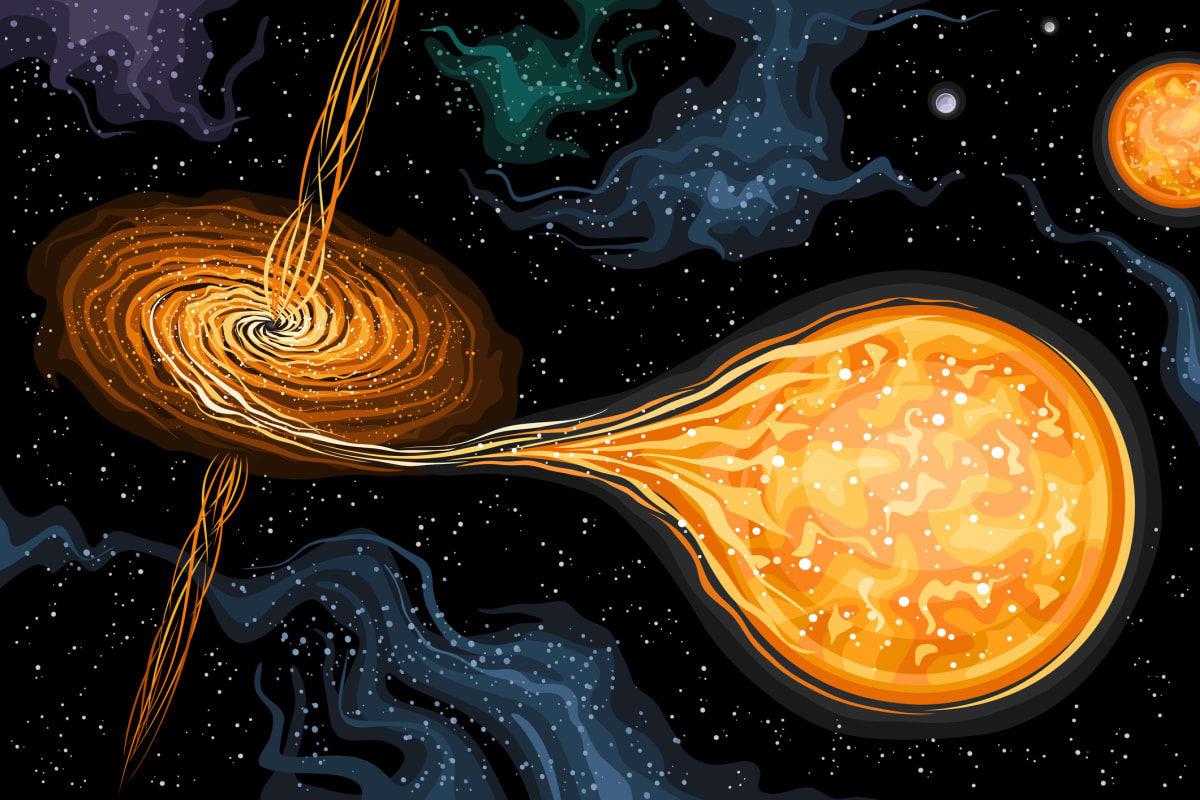
Depiction of a black hole eating a star
"The intense jump in AGN activity between dwarf galaxies and mid-sized, or transitional galaxies tells us something important is changing between the two," Mugdha Polimera, an astronomer at the CfA and the lead author of the new census, shared in the press release. "It could be a shift in the galaxies themselves, or a sign that we’re still not catching everything in the smaller ones and need better detection methods. Either way, it’s a new clue we can’t ignore," Polimera added.
To grasp the complete picture of how black holes interact, grow, and co-evolve with galaxies, the team utilized a combination of optical, infrared, and X-ray instruments that could detect the faintest signs of black hole activity. Apart from understanding the partnership between black holes and galaxies, their objective was to understand the relationship between the mass of the galaxy and the black holes it hosts. As it turned out, even the tiniest, dwarf-sized galaxies were hosting black holes, in a number that was previously observed only in big or jumbo-sized galaxies.
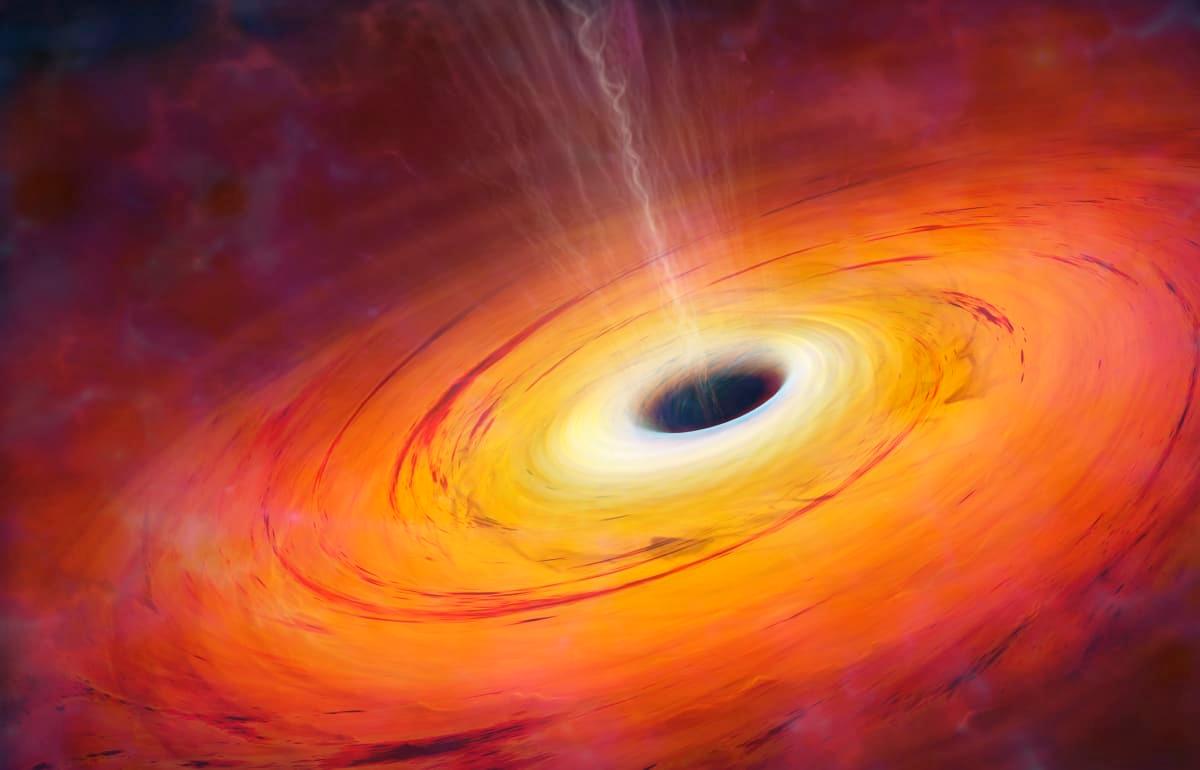
Artist's representation of a black hole. (Representative Image Source: Getty Images | Mark Garlick)
Professor of physics and astronomy at UNC and co-author of the new census, Sheila J. Kannappan, reflected that the supermassive black hole at the center of our Milky Way galaxy could have been formed by the merging of several smaller black holes. “We believe that the Milky Way was formed from many smaller galaxies that merged, so the dwarf galaxies' massive black holes should have merged to form the Milky Way's supermassive black hole,” she said, adding, “These results are essential for testing models of black hole origins and their role in shaping galaxies."