
Astronomers Measure Mass of Rare Saturn-Sized Planet for the First Time
Published Jan. 2 2026, 6:11 a.m. ET

Astronaut looking through the window of a spaceship
The planets in our galaxy are surrounded by stars and other celestial bodies, unlike some distant and isolated planets in space. Quite far beyond the Milky Way is a lone planet that astronomers found new information about. For the first time, scientists were able to measure the mass of the distant planet, which is about a fifth of the mass of Jupiter, according to the study published in the journal Science. They also calculated the distance from Earth to be under 10,000 light-years. According to the scientists, the massive size of the rogue planet—close to that of Saturn—suggests that it was once part of a planetary system. It was likely expelled out of the planetary system due to gravitational upheavals, forcing it into space and roam around the cosmos. There isn't one, but several such rogue planets that are dim and small and very hard to detect.
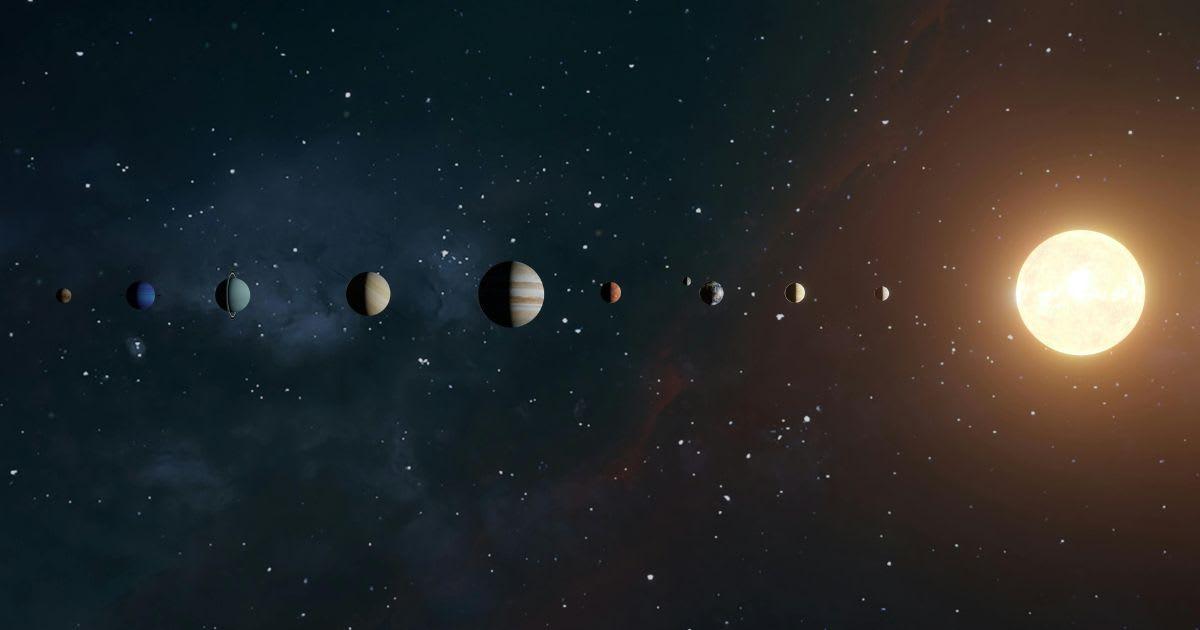
Planets in our solar system.
Since these planets are isolated, without stars, and don't have light of their own, even some of the powerful telescopes might miss their presence. Astronomers rely on a phenomenon called microlensing to detect distant planets when they pass in front of a distant star. The planet's gravity acts like a lens, briefly magnifying the light of the distant star. However, more than the detection of these lensing planets, calculating their mass and distance is a mammoth task. Since they are not part of a planetary system, the lack of context clues makes it difficult to measure the distance, which in turn is important to calculate the mass. This case proved to be an anomaly that worked in favor of the researchers. On May 3, 2024, the initial lensing was recorded on multiple ground-based telescopes in Chile, South Africa, and Australia.
Planets and exoplanets of unexplored galaxies.
Simultaneously, the now-retired Gaia Space Telescope captured the phenomenon. But because it was located 932,057 miles from Earth, the angle captured was different than that of the ground telescopes. As a result, the light from the background star did not reach Gaia and the Earth at the exact same moment. The slight difference in Gaia's viewpoint caused brightening from the lensing event to appear at different times for Gaia and the ground-based telescopes. This minute difference in time helped scientists compare the observations and estimate the distance of the planet from Earth. According to the calculation, the distant planet is located about 9,785 light-years away from Earth, and its mass is about 22% of Jupiter's mass.
Depiction of planets orbiting in a pool of stars and dark space
Gavin Coleman, an astrophysicist from Queen Mary University of London, believes that studying rogue planets will be a huge part of future space explorations. He notes that the NASA Nancy Grace Roman Space Telescope campaign, which is scheduled for launch in 2027, will make future observations much easier. "This finding demonstrates how coordinated observations can overcome difficulties in determining both the position and mass of a rogue planet and improve the understanding of how these planets form," Coleman said. The new, soon-to-launch telescope can help scan the space for distant planets about 1,000 times faster than existing space telescopes like NASA's Hubble. “Simultaneous space- and ground-based observations of microlensing events could be applied in the planning of future exploratory missions and could lead to a better understanding of how planets form across the Galaxy," he said in a statement.