
NASA's Telescope Spots Possible Sign of Life on Distant Earth-Like Exoplanet
Published Dec. 9 2025, 8:36 a.m. ET

Artist's concept of TRAPPIST-1 and its 4 most closely orbiting planets, all of which have been observed by James Webb Space Telescope. (Image Source: NASA, ESA, CSA, STScI, Joseph Olmsted (STScI))
Earth, though seemingly huge for us, is just a Lilliputian blue-green ball swimming around in the infinite lagoon of dark space. The fathomless darkness of this space often makes scientists stay up at night and question, “Are we alone in the universe?” Science fiction has jostled our imaginations with pictures of humans venturing on interstellar adventures and encountering aliens, of magical worlds hiding far away, and of robots that save humanity. In reality, however, no astronaut has officially bumped into an alien so far. The abysmal ocean of dark space hasn’t revealed any definitive signs of life yet. But there are clues. In a new study published in Astrophysical Journal Letters, scientists documented the discovery of a biosignature gas on a distant exoplanet.
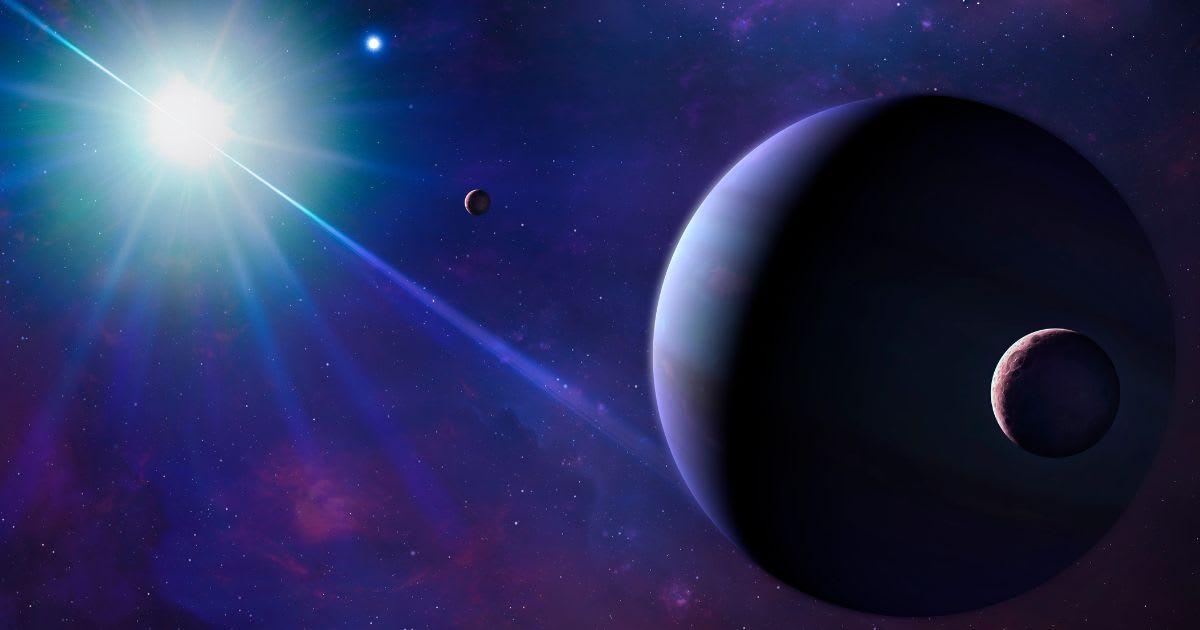
Depiction of an exoplanet around Earth
According to NASA, there is an exact habitat that life needs for its existence. If Earth, for example, were in place of Pluto, life wouldn’t exist here. Due to its large distance from the Sun, everything would freeze into a gigantic ice ball. On the other hand, if Earth were in place of Mercury, everything would vaporize into steam, like a big cauldron of boiling soup. Luckily, the distance Earth orbits the Sun is “just right” for water to remain a liquid. This distance from the Sun is called the “habitable zone” or the “Goldilocks zone.” It is a zone where the star is neither too hot nor too cold for liquid water to exist.
Lately, scientists have been keeping an eye on an ultracool red dwarf star named TRAPPIST-1, which hosts a stellar system of seven Earth-sized planets circling it. TRAPPIST-1 is around 39 light-years away from Earth, in the constellation Aquarius. Observations revealed that the star resembles a miniature version of our solar system. If hosting seven gigantic planets wasn’t too exhausting, the small star is also notoriously active. Roughly six times per day, it erupts with energy bursts, which can threaten the planetary atmospheres within the system and obstruct scientists’ observations.
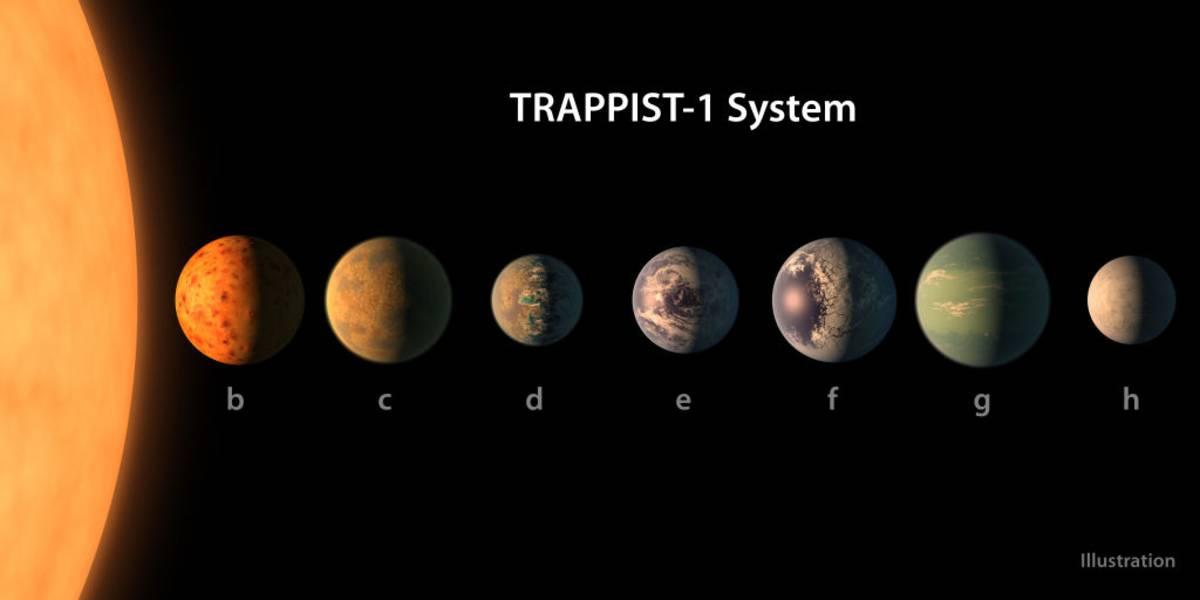
NASA telescope reveals a new star system with seven Earth-sized planets hosted by a single star
The TRAPPIST system will comfortably fit inside the orbit of planet Mercury, researchers say. A year for any given TRAPPIST planet will last mere days on Earth. In this study, lead author and scientist from the University of Arizona’s Lunar and Planetary Laboratory, Sukrit Ranjan, presented a detailed analysis of several potential scenarios for what the planet’s atmosphere and surface may be like. "The basic thesis for TRAPPIST-1e is this: If it has an atmosphere, it's habitable. But right now, the first-order question must be, 'Does an atmosphere even exist?’" Ranjan speculated, according to a press release.
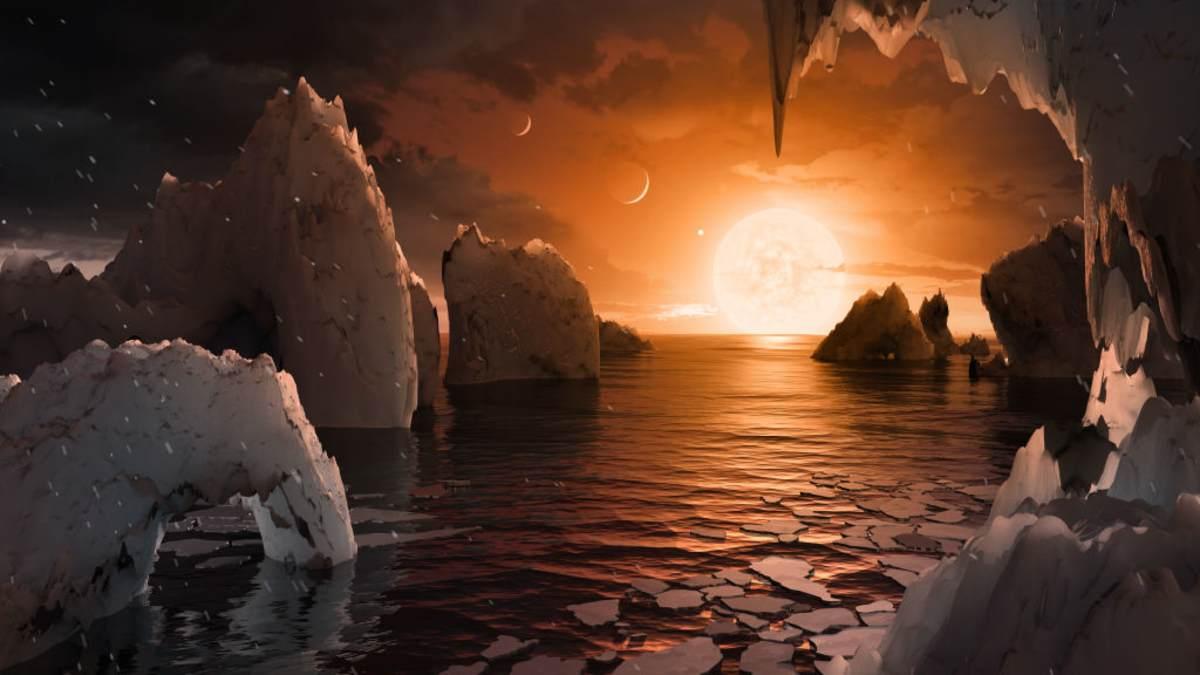
Picture by NASA depicting a distant exoplanet TRAPPIST-1e that can potentially hold signs of life
For investigation, scientists locked NASA’s James Webb Space Telescope’s Near-Infrared Spectrograph, or NIRSpec, instrument at the TRAPPIST system. During the transit, starlight was observed filtering through the planet’s atmosphere. But the most stunning observation, perhaps, was the discovery of hints that indicated traces of methane. “We reported hints of methane, but the question is, 'is the methane attributable to molecules in the atmosphere of the planet or in the host star?'" Ranjan reflected. The planet, named TRAPPIST-1e, resembled Saturn's methane-rich moon Titan.
These ideas sound intriguing, but Ranjan says, more rigorous studies are needed to determine whether TRAPPIST-1e has an atmosphere at all or the hints of methane are linked to the host star. "These observations will allow us to separate what the star is doing from what is going on in the planet's atmosphere – should it have one," Ranjan clarified.