
Scientists Find Planet Orbiting Sun-Like Star Remarkably Similar to Earth — but There's One Problem
Published Jan. 29 2026, 3:10 a.m. ET

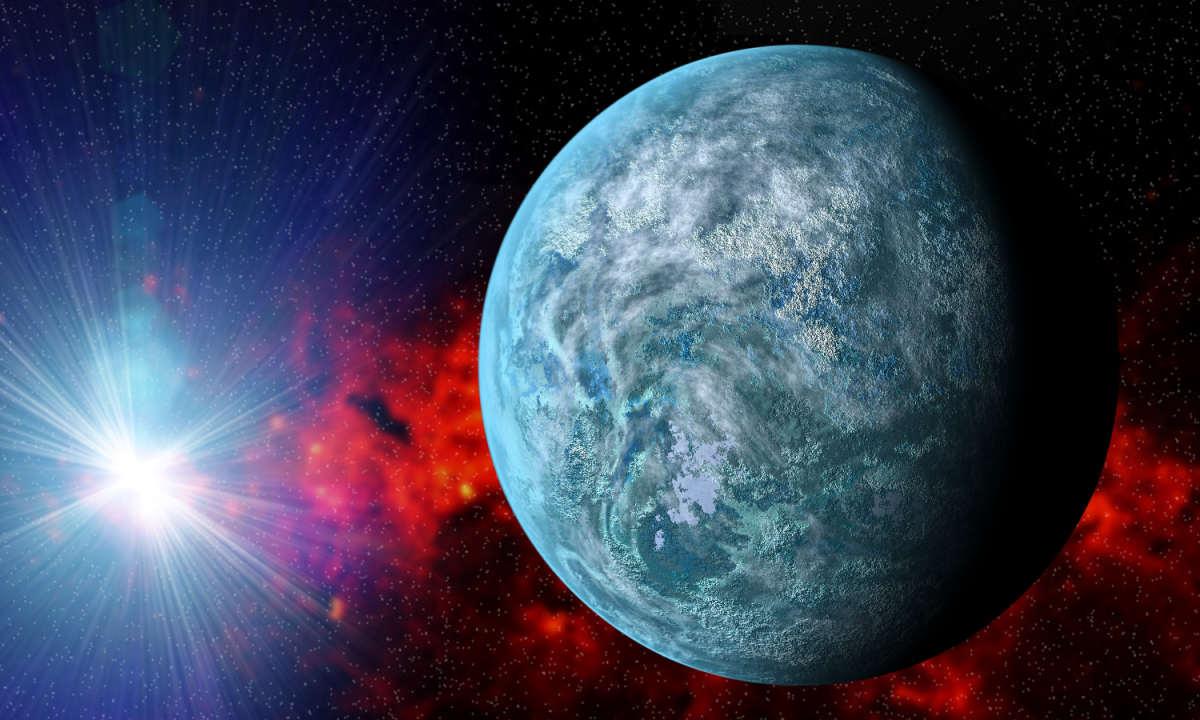
Artist's concept of exoplanet candidate HD 137010 b, dubbed a 'cold Earth' (Cover Image Source: NASA/JPL-Caltech/Keith Miller (Caltech/IPAC))
A new candidate for a planet similar to but slightly larger than Earth could be about 146 light-years away. However, one unique characteristic of the candidate planet HD 137010b, which revolves around a sun-like star, is its ice-cold temperature. According to the new study, published in The Astrophysical Journal Letters, the planet could be much colder than perpetually frozen Mars. A team of scientists led by astrophysics Ph.D. student Alexander Venner of the University of Southern Queensland relied on data collected by NASA's Kepler Space Telescope, which retired in 2018. The candidate planet might fall within its star's “habitable zone,” meaning it allows liquid water to remain on the planet's surface. Since planets orbiting stars are known as exoplanets, "candidate" HD 137010b would be the first exoplanet with Earth-like properties.
Earth-sized exoplanet in space
But having properties similar to our planet doesn't make the "candidate" planet habitable. Earth revolving around the Sun gets ample heat and light to support life and biodiversity. But although HD 137010b orbits a sun-like star, the amount of light and heat it receives is less than a third of Earth's. Despite the star being similar to the Sun, it is exponentially cooler and dimmer in comparison. Researchers have revealed that the surface temperature of the "candidate" exoplanet, aka "cold Earth," could be minus 68 degrees Celsius, a few degrees colder than Mars' surface temperature of minus 65 degrees Celsius. It takes various measures for astronomers to identify an exoplanet. However, it only took a single "transit" for researchers to discover HD 137010b. Transit here refers to the moment an exoplanet crosses the face of its star, almost eclipsing it.
Depiction of exoplanets in space
This detection occurred during Kepler's K2 mission, and the researchers continue to explore the data, seeking signs to upgrade the exoplanet from the "candidate" to the "confirmed" category. Just a single transit was enough for the team to track the hours it took for the planet's shadow to pass across the star. The result showed the transit lasted 10 hours, which is less than the time it takes Earth to pass across the Sun's face: 13 hours. For an initial observation, the data were surprisingly accurate, but there's a loophole that the researchers still need to find a way around. It's important to know if these transits occur regularly to confirm whether the eclipse was caused by an exoplanet or not. However, observing more transits would be tricky and time-consuming, considering the "candidate" planet's similarity to Earth. Just like our planet, HD 137010b has a large orbital distance, which means the frequency of transits is lower.
Earth-like exoplanet with two moons in deep space
Earth takes a year to repeat its transit period. Since the orbital distance seems similar, researchers might have to wait a year or even longer to observe another transit of the "candidate" exoplanet. That's why exoplanets with tighter orbits are easier to detect compared to those with properties similar to larger planets like Earth. Now that the Kepler Telescope is retired, scientists hope to gather information on the next transit through NASA’s TESS (the Transiting Exoplanet Survey Satellite) or from the European Space Agency’s CHEOPS (CHaracterising ExOPlanets Satellite), both exemplary at detecting planetary movements. Further study would even help detect if the icy exoplanet can potentially become a temperate or water exoplanet, capable of habitation.
Based on their modelling of its potential atmosphere, scientists believe that HD 137010b has a 40% chance of being within a "conservative" habitable zone and a 51% chance of being on the outer edge of the zone. However, there are chances that the exoplanet might not fall into the habitable zone at all.