
Scientists Discover Exoplanet With 18 Times More Mass Than Jupiter in Distant Space
Published Dec. 10 2025, 2:46 a.m. ET

Brown dwarf with a planet in far space
Stars are bright. Extremely, intensely bright. This intense glare can sometimes make it harder to view other celestial objects creeping around it. That’s why scientists designed an instrument called coronagraph in the early 1930s. Coronagraph, as NASA describes, is inspired by solar eclipse, where the disk of the Moon overshadows the light of the Sun. Nicknamed “starglasses,” coronagraphs use a cool system of disks, mirrors, and masks to suppress the overwhelming glare of the stars and illuminate their muted neighbors and capture their stories. In a series of two new studies, both published in Astrophysical Journal Letters, NASA scientists documented the discovery of a brown dwarf and a superjovian exoplanet made using two trailblazing coronagraph-based telescopes.

Exoplanet surrounded by a starry nebula
These two stellar candidates are the first discoveries made in the OASIS (Observing Accelerators with SCExAO Imaging Survey) project. The project combines measurements from space along with Subaru Telescope’s state-of-the-art imaging technology to reveal mysteries of the hidden worlds. The OASIS project involves precise measurements from Hipparcos and Gaia, two of the space missions initiated by the European Space Agency.
Thayne Currie, OASIS Principal Investigator, explained in a press release that OASIS has enabled scientists to “find, weigh, and track the orbits of massive planets around stars” that they never thought of looking at before. The first discovery, made using the Subaru telescope, was of a giant gas exoplanet HIP 54515 B, and the second discovery was of a brown dwarf HIP 71618 B. These discoveries have enabled scientists to set the target for the missions of NASA’s Nancy Grace Roman Space Telescope, set to launch in 2027.
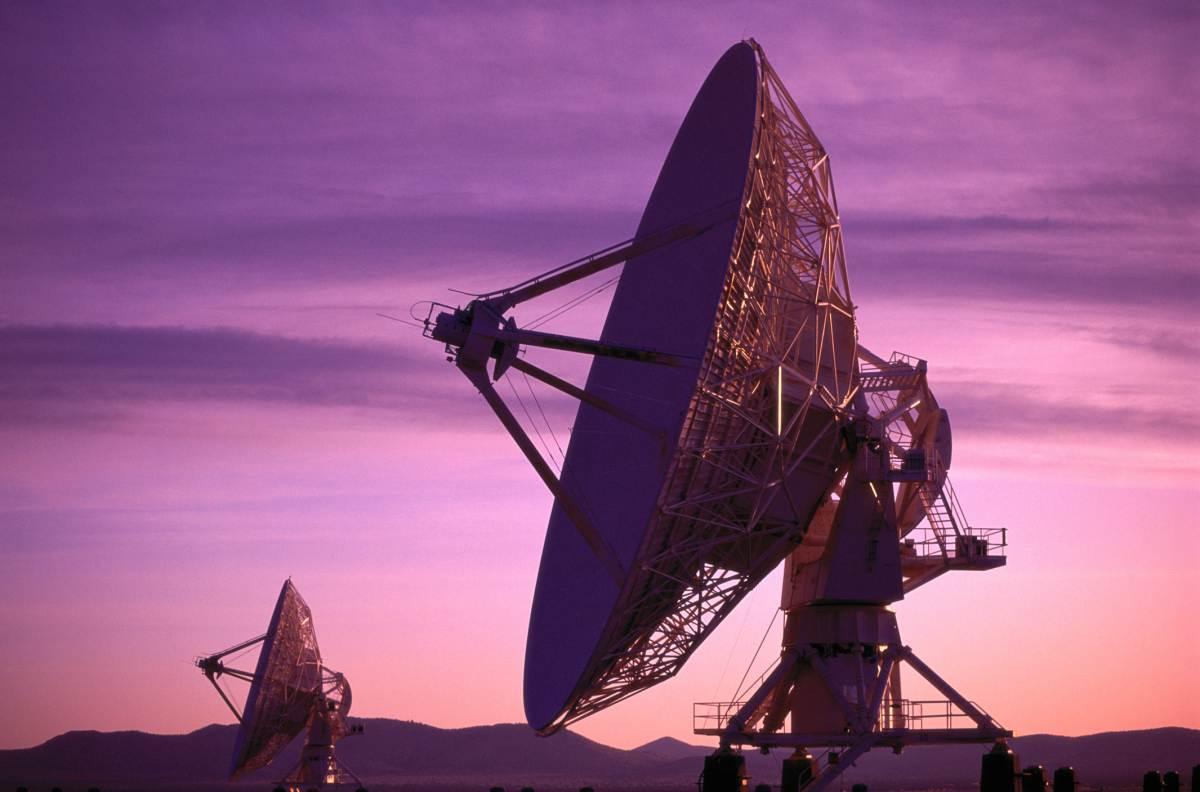
A radio telescope.
HIP 54515 B, a planet weighing 18 times that of Jupiter, is located 271 light-years away, inside the constellation LEO, whereas HIP 71618 B is about 60 times the mass of Jupiter, located in the constellation Bootes, 169 light-years away. Far above the Earth’s surface, swimming within the dark space are celestial objects and glittering balls that keep on forming and dying, as they encounter constantly erupting stellar masses.
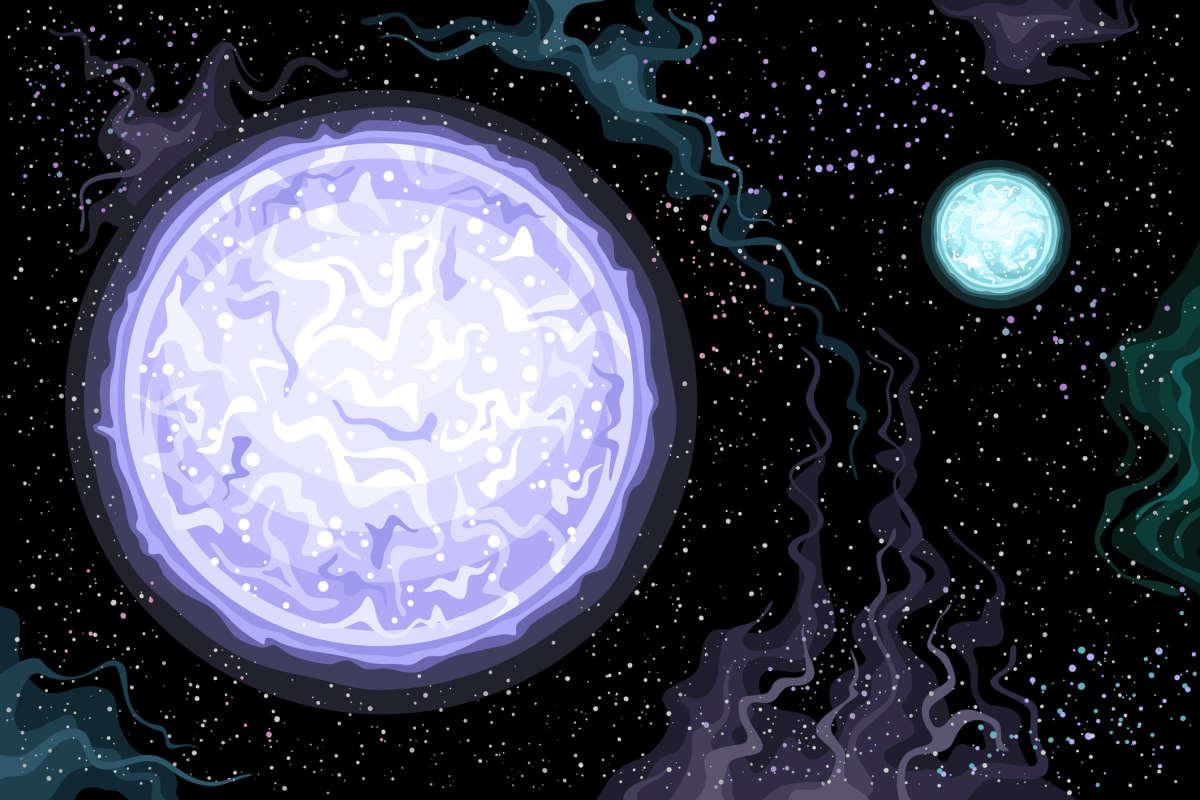
A binary star system with a white dwarf and a brown dwarf
A brown dwarf, also known as a “failed star,” is neither a star nor a planet. It is a failed star that resembles a planet. Like planets, they are ultracool to radiate any visible light, and like a star, they have the potential to trigger fusion reactions in their core, generating tremendous amounts of infrared heat. That’s why scientists need telescopes with infrared sensors to detect and capture the details of brown dwarves as they lurk around. As a video explains, brown dwarves only become denser with the addition of mass, never bigger.
The newly discovered brown dwarf, HIP 71618 B, is circling at a distance approximately equal to what Saturn has when it orbits the Sun. On the other side, HIP 54515 B is circling the star at a distance at which Neptune orbits the Sun. Reflecting on the discoveries, Mona El Morsy, lead study author, said, “These new discoveries could help clarify how planets and brown dwarfs form and how their atmospheres evolve, and provide NASA with additional targets for honing the exoplanet imaging technologies we will need to detect a habitable Earth-like planet in the future.”