
NASA's Hubble May Face an Early End — Experts Point to 2029 as a Risk Year
Published Jan. 12 2026, 5:00 a.m. ET

Hubble Space Telescope in deep space.
NASA's Hubble is an iconic telescope for space enthusiasts. Since its 1990 launch, the space telescope has rendered outputs, providing groundbreaking discoveries to astronomers on Earth. Unfortunately, the iconic Hubble is aging towards its ultimate demise. A team of scientists analyzed how long the space telescope could sustain, and an early death may be one of the possibilities. Although the Hubble orbits at an altitude above our planet, it is affected by atmospheric drag, which means its movement faces some resistance from the planet's atmosphere. However, the resistance may vary depending on the density of the atmosphere, which in turn relies on the solar flux levels. According to the Hubble Reentry Tracker, the solar flux level periodically changes with solar cycles every 11 years.
But there's been an unexpected surge in the current solar flux levels. Solar activities have been intense and more elevated than previously predicted. If this pattern were to continue, the reentry of Hubble into Earth could happen earlier than expected. The high level of solar flux increases atmospheric density, which in turn escalates the resistance or the atmospheric drag experienced by the space telescope. As a result, Hubble's wear and tear will rise exponentially, slowly pushing it back into the Earth, only for it to meet a fiery death on the way. The reentry, which will perish the space telescope, is predicted to occur in the next 5-6 years. But if the high levels of solar flux continue, the reentry might happen in 2029, which gives Hubble just three more years of spatial orbiting.
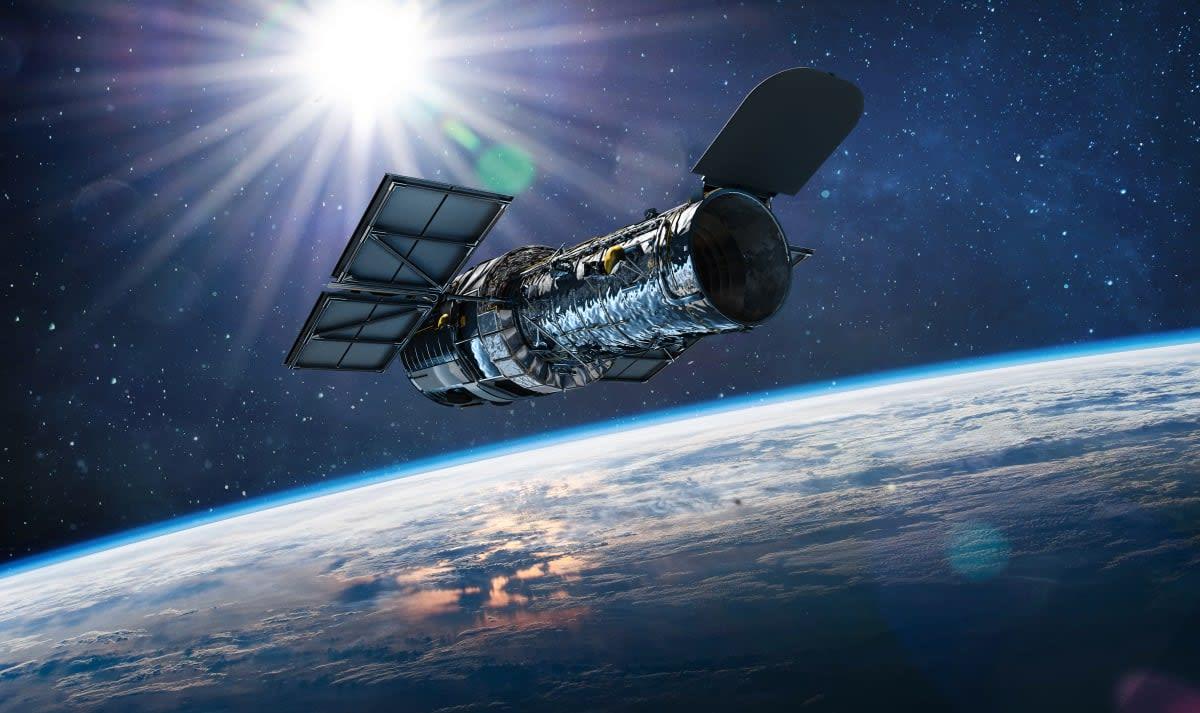
The Hubble telescope in orbit around Earth.
However, that's the worst-case scenario. In case things work out in favor of Hubble, either organically or by the efforts of the astronomers, it could survive for another 14 years until its reentry in 2040. But if no action is taken to assess the situation, the chances of the telescope perishing in the next decade are certain. The Hubble Reentry Tracker website is curated to keep a close eye on fluctuations and movements of Hubble as it hovers in space. The site was initially designed as a quick test project, but has now become pivotal for the agency, as it allows scientists to constantly keep a check on the telescope. The tracker will continue to update and improve until Hubble reenters the Earth.
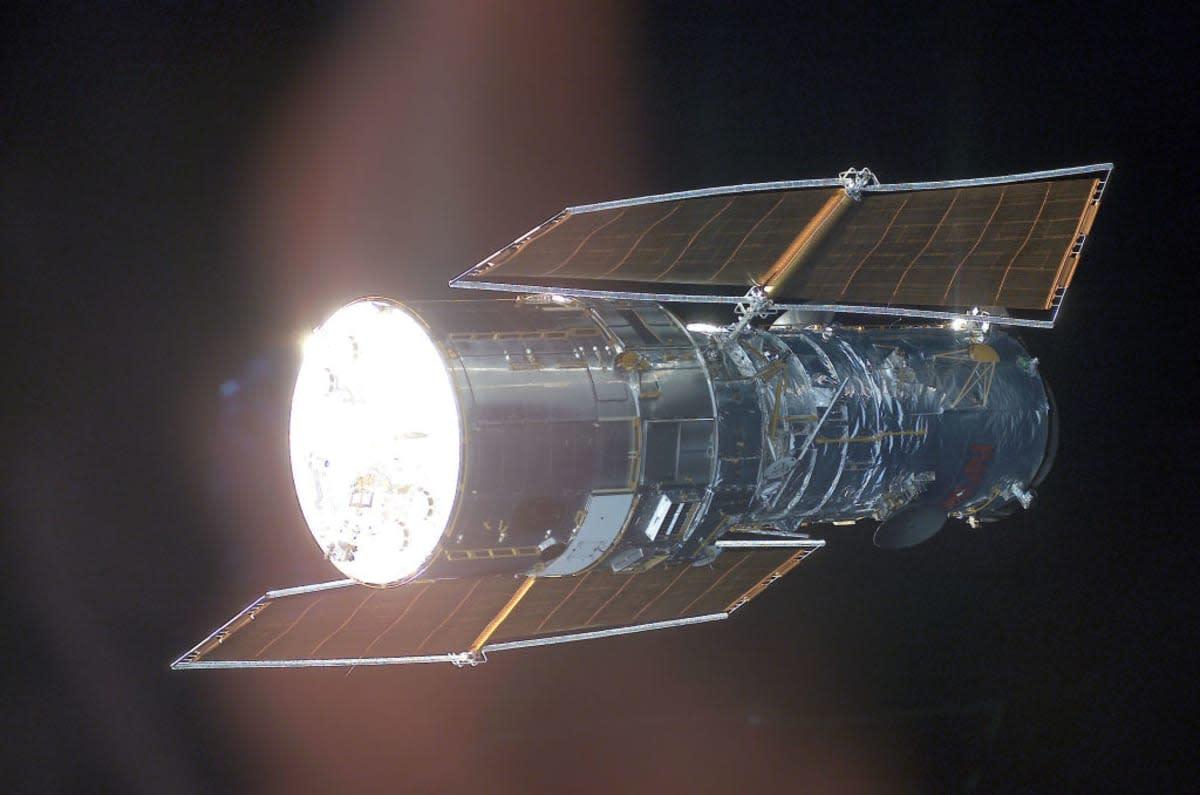
Hubble Space Telescope is backdropped against black space.
According to SpaceNews reporter Jeff Foust, the new data was presented at the American Astronomical Society meeting held this week in Phoenix, Arizona. "One note from the STScI town hall at #AAS247 today: the median reentry date for Hubble, based on current modeling, is 2033; a <10% chance of reentry by 2029," he wrote on X. Hubble's survival might increase if NASA decides to bump up the telescope to another, more stable orbit. If not, then the agency must build more alternative space telescopes to conduct spatial research in the future. Hubble was built to be a low-Earth orbit space telescope, orbiting less than 1,200 miles from the planet’s surface, as per NASA. It's situated above the planet's atmosphere, allowing it to capture clearer images compared to ground-based telescopes.
Hubble is located at a distance safe enough for astronauts to visit on space shuttles. The safe zone allows easy access to humans, which is important to keep the space telescope's maintenance in check, fix repairs, and upgrade when needed.