
Scientists Finally Find a Way to Track Space Junk Before It Hits People on Earth
Published Jan. 23 2026, 8:54 a.m. ET

Space junk orbiting Earth, artist's illustration.
Researchers have found a new method to track space junk. This methodology involves the use of seismometers. Typically, these instruments are used to detect earthquakes, but in this case, they will help spot human-made objects in orbit. Findings have been published in the journal Science. Benjamin Fernando, a postdoctoral research fellow at Johns Hopkins University, devised this methodology of using existing networks of earthquake-detecting seismometers to track the falling debris in space. The setup produces data in near real time. Through these networks, Fernando also observed earthquakes on Mars and other planets of the solar system.
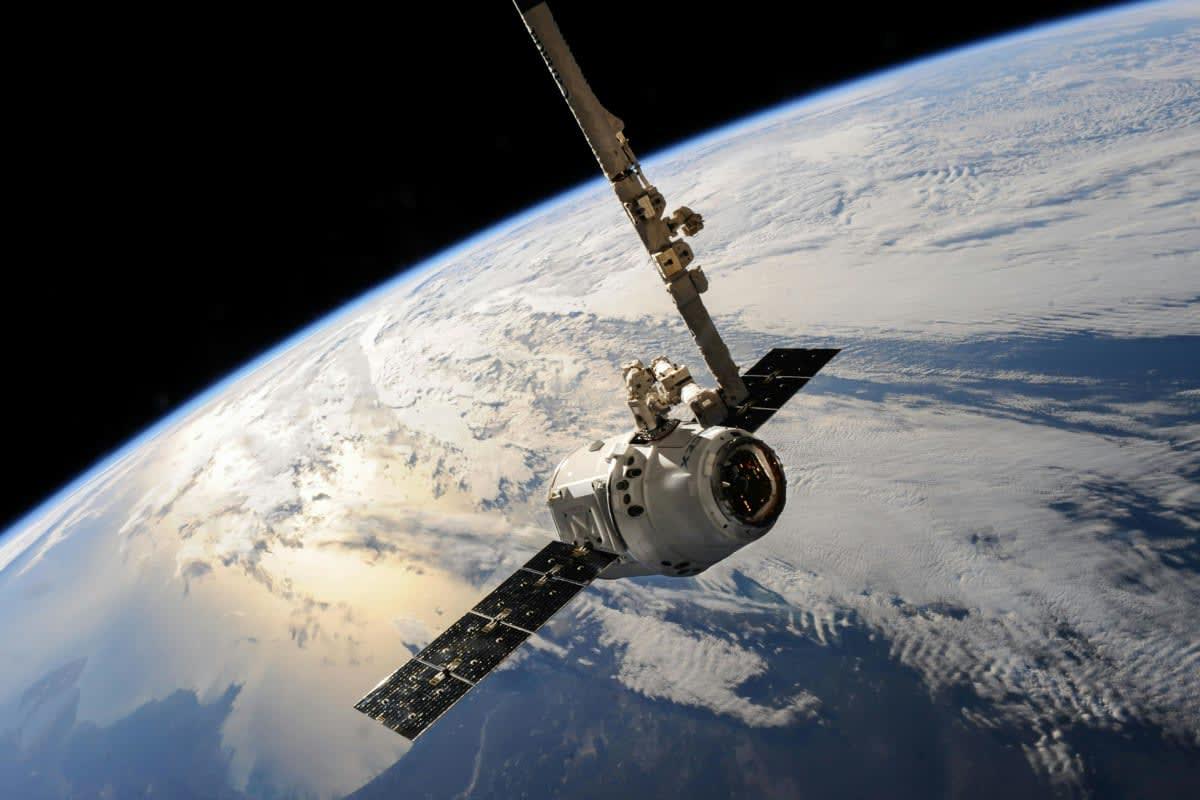
White Outer Space Satellite
It is essential to monitor the human-made space junk in orbit, as some of them pose a risk to the population if they fall back on Earth. Through the networks, researchers can predict their possible crash sites. The new tracking method focuses on the trajectory of the falling debris. Prediction of crash locations will allow scientists to spot and collect the charred remains of the space junk. “Re-entries are happening more frequently. Last year, we had multiple satellites entering our atmosphere each day, and we don’t have independent verification of where they entered, whether they broke up into pieces, if they burned up in the atmosphere, or if they made it to the ground,” shared lead author Fernando, per Astronomy. “This is a growing problem, and it’s going to keep getting worse.”
Researchers utilized the seismometer data to reconstruct the trajectory of debris from China’s Shenzhou-15 spacecraft. This debris was seven feet long and weighed around 1.5 tons. It was essentially an orbital module that entered Earth's atmosphere on April 2, 2024. Considering the size of the module, it could turn out to be fatal for humans living at its crash site. Its trajectory was calculated using 125 seismometers in Southern California. Apart from the pathway, they also determined the speed of the module. Results indicated it was moving at the speed of Mach 25-30 when it interacted with the atmosphere. It apparently moved over Santa Barbara and Las Vegas at a speed ten times faster than the fastest jet in the world.
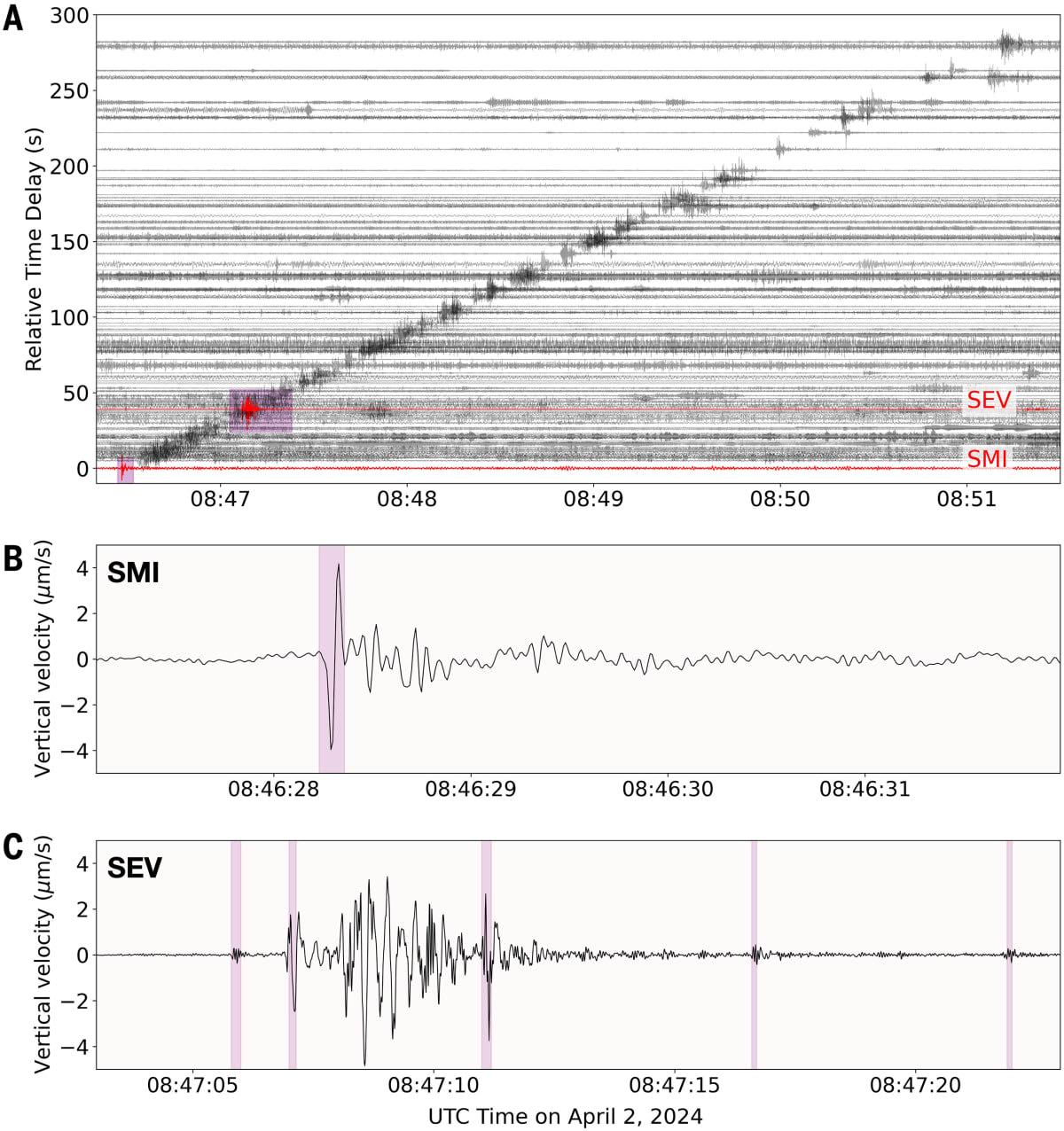
Seismic data recorded across southern California and Nevada during the 2024 Shenzhou-15 reentry.
The intensity of the seismic readings gave an idea of the module’s altitude. The readings suggested that the debris was 25 miles south of the trajectory, mapped by the US Space Command. Once in the planet’s atmosphere, space debris moves faster than the speed of sound. Also, it releases sonic booms or shock waves, mostly produced by fighter jets. It is the vibrations behind the shockwaves that seismometers pick up. Insights from the different seismometers helped formulate the pathway of the debris. From the mapping, scientists also predict where it could be headed.
After the tracking, the retrieval of remains from the site will help remove toxic substances before it could affect populations. These elements can persist in the atmosphere for hours, and also access a wide portion of the planet due to changes in weather patterns. After removal, researchers can determine who is at risk of exposure through the tracking of space junk. “In 1996, debris from the Russian Mars 96 spacecraft fell out of orbit. People thought it burned up, and its radioactive power source landed intact in the ocean. People tried to track it at the time, but its location was never confirmed,” Dr Fernando said. “More recently, a group of scientists found artificial plutonium in a glacier in Chile that they believe is evidence the power source burst open during the descent and contaminated the area. We’d benefit from having additional tracking tools, especially for those rare occasions when debris has radioactive material.”
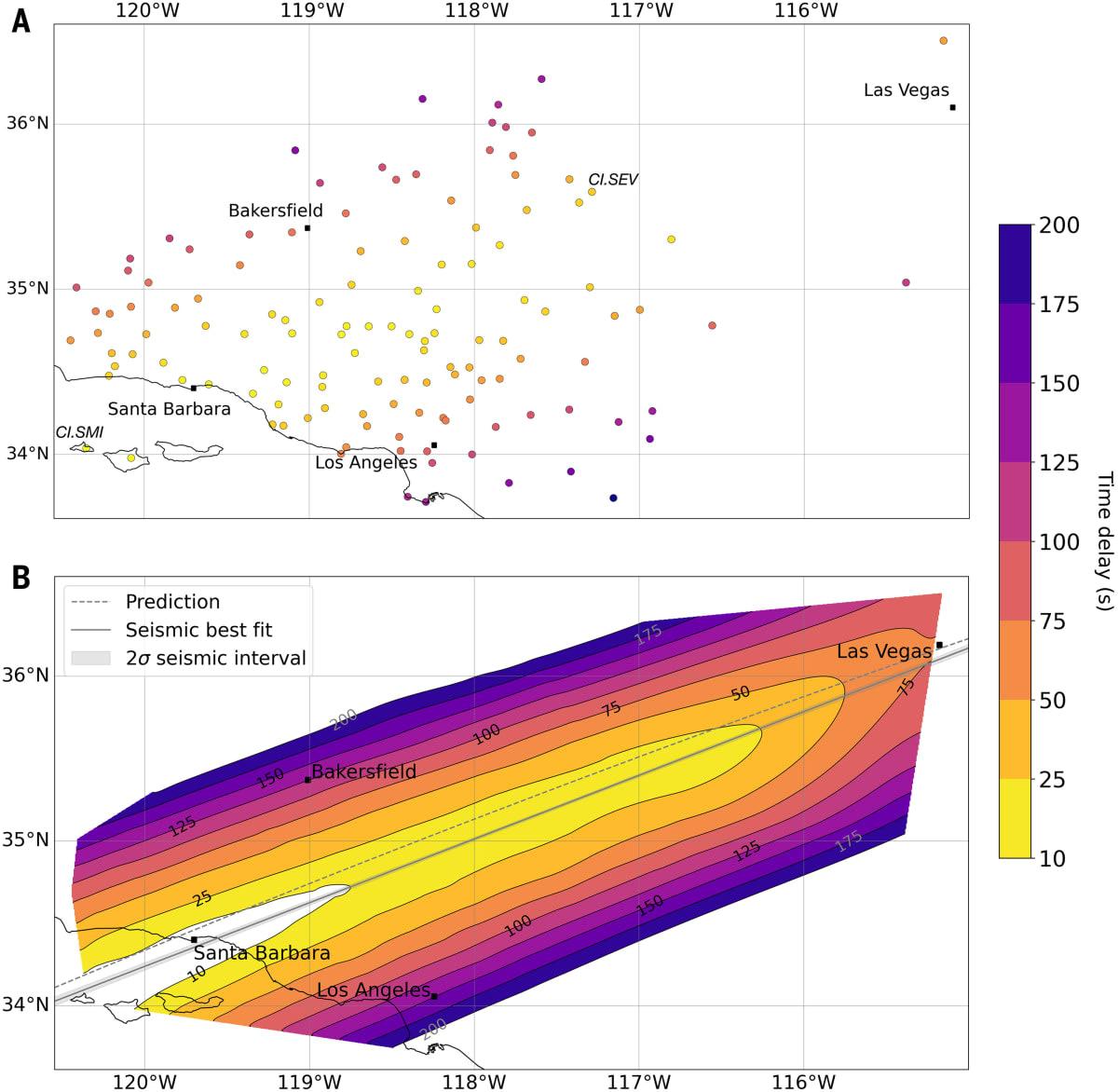
Pointwise and interpolated arrival times of sonic booms at stations across the Southern California and Nevada Seismic Networks.
This methodology will also prevent disruptions from facilitating, every time such objects crash in a heavily populated region. Forewarning will allow officials to organize proceedings in such a way that the public does not face any disturbance. “For example, in 2025, a SpaceX Starship test flight disintegrated, and debris fell over parts of the Caribbean, prompting temporary air-traffic restrictions and aeroplanes to be grounded,” said Dr Constantinos Charalambous, co-author of the new study from Imperial’s Department of Electrical and Electronic Engineering. Timely interventions will not allow such situations to unfold.