
China Wants to Launch 200,000 Satellites — and SpaceX Could Face Real Competition
Published Jan. 19 2026, 4:18 a.m. ET

China's Tiangong Space Station orbiting Earth.
China wants to overtake the space race and has taken some meaningful steps towards this objective. In December 2025, the country's authorities submitted a massive request to the International Telecommunication Union (ITU). The fillings designated CTC-1 (CHN2025-79441) and CTC-2 (CHN2025-79398) asked consent for placing nearly 200,000 satellites. The documents are currently present in the Union’s “as-received” database. Each of the filings dealt with 96,714 satellites in 3,660 orbital planes. Essentially, the country plans to place two huge non-geostationary satellite networks in space. Although the government has requested permission to place the satellites, these pieces of equipment have not yet been fully constructed.
Experts don't think that the application means that China has in its hands the largest mega-constellation in existence, according to New Scientist. They believe it is an attempt to reserve orbital space. The filings were reportedly submitted by the newly formed Institute of Radio Spectrum Utilisation and Technological Innovation in China. ITU, where the proposals have landed, is a UN body that is tasked with allocating spectrum in space. The sheer number of satellites mentioned in the proposals created quite a stir worldwide. The requested number of satellites is head and shoulders above the currently active 14,300 satellites. Amongst the active satellites, 9,400 belong to SpaceX, which are operating in a handful of orbits.

Crowd of satellites hovering in Earth's orbit in a neon blue color depiction
As per ITU regulations, at least one satellite must be sent by China after seven years of the filing. In another seven years, the country needs to launch all the remaining proposed satellites. These proposals with the ITU ensure that, in the future, if other satellite operators want to place equipment in the concerned orbital planes, then they need to prove that their operations are not conflicting with the interests of the Chinese satellites. “If you file ahead of someone else, if you meet your deadlines, those other operators should not interfere with you,” said Tim Farrar, a satellite communications consultant. “It gives them freedom of choice of what they want to do,” he shared, adding, “There's very little penalty to doing it this way.”
Rwanda pulled off something similar in 2021, when it applied for 27 orbits and proposed to place 327,000 satellites in total. This application, though, did not have a huge impact on the workings of other satellite operators. Other powers did not expect Rwanda to actually produce these many satellites. Scientists also do not think that China can deliver on the promise in their proposals. In 2025, China launched 92 rockets, which is a personal record for the nation, reflective of its steady development. However, to place two satellite networks containing 200,000 satellites in total under the required time limit, they would need to send hundreds, if not thousands, of satellites every week to space.
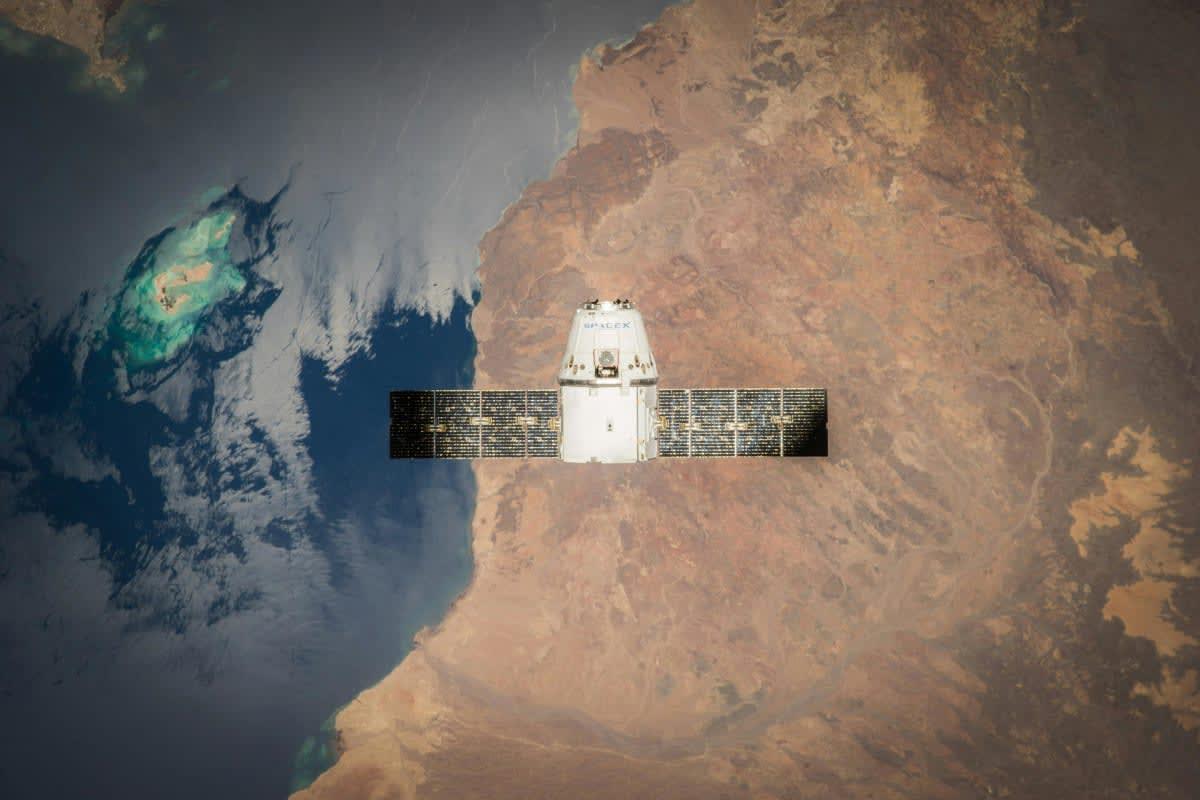
A SpaceX satellite seen above Earth
China's application is indicative of the hefty competition between different powers for the mega-constellation field. The more satellites a power or company has in space, the more people it can provide internet facilities to. Not only will it give the organizations the means to control the flow of information worldwide, but also allow them to take advantage of a potential market amounting to millions of dollars. At present, SpaceX is dominating the arena of internet connections. Other major players are also coming to the party, like Amazon’s Project Leo in the US, which has already launched 200 satellites, and two major state-backed Chinese constellations, Qianfan and Guowang, which have released hundreds into space.