
Scientists Discover Massive Spinning Structure in Space — and It's More Than 5 Million Light-Years Long
Published Dec. 5 2025, 5:20 a.m. ET

A scientist near a radio telescope.
Some cosmic discoveries over the years have astonished us in ways that we might have never imagined. Each new finding—whether it’s a distant galaxy or a mysterious cosmic signal—reminds us how much about our universe is still there to explore. In one such discovery, scientists have recently found one of the universe’s largest spinning formations, which is a cosmic thread. This filament of matter, which is mostly made up of dark matter, stretches across an astonishing 50 million light-years in length and features a chain of galaxies rotating in the same direction as the larger cosmic filament.
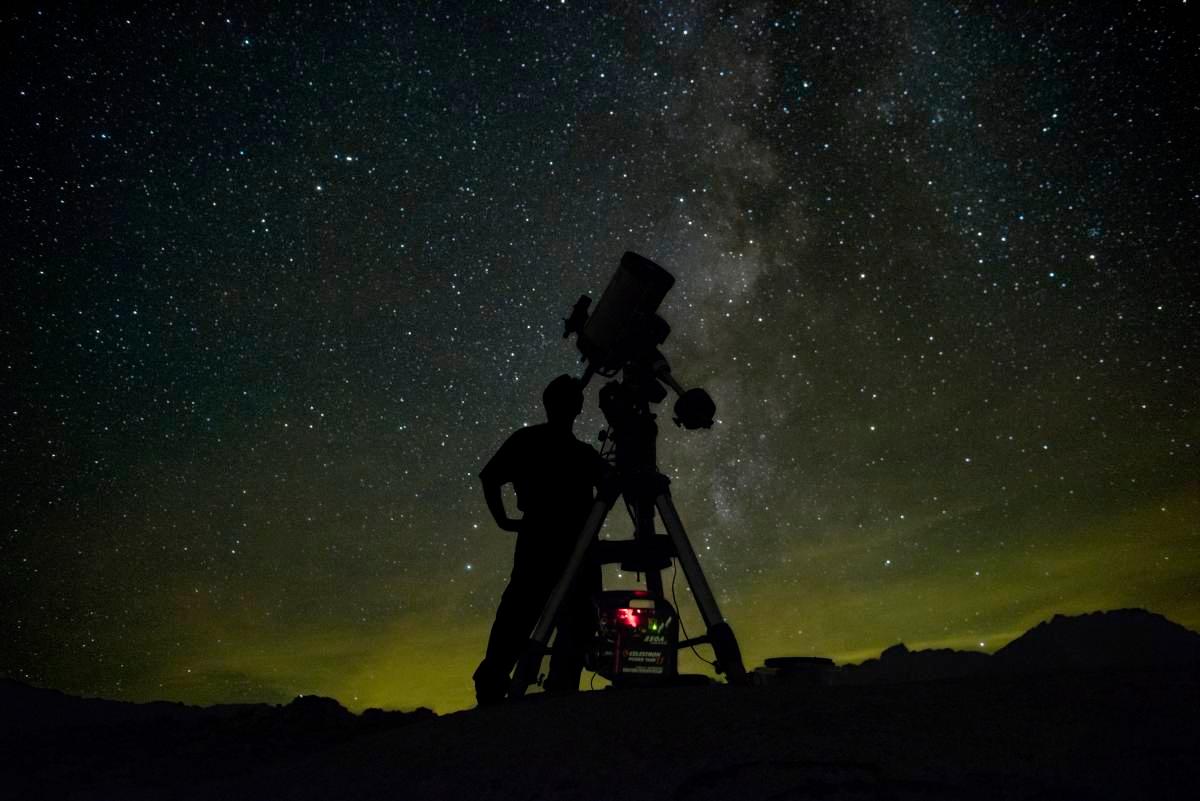
A man looking at the sky through a telescope.
The neatly arranged chain of 14 galaxies, which is spread across 5.5 million light-years in length and about 117,000 light-years in width, is located at the heart of the filament. This smaller galactic chain then sits within a much larger filament that contains around 300 galaxies overall. But one thing that has caught the attention of scientists is the rotational pattern of this chain. Imagine each galaxy spinning on its own axis, while the entire row is also aligned perpendicular to the filament’s longer axis, rotating around that axis at 68 miles per second—all in sync, as reported by Space.
This makes it one of the universe’s largest known coherent rotating structures. Researchers made this discovery while studying the filament with the MeerKAT radio telescope, using its 64 interconnected dishes to map the motion of neutral hydrogen gas in the galaxies and the filament. Along with this, optical observations from Arizona’s Dark Energy Spectroscopic Instrument at Kitt Peak and the Sloan Digital Sky Survey in New Mexico also helped in the research process. The findings of this research were revealed in a study published by the journal Monthly Notices of the Royal Astronomical Society.
Speaking of the discovery, Lyla Jung from the University of Oxford, who is one of the lead authors of the study, said, "You can liken it (chain of galaxies) to the teacups ride at a theme park. Each galaxy is like a spinning teacup, but the whole platform – the cosmic filament — is rotating too. This dual motion gives us rare insight into how galaxies gain their spin from the larger structures they live in." However, it's important to note that the filament’s rotation appears to strongly dominate the spin of the galaxies it contains, likely passing hydrogen gas along the dark-matter structure and the galaxies. This also supplies additional material for forming new stars.
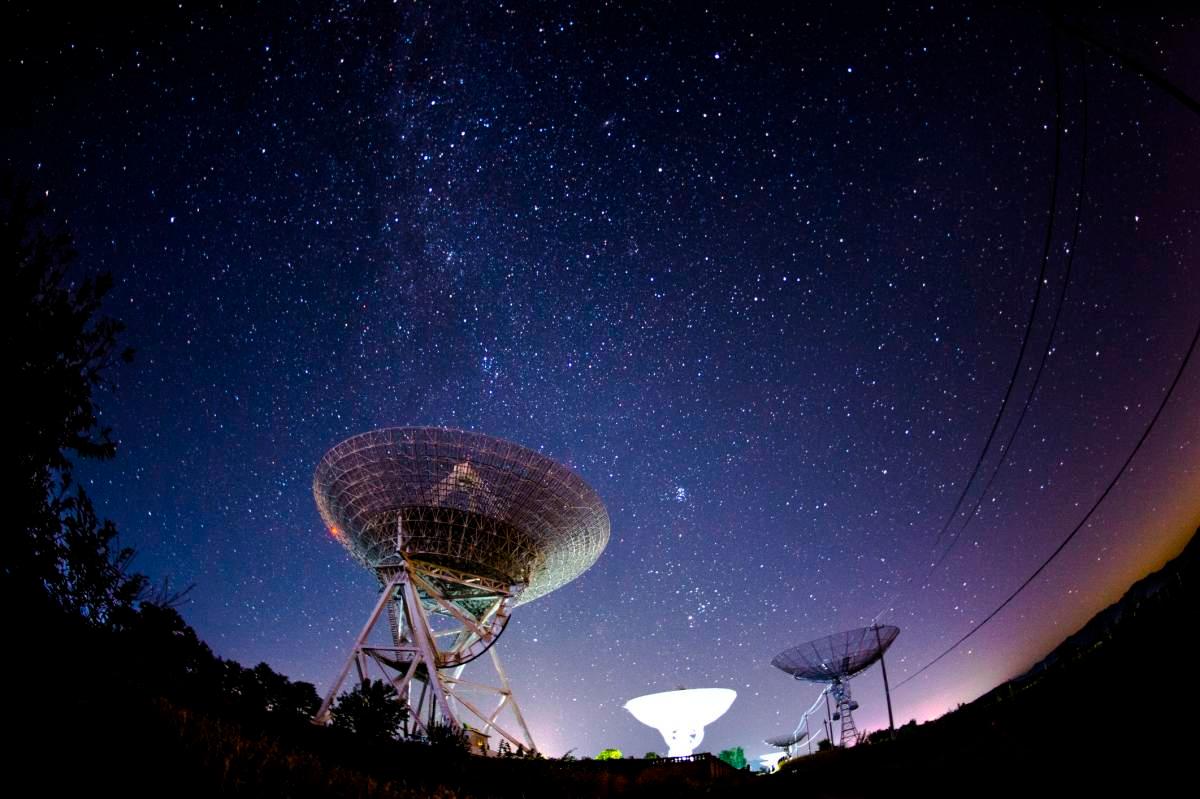
A radio telescope.
Furthermore, the galaxies within the filament appear to be in the early phases of growth, giving rise to the possibility that their spinning patterns might change in the future. Meanwhile, Dr Madalina Tudorache, who is also from Oxford and a co-author of the recent research study, spoke about the filament and said, "This filament is a fossil record of cosmic flows. It helps us piece together how galaxies acquire their spin and grow over time." It was in 2022 that astronomers found that cosmic web filaments rotate on their own. The conclusion was drawn by observing the movements of the galaxies present within them.