
Scientists Stunned as ‘Man-Made’ Material Discovered Forming Naturally on Moon's Far Side
Published Jan. 22 2026, 9:55 a.m. ET

China's Chang’e-6 | Image Source: CNSA
China’s historic 2024 Chang’e-6 mission that became the first to land on the Moon’s far side has discovered something scientists never thought could happen. They found tiny carbon nanotubes on the dark side of the Moon, providing the first evidence of a material once believed to have never formed naturally. Without the help of advanced human technology, it was once thought that the formation of the substance was impossible. The material was found in the rocks collected by the Chang’e-6, and researchers at Jilin University examined them. By using powerful electron microscopes, the team spotted the ultra-thin, straw-like structures hidden inside the lunar rocks. These nanotubes are incredibly small, with walls just one atom thick, and until now were only known to be made in laboratories on Earth.
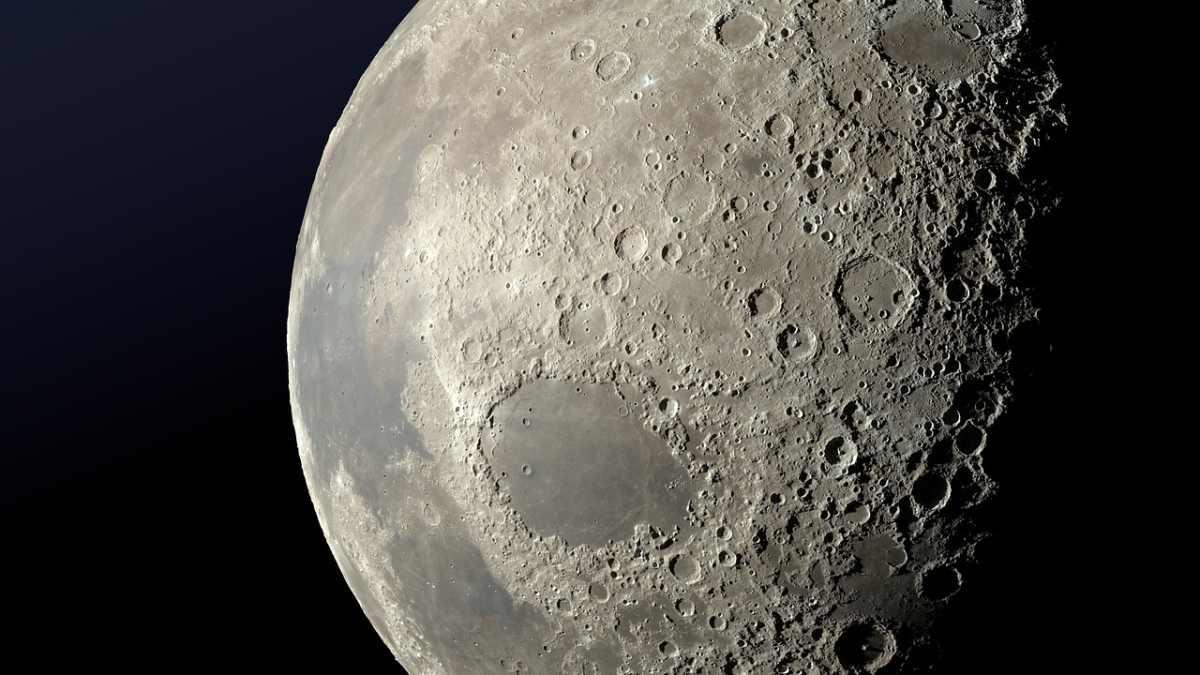
A close-up view of the far side of the moon.
However, multi-layer carbon nanotubes can be formed naturally on Earth as a result of extreme natural events, such as forest fires or deep ice cores. But there has always been a debate whether single-layer carbon nanotubes, the thinnest possible form, could be formed naturally or not. According to the scientists, these nanotubes likely formed under harsh lunar conditions. Since the Moon is bombarded with micrometeorite strikes, intense solar wind, etc., it created an extreme environment, leading to the formation of these structures to develop easily.
Ahead of this event, creating these ultra-thin nanotubes required carefully controlled laboratory conditions, including exact temperatures and special chemical catalysts. But now the debate has been finally put to rest after the Chinese research team published their results in the scientific journal Nano Letters. The study confirms that single-layer carbon nanotubes can indeed form without human intervention. This discovery follows the identification of graphene by Chang’e-5 on the Moon’s near side. These new findings can cause a major new shift in developing touchscreens, sensors, and next-generation batteries.

A satellite in space
Single-walled carbon nanotubes are tiny and hollow, which is entirely made of carbon. Each tube is only about one nanometer wide. It is formed when a one-atom-thick sheet of carbon rolls into a smooth cylinder. Although they are incredibly small, the nanotubes are extremely strong and can conduct electricity and heat very well. The substance was first identified in the early 1990s by Japanese physicist Sumio Iijima. Later on, scientists were able to develop both multi-walled and single-walled nanotubes by using heat and metal catalysts.
The soil returned by Chang’e-6 was closely examined by the Chinese researchers using advanced microscopes and spectroscopy tools. They were formed during brief bursts of extreme heat caused by countless small meteorite impacts. When it was cooled very quickly after each impact, some of the carbon atoms bonded together unusually. Instead of forming flat carbon layers or ordinary soot, they rearranged themselves into extremely small, tube-shaped structures. “The detected carbon and the formation pathway elucidated a further in situ application of the lunar soil, laying the foundation for deep space exploration and lunar resource use,” the team said.