
Satellites Are 'Photobombing' Space Images — and Scientists Are Sounding the Alarm
Published Dec. 4 2025, 6:10 a.m. ET

Communications satellite against the background of the starry sky.
Everyone is familiar with that one friend who photobombs every selfie or that one curious guest who materializes in every photo of the wedding album. Even in space, there is a whole lot of photobombing mishap going on, displayed by robots whirling around. These robots, or satellites, are becoming a growing threat to space telescope operations. Even NASA’s very own Hubble Space Telescope is suffering. In a study published in Nature, scientists wrote about the expanding crowd of satellites in space that could disrupt the view telescopes need to unravel the mysteries of the cosmos.
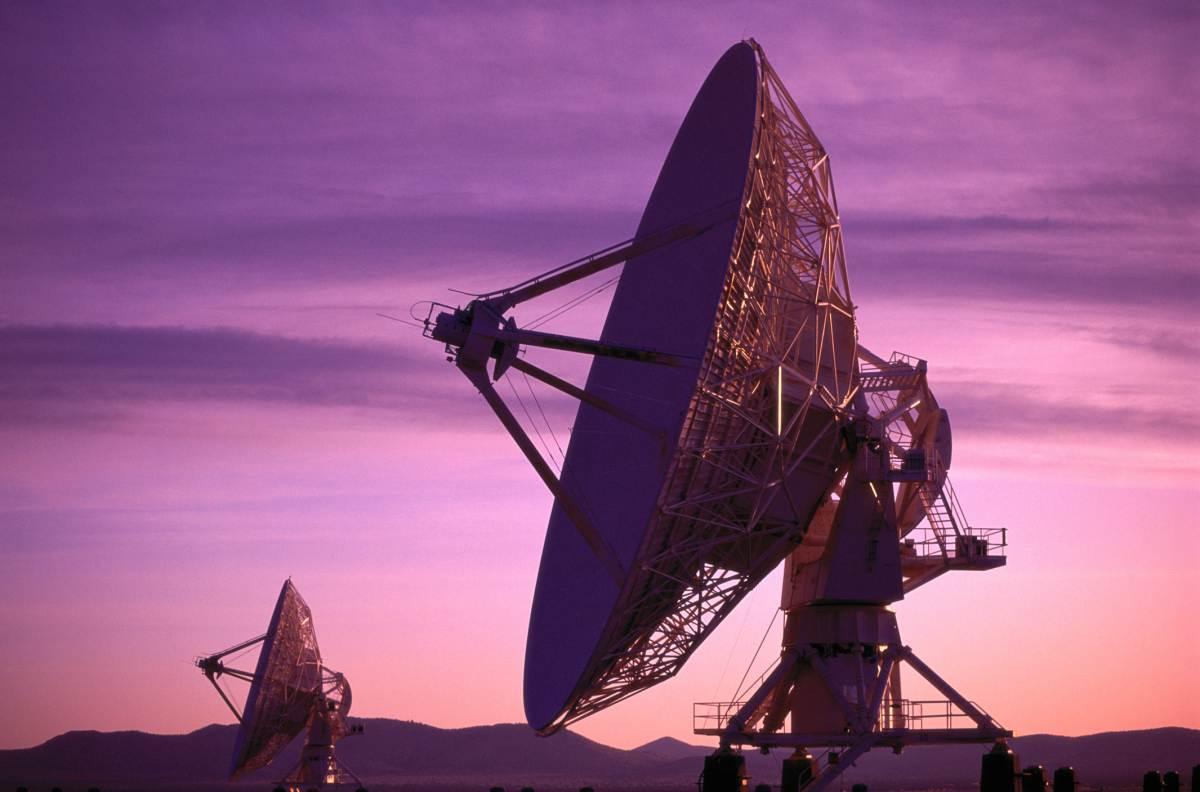
A radio telescope.
With intelligent computerized brains studded into them, clever batteries that can recharge themselves with sunlight, and futuristic cameras that can capture every dab and dot of the stars and galaxies they detect, satellites are the “eyes” of scientists that provide them with an uninterrupted report of cosmic happenings around the clock. However, as the saying goes, too many cooks spoil the broth; similarly, too many satellites can hinder the actual purpose.
Picture an asteroid bouncing towards Earth’s orbit. On its pathway falls a trail of satellites. Now, the actual satellite observing the asteroid could become confused by the swarm of light beams shot around by the satellites that stand in the path. This is what scientists refer to as “light contamination.” When this happens, it becomes difficult for satellites to discriminate between the positive events and the negative events, between the good guys and the bad guys.
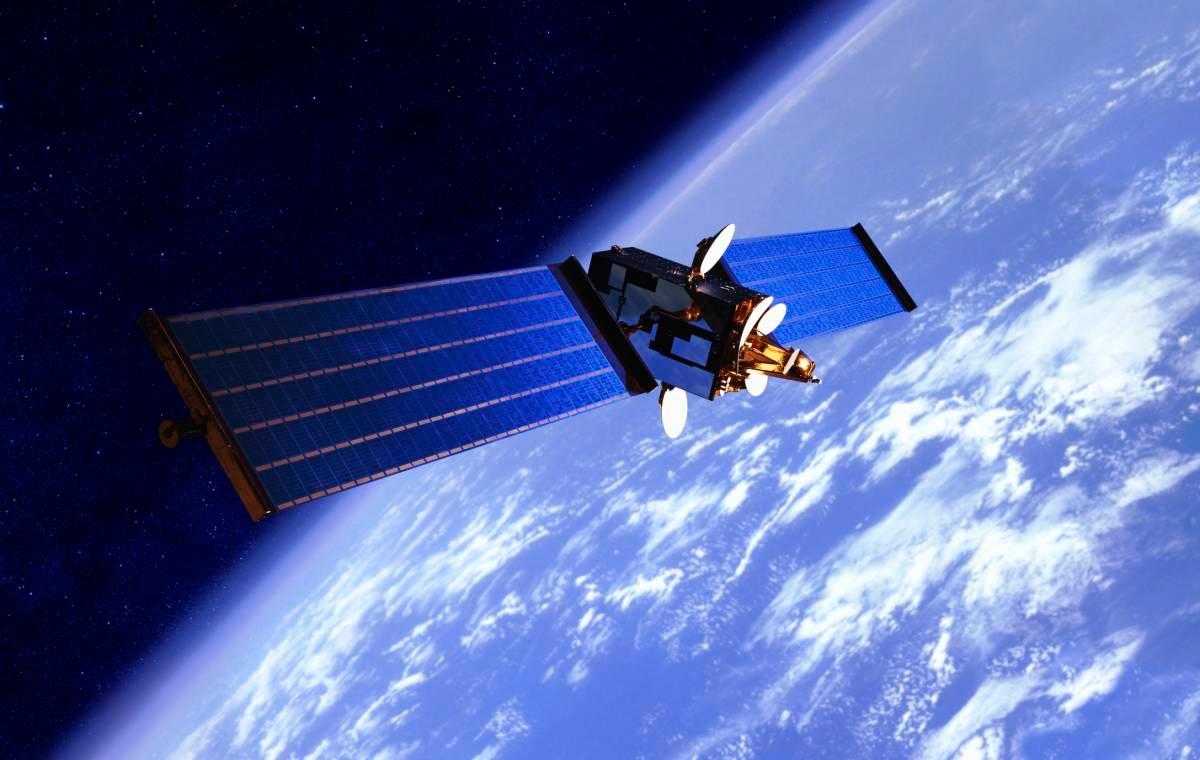
Communication satellite over the Earth
Over the past few years, the reduction in the cost per kilogram of launching payloads has spurred an exponential increase in the number of satellites. Currently, there are about 15,000, and in another ten years, the number is estimated to reach 560,000. Nearly three-quarters of the satellite constellation is dominated by Elon Musk’s Starlink satellites. To make matters worse, companies are constantly making plans to install new satellites, which could leave the telescopes probing the mysteries of dark space perturbed with glittering disturbance.
According to The Verge, describing the extent of satellite trail contamination, NASA scientist and lead study author, Alejandro Borlaff, said, “My career has been focused on trying to make telescopes see better… try to make the telescopes more sensitive, more precise, getting better images. For the first time, we found something that may actually be worse in the future.” Until 2019, the study notes, the largest constellations of artificial satellites belonged to the Iridium system, which was one of the first sources of electromagnetic pollution in space. Now that there is a whole lot of crowd over there, the challenge has become even more distressing.
A researcher looks through a telescope.
For this study, scientists selected random locations in space and curated a database of satellite trails, recording information like orbital position, attitude, brightness, angular velocity, distance to the observer, and location in the sky as a function of time. Results revealed that, in the future, Earth would probably be orbited by half a million satellites whose light traffic could pose a pestering challenge to over 96% of the telescopes.
The traffic isn’t just made of the satellite’s personal light. It is also the add-ons of the lights reflected from the Sun, Earthshine, and Moonshine. Add to it the muddle of debris. When the rocket carrying the satellite lifts off from the ground, its smoke-stained metal releases a lot of fragments in space once the satellite is ejected. In February 2024, the International Astronomical Union Center for the Protection of the Dark and Quiet Sky even proposed a list of recommended actions for satellite operators that can prevent these mishaps, such as limiting the satellite’s reflectivity.