
California Residents Hear Sonic Booms After Thanksgiving — Turns Out, It Was SpaceX's Falcon 9 Launch
Published Dec. 1 2025, 5:12 a.m. ET

SpaceX launches its Falcon-9 rocket as part of Transporter-15 mission
At about quarter to eleven in the morning, a day after Thanksgiving, the launchpad at the Vandenberg Space Force Base in California came alive with wild furore as Elon Musk’s Falcon 9 rocket headed for its launch. Residents across Southern California slumped down on their sofas and desks, their eyes glued to the screens that flashed a livestream footage of the rocket launch.
After the rideshare deployment sequence was initiated, a frothy plume of glowing white smoke materialized from the decorated Merlin engines tucked in the rocket’s buttocks. The boosters started spinning, and within a few moments, the rocket detached from the base and shot up in the air, ejecting sparkly fireworks that glittered across the Californian skies. It wasn’t just a brilliant smoke and light show. According to the latest report by KTLA, the launch also rattled windows across Southern California.
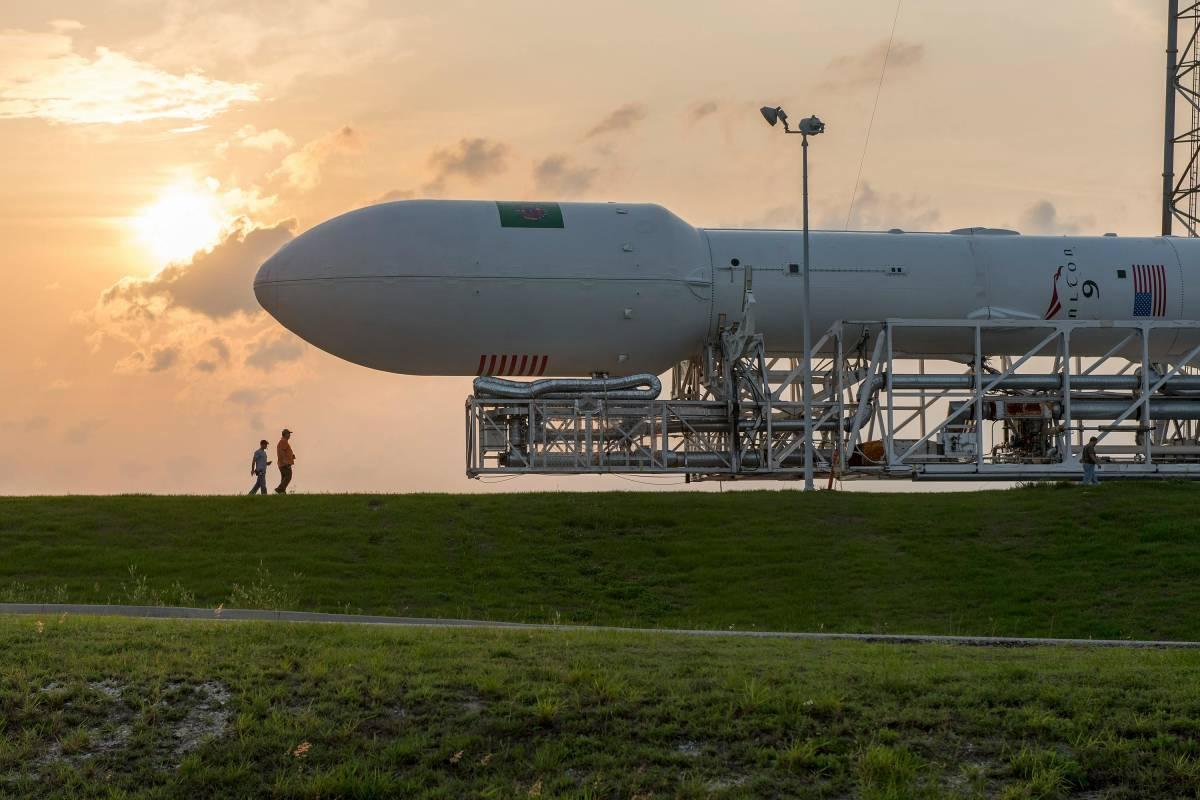
Two men walk by a spacecraft at Cape Canaveral.
Falcon 9, according to SpaceX, is the “world’s first orbital class reusable rocket” crafted with advanced Merlin engines that operate on kerosene and liquid oxygen. Its boosters, too, have made over 30 space trips in the past. In this mission, a.k.a. Transporter-15, the rocket was supposed to transport an assemblage of satellites and robots that different companies had designed for the surveillance of Earth from space. As the company’s pictures show on X, the payload stack of the rocket was jangling with 140 chunky payloads, jangling with metallic stacks consisting of these satellites and space spying equipment.
The equipment, the news outlet explains, consisted of CubeSats, microsatellites, and orbital transfer vehicles from various government and commercial clients, as well as a constellation of defense satellites for Earth’s observation. Among the payloads was also an Umbra-11, deployed on behalf of Santa Barbara-based Umbra, an American space-technology company that builds advanced radar-imaging systems and operates a constellation of high-resolution Synthetic Aperture Radar (SAR) satellites.
The event, however, was much more than just a rocket launch. For the residents of Southern California, it became a phenomenon that sent shockwaves rumbling through the state. In some places across the central coast, Santa Barbara, San Luis Obispo, and Ventura, deafening sounds could be observed. Although sonic booms are not associated with rockets, they have mostly been observed in connection with airplanes. According to an explanation by ScienceDirect, a sonic boom erupts when the speed of the rocket surpasses the speed of sound.
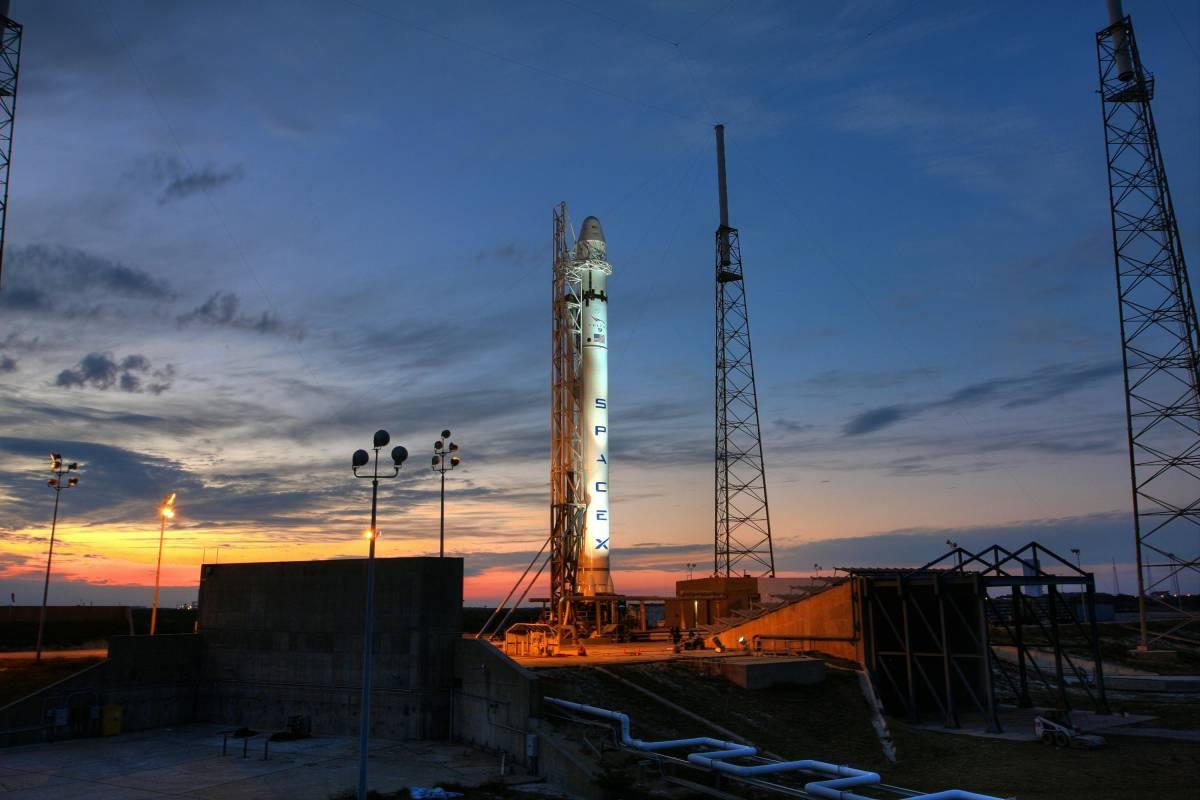
A SpaceX rocket is installed on the launch pad before the countdown
Air becomes compressed by the accelerating speed, and a powerful shockwave breaks out, flitting through the surrounding atmosphere and triggering a cascade of loud, thunderous booms as it crosses the sound barrier. The more the air pressure amplifies, the more this boom crackles and grumbles in the air. Often, a second layer of this sonic boom is heard as an “N-wave signature.”
Meanwhile, another whizzing booster of the same fleet of SpaceX rockets landed on the “Of Course I Still Love You” droneship positioned in the Pacific Ocean after stage separation on the same day as this rocket was launched.