
Scientists Plan to Turn the Ocean Floor into a Renewable Energy Storage Powerhouse Using Concrete Orbs
Published Feb. 10 2026, 8:57 a.m. ET

Rendering illustrating the production of the 30m spheres for a StEnSea park
With rapid environmental changes, scientists are developing new ways of energy conservation. Recently, they have discovered a new way inside the deep ocean. Their idea is to place massive hollow concrete spheres on the seafloor and turn them into energy storage units. When wind or solar farms produce more electricity than needed, that extra power will be used push seawater out of the sphere. This creates stored energy. When demand rises, water will flow back inside and spin a turbine to generate electricity. This could solve the problem of storage and renewable energy. Since the wind does not always blow and the sun does not always shine, this could solve a major problem.
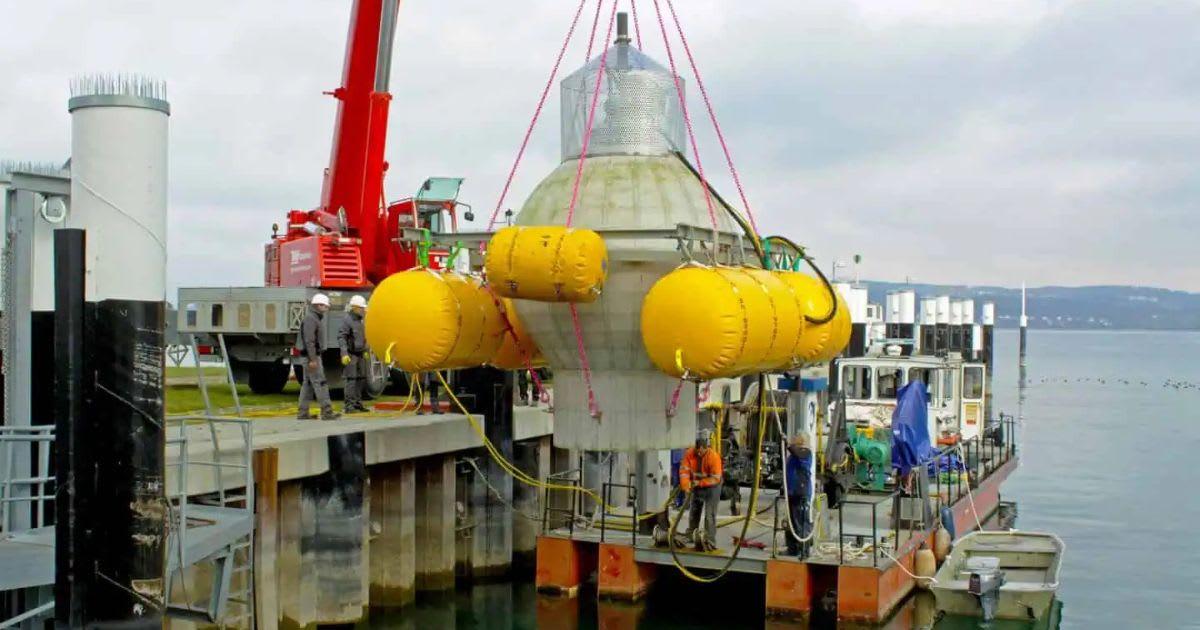
Research team preparing for StEnSea testing
The idea of storing energy deep underwater is being developed by the StEnSea (Stored Energy in the Sea) project, led by the Fraunhofer Institute. The system will take advantage of the intense water pressure found deep in the ocean. Large hollow concrete spheres will be placed on the seafloor and used as energy storage units. When electricity is needed, seawater will rush into the sphere through an opening. The spinning turbine will produce power. To recharge the system, excess electricity from the grid will pump the water back out.
The team conducted tests in Lake Constance, which were successful. Now, researchers are planning to put a larger prototype in Long Beach. According to the researchers at the Fraunhofer Institute, the underwater concrete spheres could provide an enormous amount of energy storage worldwide. The system could store up to 817,000 gigawatt-hours of electricity if deployed at scale, enough to power 75 million homes across Germany, France, and the UK for an entire year.
Although the investment for such a project would be high, the long-term benefits are substantial. Besides storing energy, the system can also help stabilize power grids by balancing supply and demand and supporting frequency regulation. Furthermore, it allows energy providers to store electricity when prices are low and release it during peak demand. These underwater systems can be deployed in many regions, unlike pumped hydro storage, which occupies a huge chunk of land.
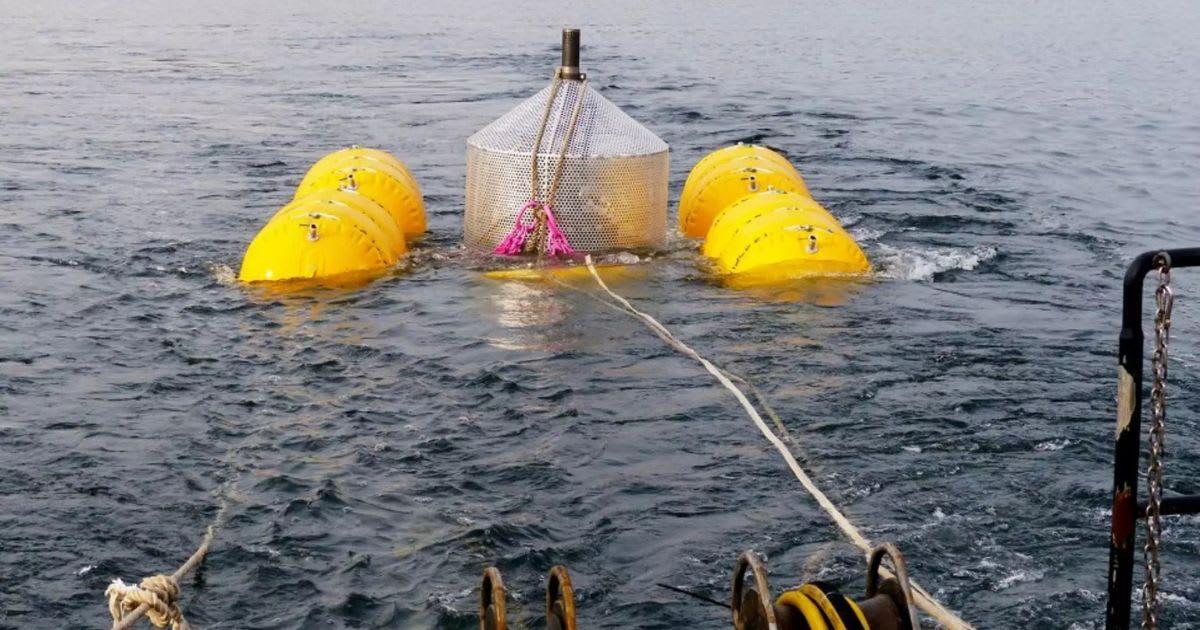
StEnSea testing
“We are transferring their functional principle to the seabed — the natural and ecological restrictions are far lower there. In addition, the acceptance of the citizens is likely to be significantly higher,” Dr. Bernhard Ernst, Senior Project Manager at Fraunhofer IEE, said, per ZME Science. The Fraunhofer Institute plans to deploy a full-scale prototype off the coast of California very soon. The system does not just point to a new way of thinking about renewable energy storage, but it will also be beneficial for the environment. It focuses on saving surplus power when production is high and releasing it when demand rises.
If the project is successful, it could change the way renewable energy is stored and used globally. “We have developed a cost-effective technology that is particularly suitable for short to medium-term storage. With the test run off the US coast, we are making a big step towards scaling and commercializing this storage concept,” Ernst explained. However, there are also many hurdles to cross, and it heavily depends on how long the concrete spheres can withstand extreme pressure and corrosive seawater. The cost of the project is also another major problem.