
There's a Vast Freshwater System Hidden Beneath Ocean Floor. Scientists Just Got Their First Look
Published Feb. 5 2026, 9:00 a.m. ET

The team drilled under the seafloor off Massachusetts and extracted samples from the potential freshwater aquifer stretching from New Jersey to Maine.
There might be a freshwater system beneath the ocean, and scientists took the first step in finding out. As part of the IODP³‑NSF Expedition 501, a team of researchers directly documented and sampled a freshwater system hidden beneath the ocean floor. The mission took place in two phases, with the first being offshore drilling off the coast of New England, which happened between May and August 2025. Currently, as part of the second phase, scientists are analyzing sediment cores and pore water samples at the Center for Marine Environmental Sciences, University of Bremen. Geochemist Dr. Thomas Harald Müller from the GEOMAR Helmholtz Centre for Ocean Research Kiel is an integral part of the research team and was the one to collect pore water samples during the expedition.
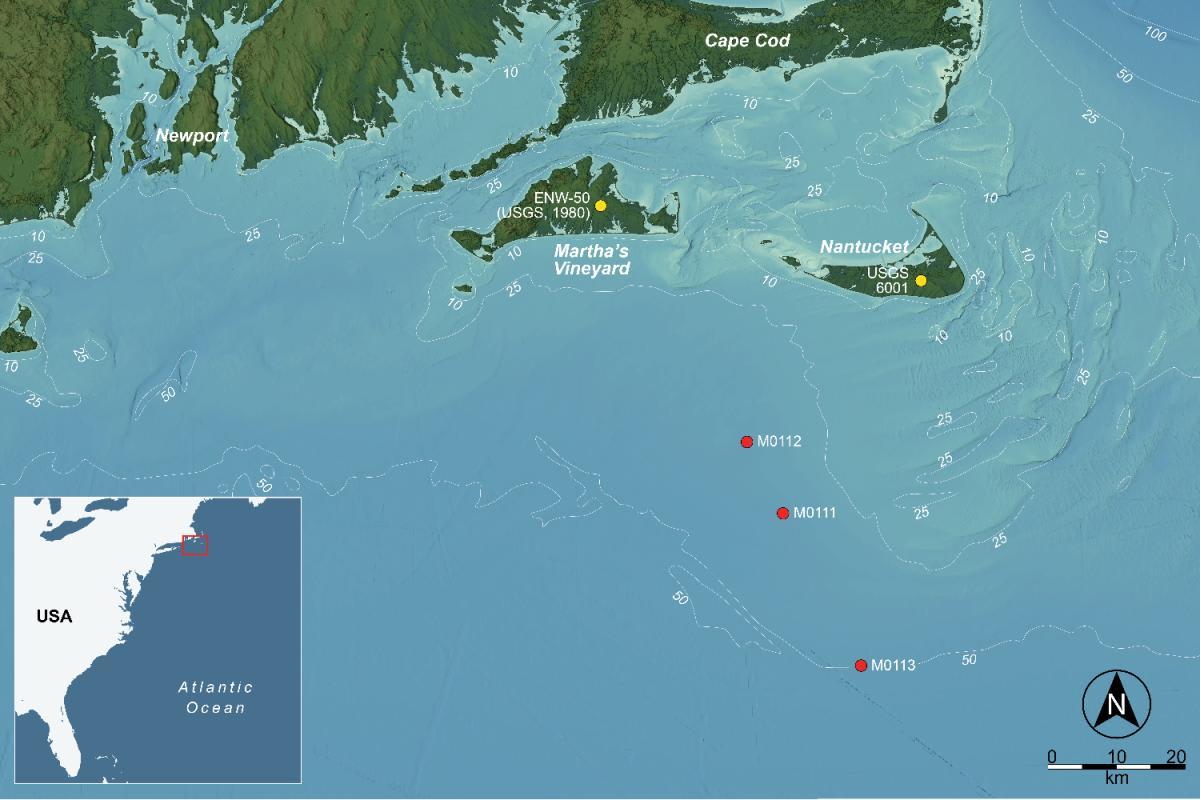
Sites from where researchers took water and sediment samples.
While some samples were analyzed at the site, the majority were brought back and stored for further investigation. In January and February this year, the researchers are focused on analyzing the cores in hopes of finding new insights. They hope to find answers to the formation of the hidden freshwater system, as well as its significance and evolution. More than collecting and sampling the sediments, scientists want to sample the water stored within those sediments. The sandy layer present within the ocean bed is essential for filtering out sediments and essentially acts as an underground aquifer. Clayey layers, also known as aquitards, help keep water steady under the seafloor. Extracting water samples from these layers might help scientists understand how the low-saline, freshwater system was formed in the first place.
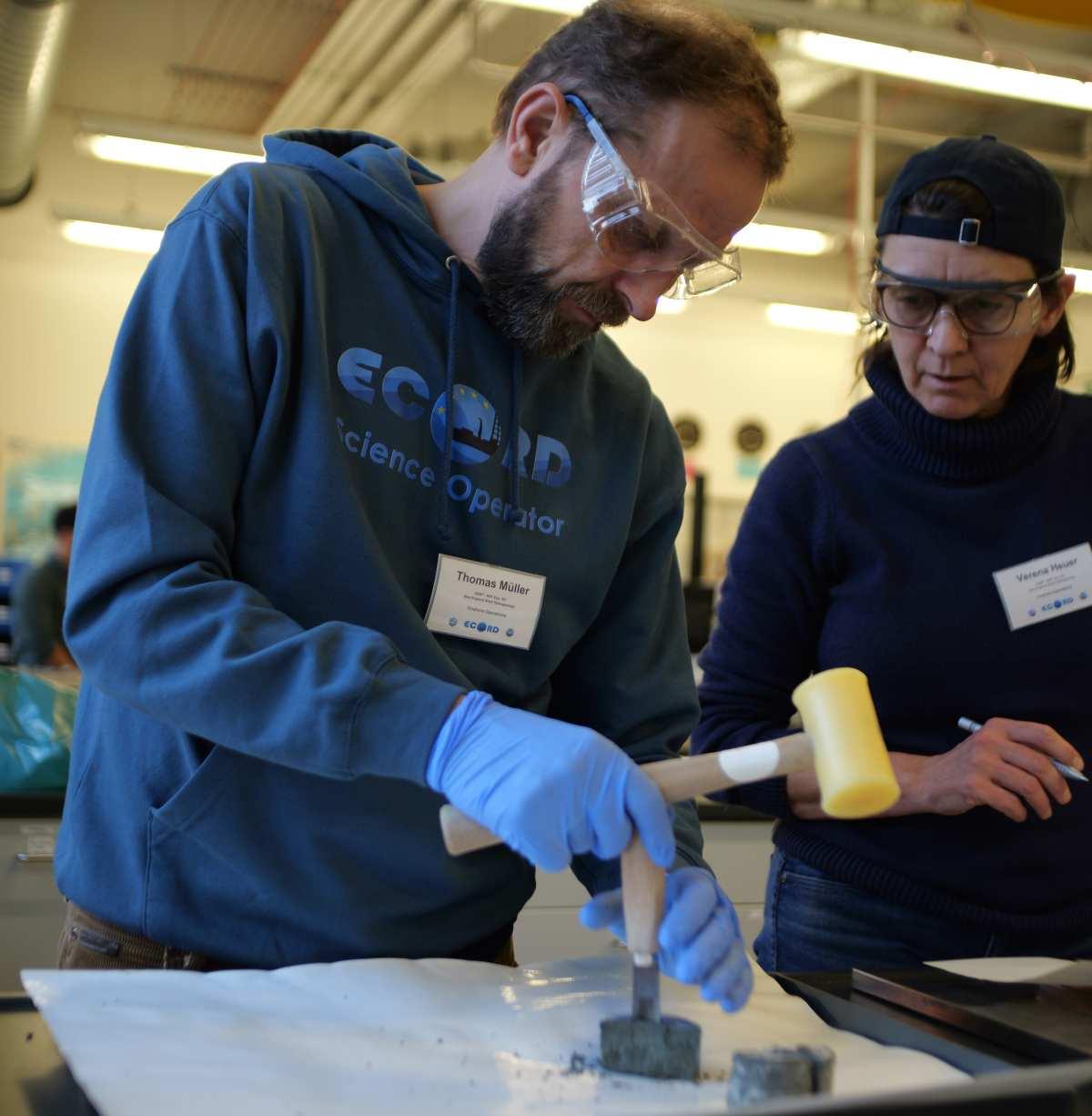
Dr. Thomas Muller and a colleague can be seen preparing the so-called 'squeeze cakes' for further geochemical analysis.
“We were excited to see that freshened water exists in multiple kinds of sediments—both marine and terrestrial," said scientist Professor Brandon Dugan of the Colorado School of Mines, Golden, in a statement. "Freshened water in such different materials will help us understand the conditions that emplaced the water," he added. Why is this research important? Even though 70% of Earth is covered in water, much of it is inaccessible. If it weren't for aquifers, many people would be stuck with utilizing the saline seawater, which has its own negative impacts. Around the world, there are many aquifers that continue offshore and go beneath the sea floor unbeknownst to the people. Exploration of these offshore aquifers that have been existing for centuries would open up several possibilities, potentially solving the water crisis in some regions.
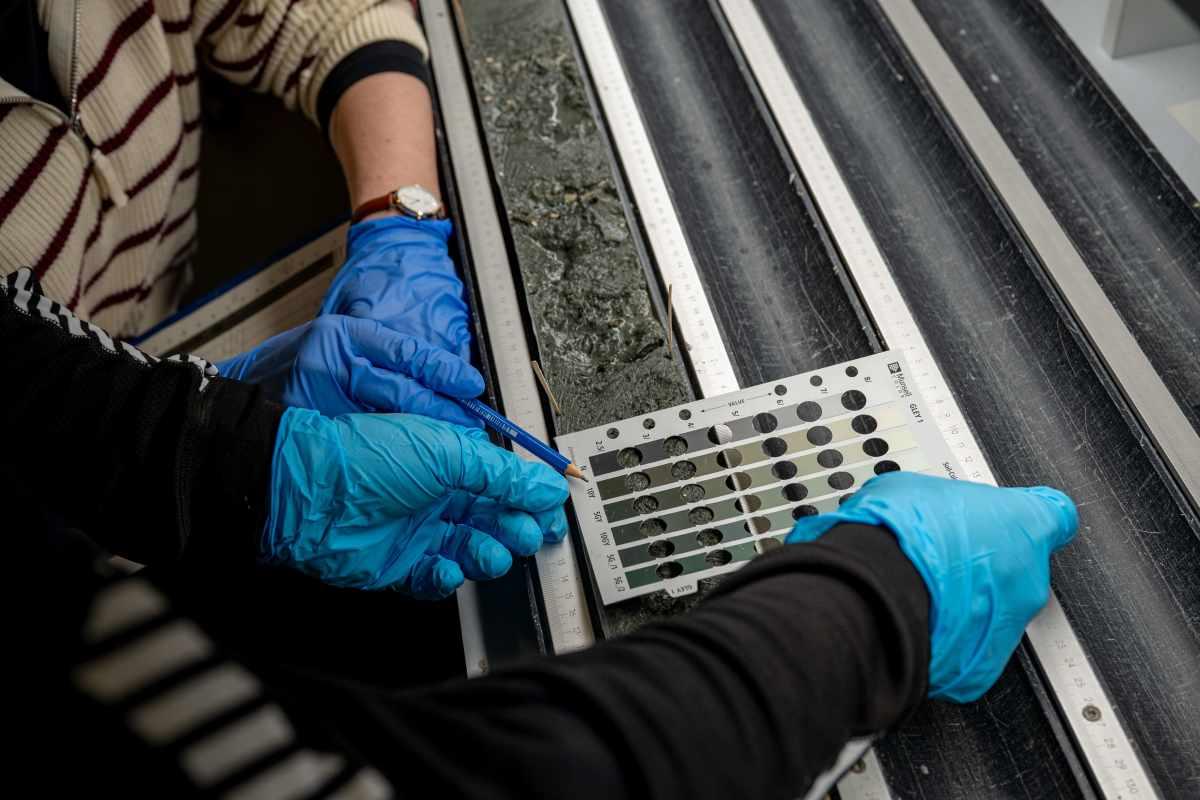
Scientists using the Munsell Soil Color Chart to study the core color and structure as accurately as possible.
Thanks to the recent expedition, scientists were able to document and sample freshened water below the seafloor for the first time within a nearly 656-foot-thick sediment. “It was surprising to see sediment, not rocks, throughout the section," noted Professor Rebecca Robinson of the Graduate School of Oceanography, University of Rhode Island. "The sediment has not yet transformed into rock—I did not expect to see that. Also, the cores comprise four lithologic units, from younger and older ages," she added. While this is milestone research, there are still many unanswered questions.
Scientists are currently building new models to understand how the sediments were deposited. Researchers believe that the IODP³-NSF Expedition 501 will not only improve their understanding of offshore freshwater systems but also shed light on other similar hidden offshore reservoirs that might be present around the world. “The researchers will continue to work on and with the samples to decipher more—for example, to date the groundwater more accurately, which is critical to advancing our knowledge,” Robinson added.