
Ring in the New Year with the Quadrantid Meteor Shower: Here’s How to View it
Published Dec. 29 2025, 8:19 a.m. ET

Man standing on a clifftop enjoying shooting stars in the sky
Just like the breakfast buffet of your favorite hotel, the cosmic buffet is unlimited. December alone was packed with back-to-back light shows, from Geminids to Ursids, and Southern Taurid, not to forget the auroras that performed dazzling dances in the northern skies. As 2025 calendars wait to be ripped and old plans await renewal, the northern skies announce another smashing light show between December 28 and January 12. Up to 120 shooting stars, a.k.a. meteors, will be served as glittering visual treats. A procession of wild, fireball-like streaks will pierce through the night sky casting a fiery, roaring display of raw wildness. This year, full moon might interfere with the view, but if you can brave the cold, the meteor shower is expected to be one of the strongest of all the showers in 2026. The name is Quadrantids, reports Forbes.
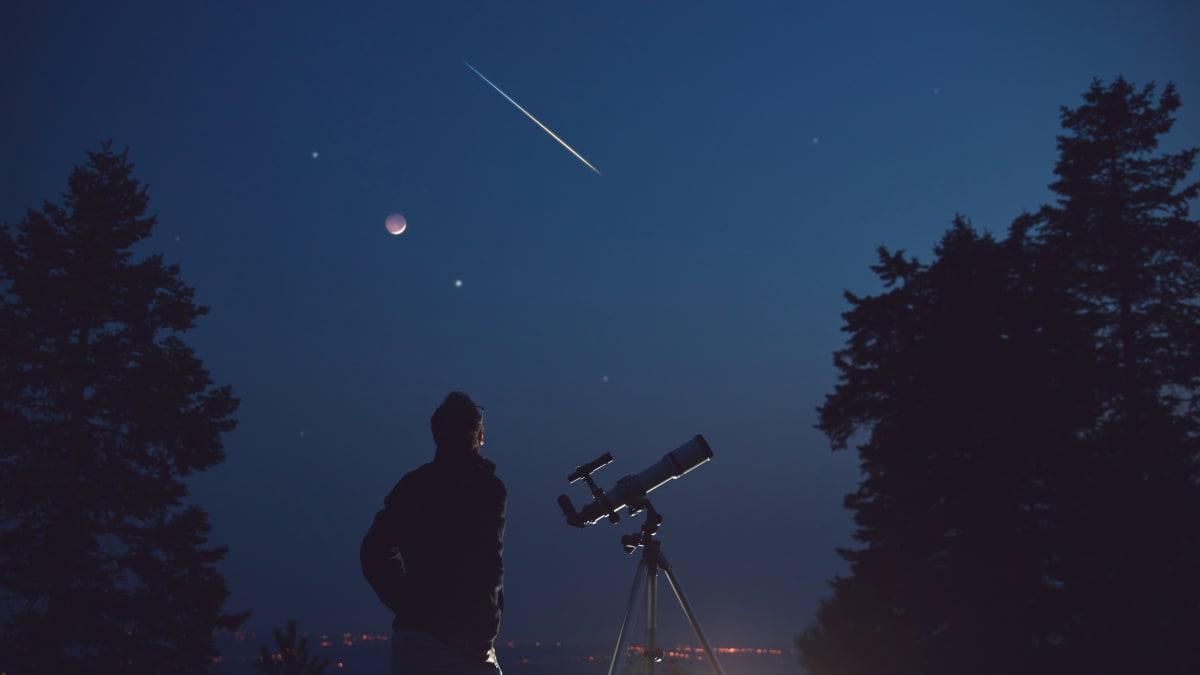
Stargazer beholding the view of shooting stars with a telescope perched on the ground
A curious thing about Quadrantids meteor shower is that it is one of the most intense events, but also short, with its peak lasting just six hours, which means you have only night to enjoy the sparkling buffet. The 2026 Quadrantids meteor shower will reach the peak on January 4. "A lot of meteor showers last days — the Quadrantids last a few hours," NASA meteor expert Bill Cooke explained to Space.com. Glowing fine trains of bluish meteors will be visible through the peak hours. The bad news is, that this year, the shower is coinciding with January’s full moon, which is also the Wolf Supermoon.
The moon will be larger and brighter than usual, and therefore, can disrupt the stargazers’ view. The good news is that the forecast says there will be no cloud cover. According to American Meteor Society, the average hourly rate of shooting stars is expected at 25 in dark skies. Glaring moon may reduce the number to around 10 per hour. Usually, NASA says, there are around 60 to 200 meteors per hour in this particular shower.
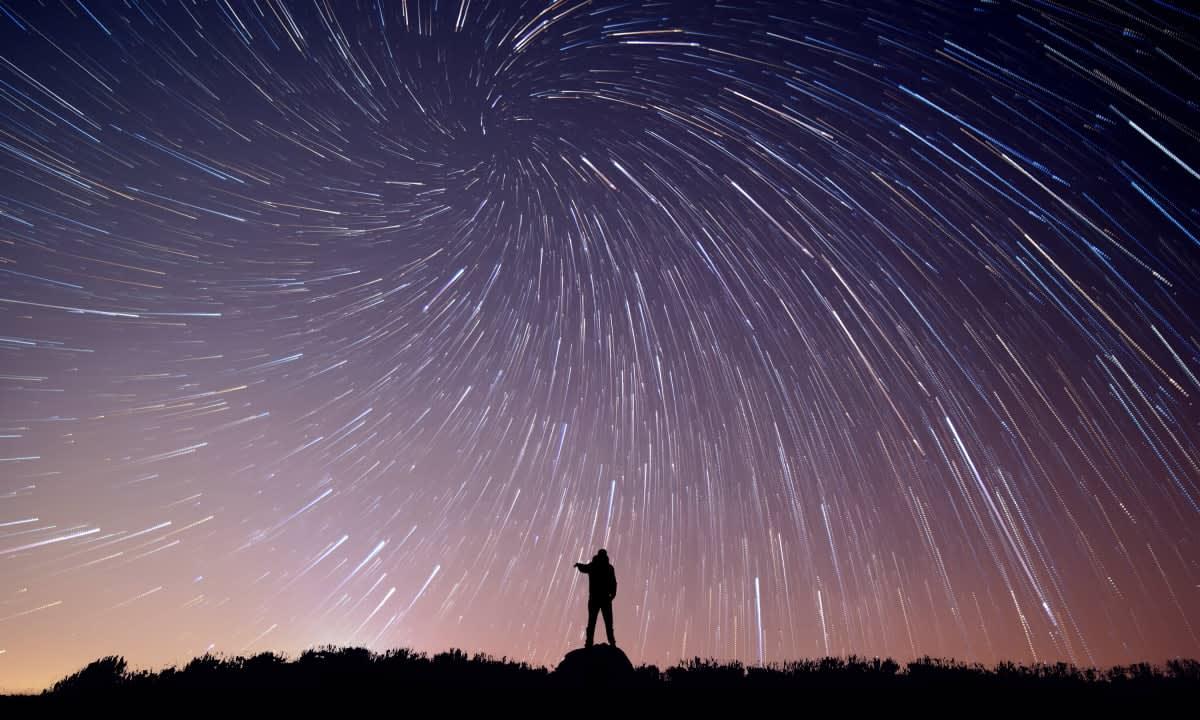
Silhouette of a person standing under a sky filled with shooting stars
In contrast to the other light shows like Geminids and Ursids, the name of the Quadrantids shower comes from the constellation “Quadrans Muralis,” located between Bootes and Draco. After it was first discovered in 1700s, the constellation’s position went obsolete, and ever since, astronomers assign the radiant point of Quadrantids shower near Boötes, near the edge of the Big Dipper in the northern hemisphere sky.
The Quadrantids is generated by the debris of an asteroid called 2003 EH, discovered in 2003, per NASA. The asteroid orbits the Sun once in every five and a half years. Scientists believe that 2003 EH was once a comet. Too many trips around the Sun stripped the asteroid of its ice, leaving a bare rocky core. "It was either a piece of a comet or a comet itself, and then it became extinct," which means that all the ice and other volatiles on the comet have evaporated, reflected Cooke.
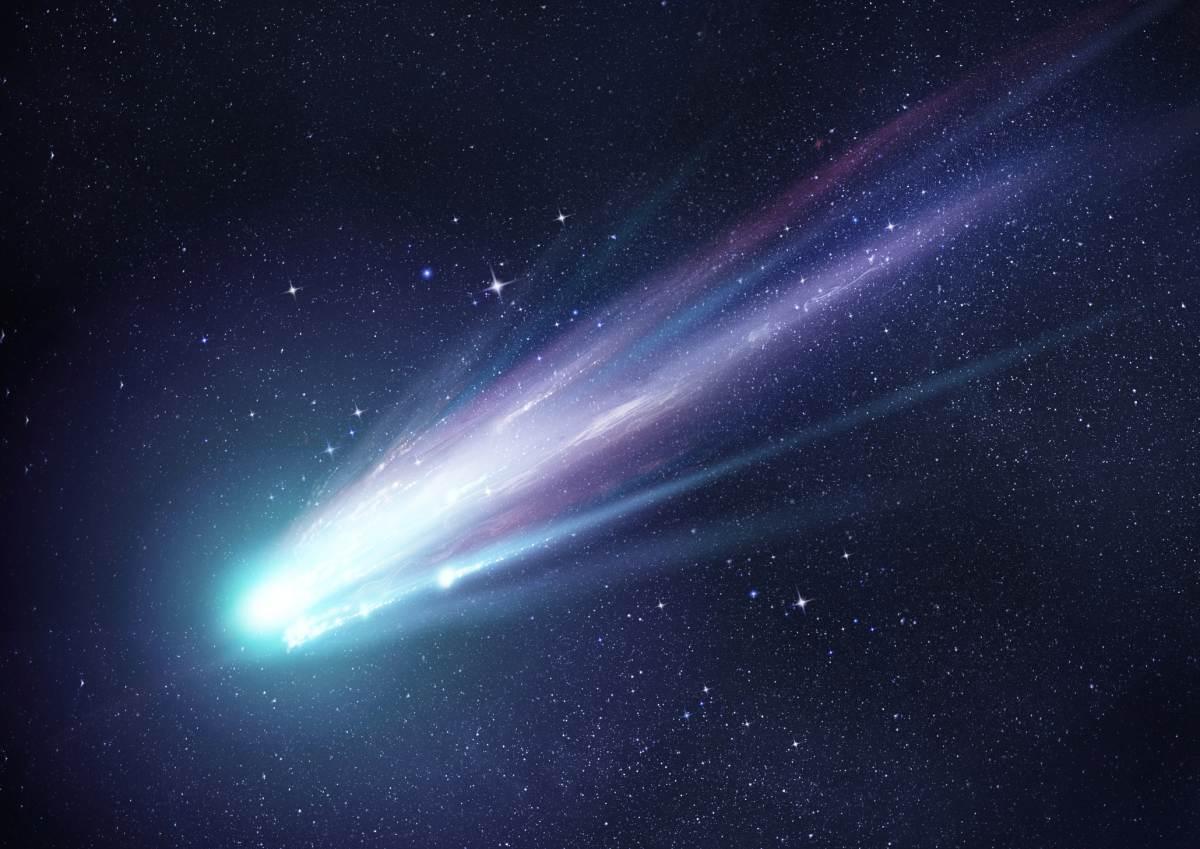
Bright glowing comet hurtling in space
The show begins on the night of January 3 but lasts only six hours. One of the first things you can do to watch this shower is to cultivate an unflinching endurance for the nippy, icy winds and take about 20 to 30 minutes to let your eyes adjust to the darkness. Choose a rural area where there is minimal disturbance of city lights. Being a Gold Tier Dark Sky Park, the Death Valley National Park is also an intelligent choice.
Denver Astro suggests that the meteors are best enjoyed with the naked eye, without telescopes or binoculars. To begin with, Space.com has also recommended some items you can add to your meteor watching list, including a red flashlight, hot beverages, sleeping bags, and deck chairs. And while this buffet of sparkle is known for filling the viewer with warmth, you must dress in warm, layered clothing, so you don’t end up freezing in the wintry cold.