
Astrophysicist Says This Interstellar Object Could Reach the Stars Much Faster Than Voyager 1
Published Dec. 23 2025, 1:50 a.m. ET

Man standing on a desert dune gazing at stars in the sky
The twinkling stars in the sky are further than they appear. So much so that NASA's Voyager 1 is still on its way to reach the star system since its launch on September 5, 1977. It will probably take about 28,000 years to reach its destination. Meanwhile, it will continue to traverse the space at a speed of 38,026.79 miles per hour (17 km per second), according to NASA. However, there's an alternative that can reach the star system much faster than Voyager. Astrophysicist Avi Loeb has claimed that the interstellar comet 3I/ATLAS could trace its journey to the stars in about 8,000 years. No science or genius technology is helping the comet accelerate. The reason it can beat the Voyager designed by scientists is that it's inherently fast.
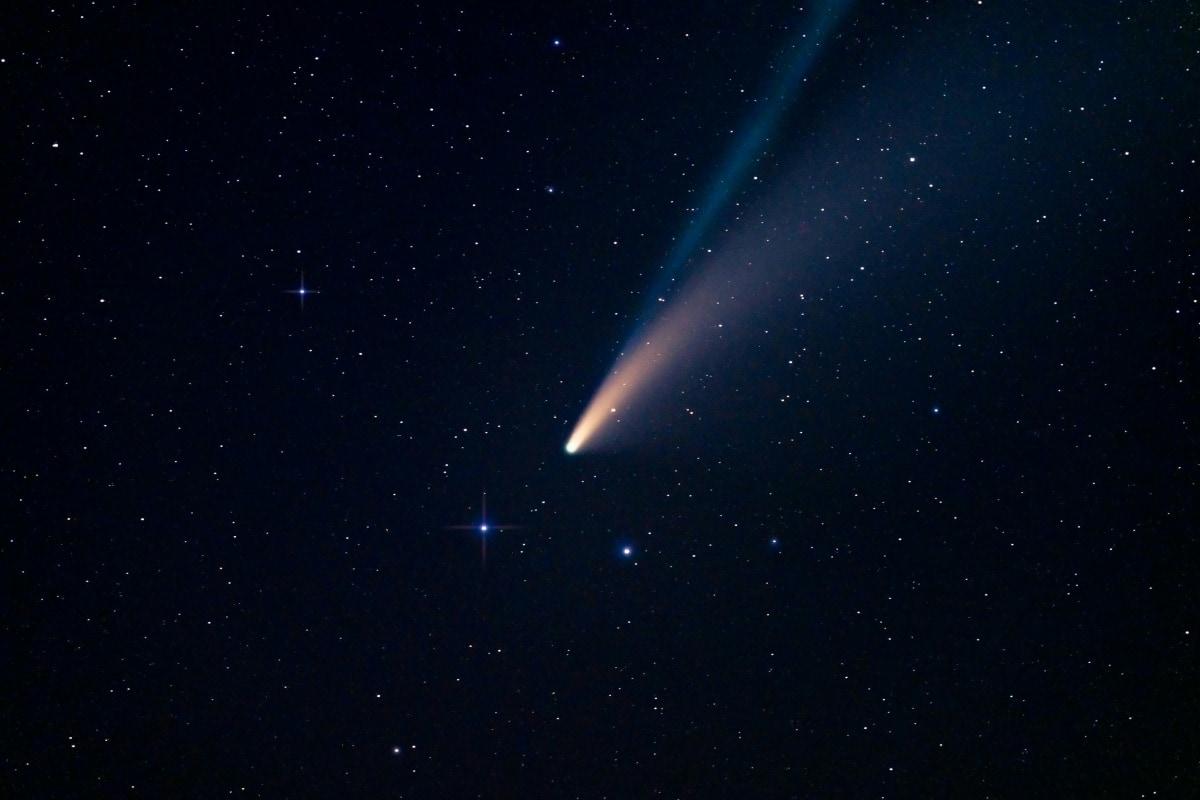
Glowing comet flitting through the star field
The interstellar comet has a speed of approximately 134,000 miles per hour (60 km per second), much faster than Voyager 1. "The discovery of interstellar objects over the past decade offers new opportunities for humanity to send time capsules to interstellar space," writes Loeb. Interstellar objects like the comet 3I/ATLAS travel at a fast speed because of how they originated. They move through space due to gravitational pull, which makes them faster than any man-made probe. As for the Voyager 1, certain scientific and engineering constraints prevent it from accelerating at a high speed without getting damaged. Loeb believes that interstellar objects push the horizon beyond what man-made probes are limited to.
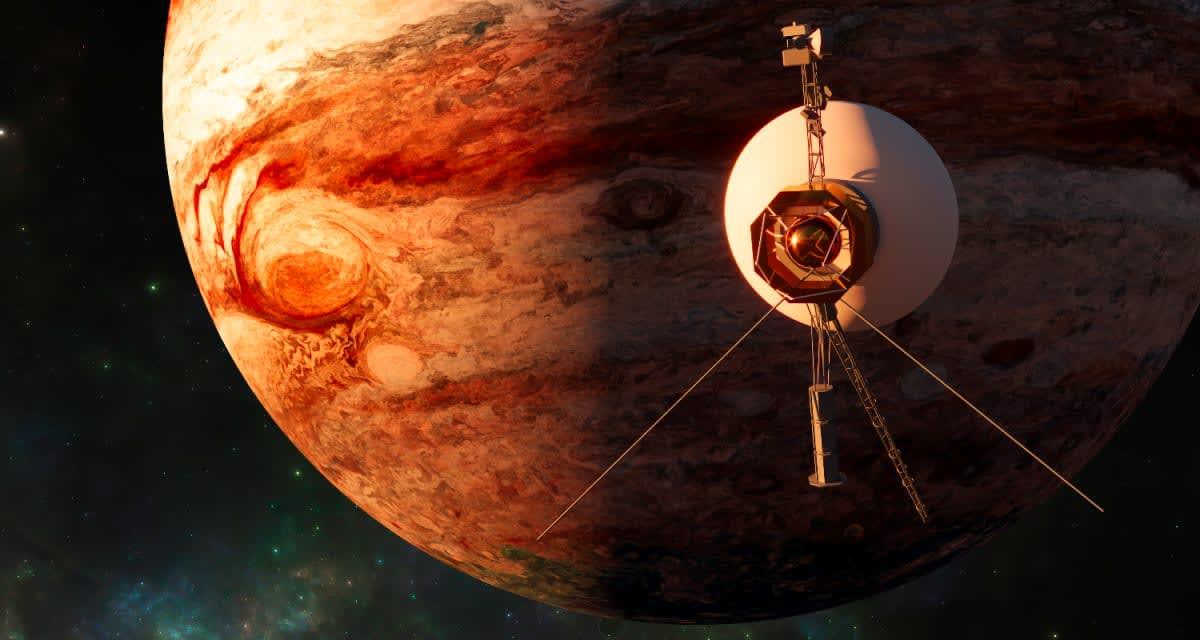
The Voyager probe is exploring the planet Jupiter.
Loeb even suggested creative ways humans might leave messages for the extraterrestrials in the near future. Rather than building a faster spacecraft, which burns resources, time, and energy, Loeb suggests placing human messages on these inherently fast cosmic visitors. The scientist believes the message could either be engraved using lasers or placed in a disc which can be attached to the interstellar object. "One approach would be to design interceptor missions that would deposit analogs of the Voyager’s Golden Records on the surface of a large interstellar object like 3I/ATLAS, with the hope that these records will be recognized by interstellar archaeologists," he explained. But there's one major problem: Will these messages be noticed by the extraterrestrials, or will the efforts go to waste?
Bright glowing comet hurtling in space
There are more chances that astronomers miss these messages because even the most powerful telescope may not capture the message unless the object travels too close to the Earth. "However, if any extraterrestrial billboard with letters that big shows up at a distance smaller than 0.1 AU, it will open up a new discipline on university campuses labeled as 'Interstellar archaeology,'" he added. If the scientists were ever to find signs of technology on interstellar comets or asteroids, it would completely change their perception of space. "Future interceptor missions, like ESA’s Comet Interceptor, could get close to interstellar objects and provide close-up photographs of them," the scientist suggested. Overall, Loeb believes that recognizing the potential of these interstellar objects could revolutionize space study.