
Comet 3I/ATLAS Makes Its Closest Approach to Earth This Week — Here’s How to View It
Published Dec. 18 2025, 2:43 a.m. ET

A man gazing at a comet in the night sky
The comet 3I/ATLAS will soon make its closest approach to Earth. The comet, which was initially believed to be an alien spacecraft, was first discovered on July 1, 2025, by the Asteroid Terrestrial-impact Last Alert System telescope in Río Hurtado, Chile, according to NASA. On Friday, December 19, the interstellar object will make its long-awaited closest approach to our planet, about 1.8 astronomical units or 170 million miles away. Although it's the "closest approach," the interstellar object would still be pretty far from the planet, a fleeting visitor for the day. Ever since its discovery, the comet has been following its predicted trajectory and speed. Initially moving at a speed of whopping 137,000 miles per hour, the 3I/ATLAS was deemed a fast-moving comet.
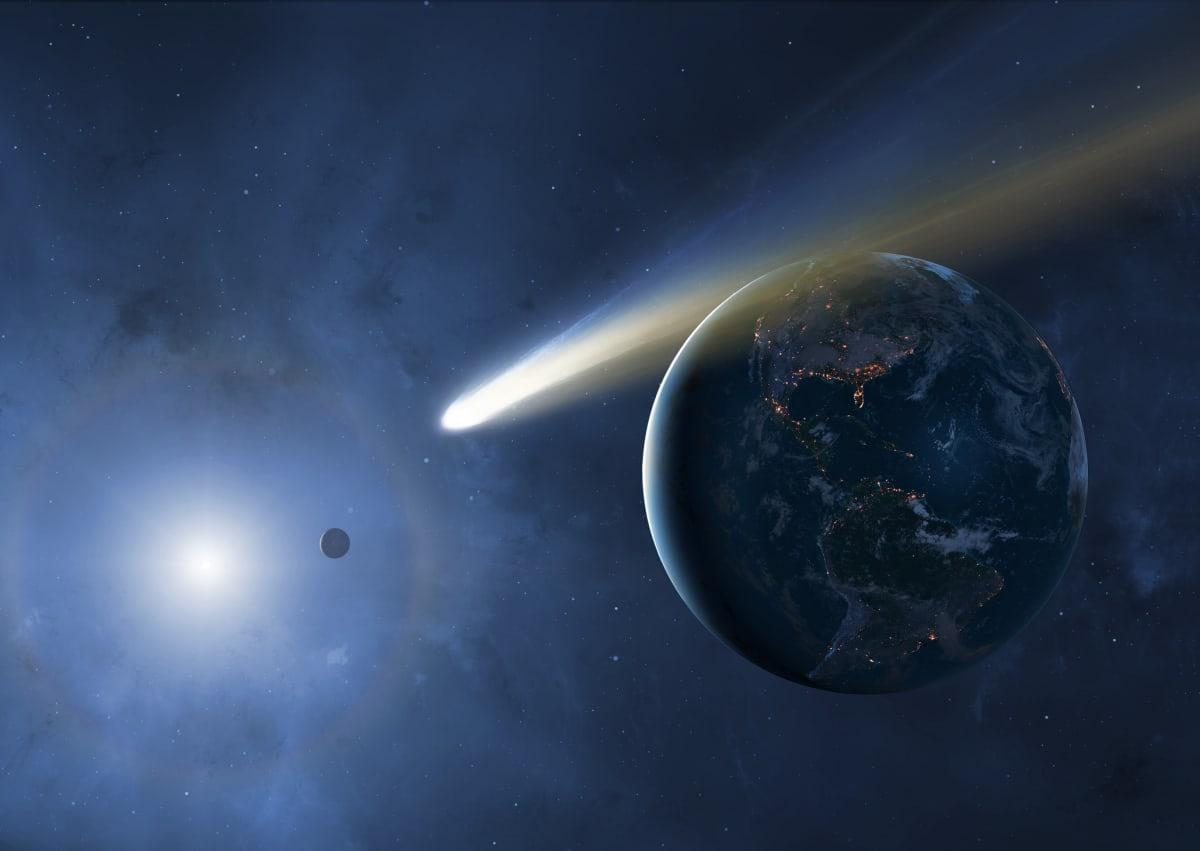
Glowing comet zipping past Earth
The speed had increased as expected when the comet reached its closest point to the Sun. But as it began moving away, the Sun's gravitational pull decreased, and so did the speed. After barreling through the solar system for a while, the comet will reach close enough for astronomers to get a better look at the much-hyped interstellar visitor. “After billions of years of galactic solitude and just moments in the warmth of our sun, interstellar comet 3I/ATLAS makes its closest approach to Earth on Friday,” said Dr. Gary Blackwood, Ph.D., a retired NASA Jet Propulsion Laboratory astronomer, in an email to Forbes. “On a hyperbolic orbit originating from the center of the Milky Way, this rare visitor will depart our solar system never to be seen again," he revealed.
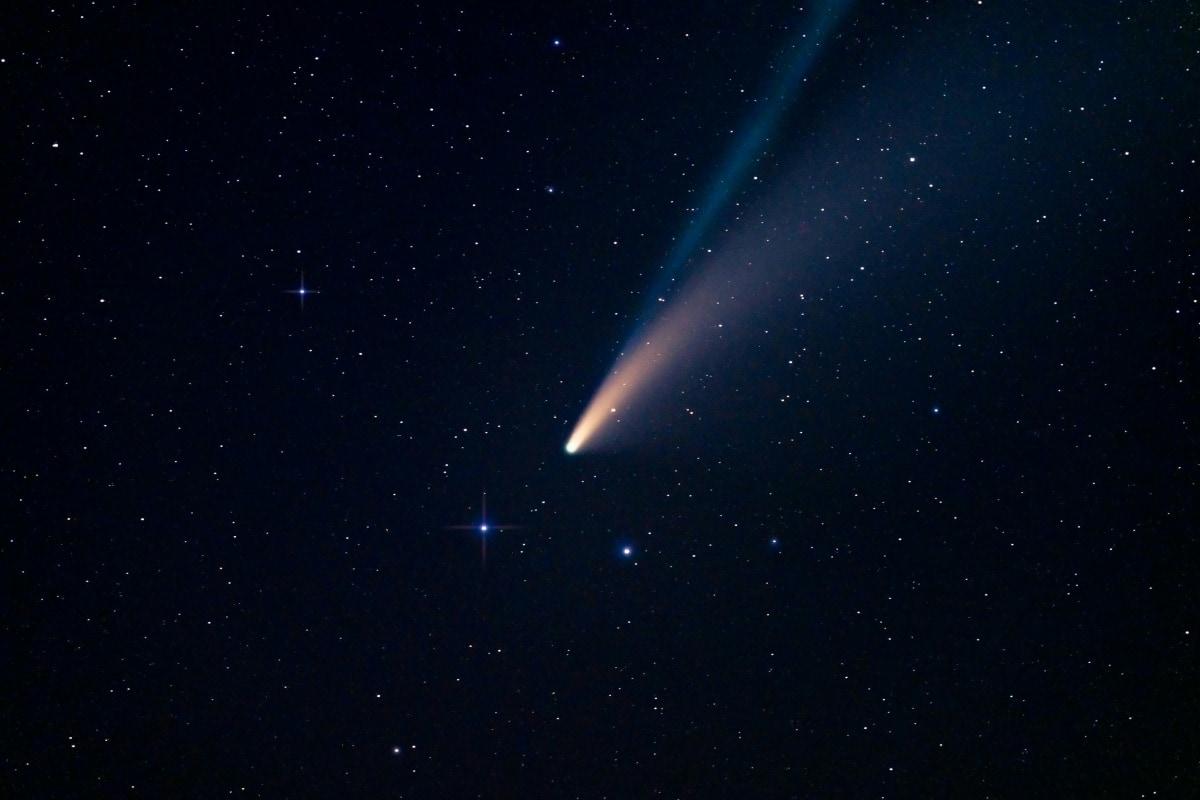
Glowing comet flitting through the star field
So, this Friday is the last chance for astronomers capture the glory of 3I/ATLAS, which might never again return to the solar system. Skywatchers can view the comet during the early pre-dawn morning by using a telescope with an aperture of at least 30 centimeters, NASA stated. You can also virtually view and track the comet’s path through NASA’s online simulation Eyes on the Solar System.
Harvard astrophysicist Dr. Avi Loeb had speculated that the comet is not a comet at all but an alien “mothership.” However, studies have found that the object behaves similarly to a comet. It contains an icy nucleus and a coma, a cloud of dust and gas surrounding a comet when it passes close to the Sun. These indications helped scientists determine that the object was, in fact, a comet. According to the outlet, Marshall Eubanks, the lead author of a new research paper, explained the factors that helped them determine the nature of the comet.
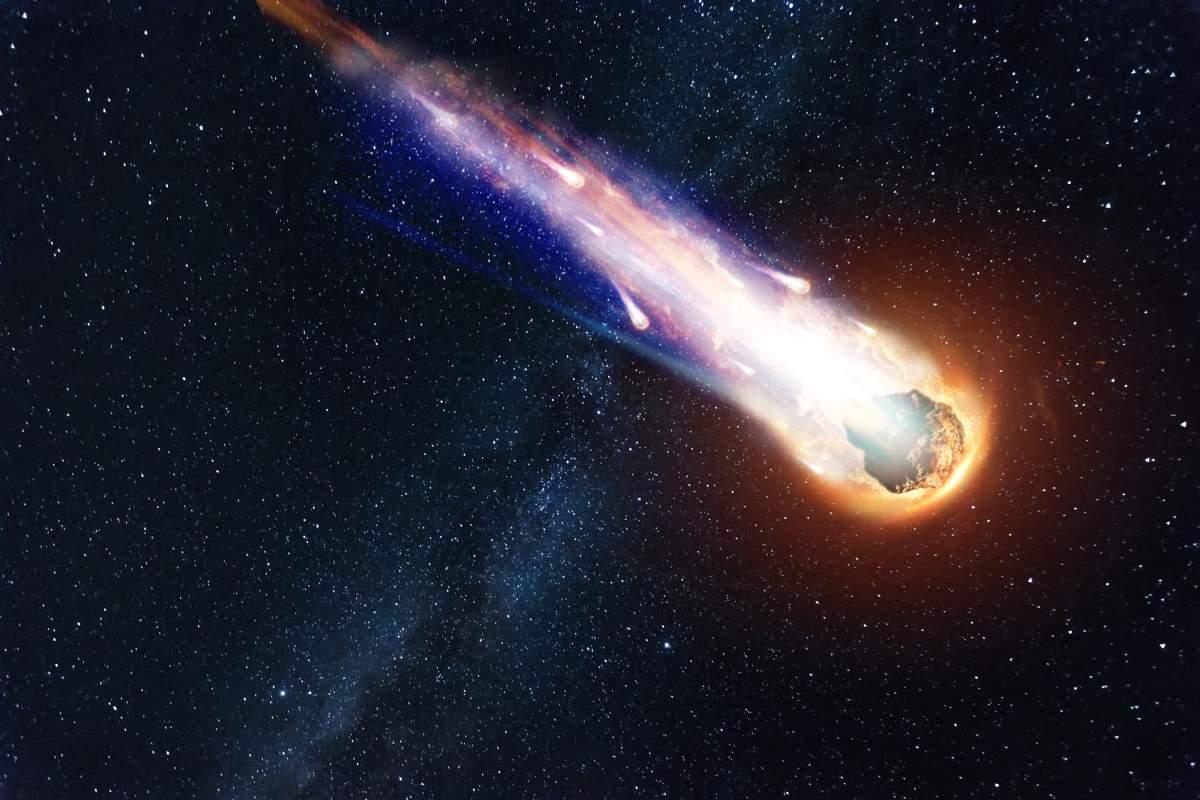
Glowing comet zipping through starry space
“We measured the non-gravitational acceleration using long-baseline astrometry,” he said. “The results are pretty typical of ordinary comets, and certainly not record-breaking,” Eubanks added. According to the research, the 3I/ATLAS was found to weigh about 44 million metric tons with a radius from 260–374 miles. Overall, the interstellar object is perfectly aligned with the characteristics of a comet, putting the alien spaceship speculation to rest. Many sky-gazing events are set to take place on December 19 to watch the 3I/ATLAS comet at its brightest, which includes Blackwood's live viewing event. “Comet 3I/ATLAS has become both a scientific and cultural phenomenon, and this week the eyes and telescopes of the world will be watching to learn everything we can,” he told the outlet.