
A Brighter-Than-Usual Wolf Moon Will Light Up January 2026 Skies — Here's When to Look Up
Published Dec. 24 2025, 6:32 a.m. ET

Silhouette of a wolf watching the full moon rise
Picture the cosmos as a grand fashion show and the celestial objects as models walking in their orbits. As moments pass, every model changes its costumes depending on its positioning and other factors. Earth’s satellite, the Moon, is the finest example, since it is visible in the night sky of the planet. While circling in its egg-shaped orbit, the Moon appears to change shape, size, and even color, depending on its position relative to the Sun and Earth. Some days, it appears rusty; other days, a faint yellow. And although every appearance it displays is a unique postcard moment for the earthlings, particular outfits attract human senses more than the rest. The “Wolf Supermoon,” for instance. According to The Old Farmer's Almanac, the first full moon of 2026, the Wolf Moon, will arrive on the night of January 3 at about 5:03 a.m. EST.
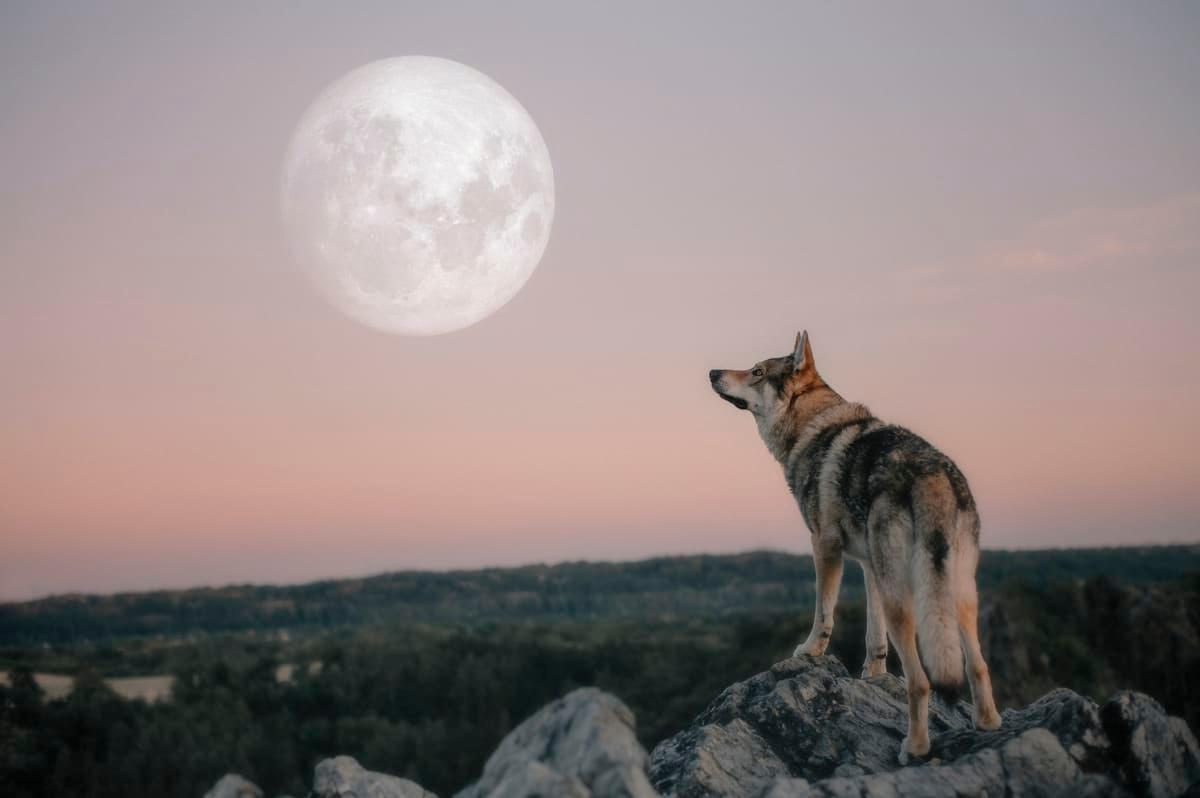
Wolf looking at the full moon
January's full Wolf Moon, which is also a supermoon, will rise in the Gemini constellation, appearing bigger and brighter than usual. For several days, it will remain bright and big, ultimately shifting into the next phase of the lunar cycle. According to NASA, it can appear up to 14 percent bigger and 30 percent brighter than the faintest full moon of the year. Yes, a supermoon is not the same as a full moon, although the two are closely related. All supermoons are full moons, but not all full moons are supermoons.
A full moon occurs when the side of the Moon facing the Earth is completely illuminated by the Sun. In contrast, a supermoon is a larger-than-usual Moon because it comes unusually close to the Earth, precisely at the closest point called perigee. At about 226,000 miles from Earth, the Moon reaches its perigee during its 27-day orbit around the planet.
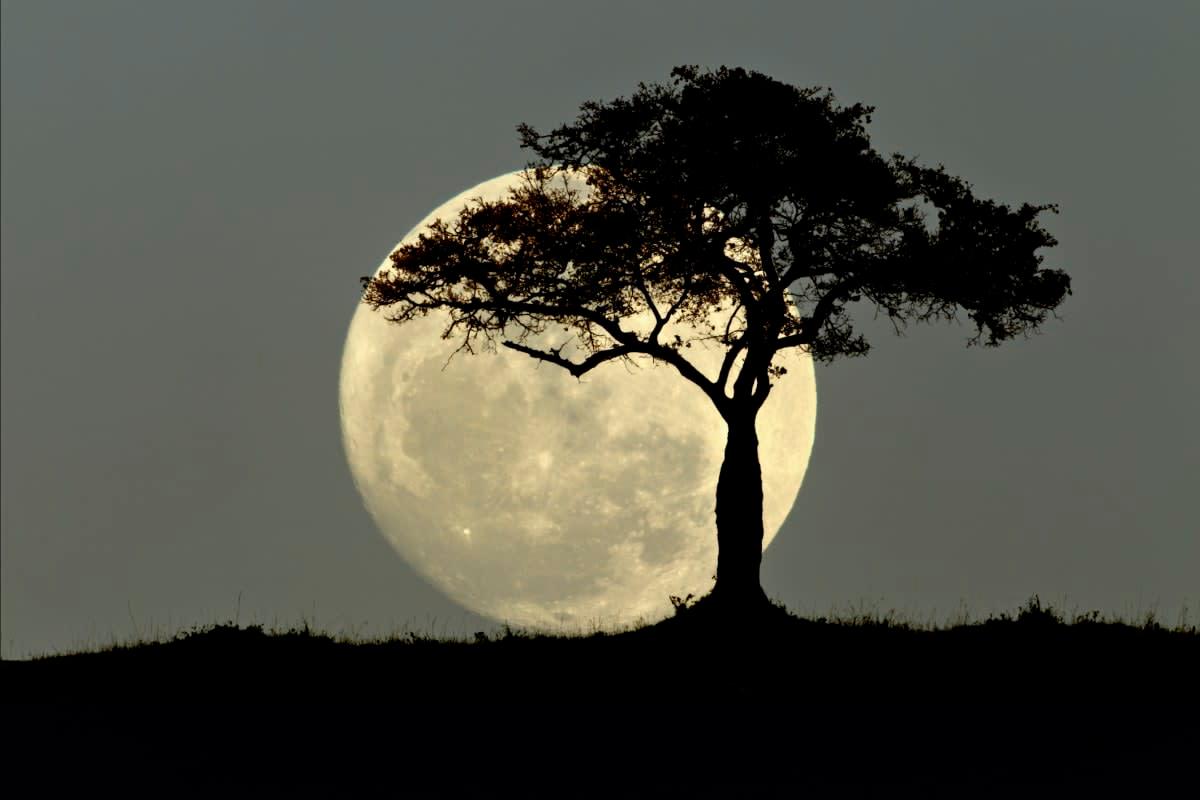
Silhouette of a tree against the full moon glowing in the backdrop
There is nothing “super” about the “supermoon” except that its closeness to Earth makes it look bigger than normal, per NASA. Otherwise, this name “supermoon” isn’t even an astronomical term, per National Geographic. It was coined by an astrologer. The actual name for this type of Moon is “perigee-syzygy of the Earth-Moon-Sun system.” Syzygy refers to three or more celestial bodies in a straight line.
Where does the term “wolf” fit into this picture? The term wolf signifies a light-hearted story attached to the celestial event based on the behaviors of these predators. At this time of the year, when winters are at their peak, it is believed that wolves tend to become hungry. As they wander out of their dens, seeking food and mates, they are heard howling at the moon during this time. The image appears frequently in movies, mysteries, and advertisements of psychics and astrologers.
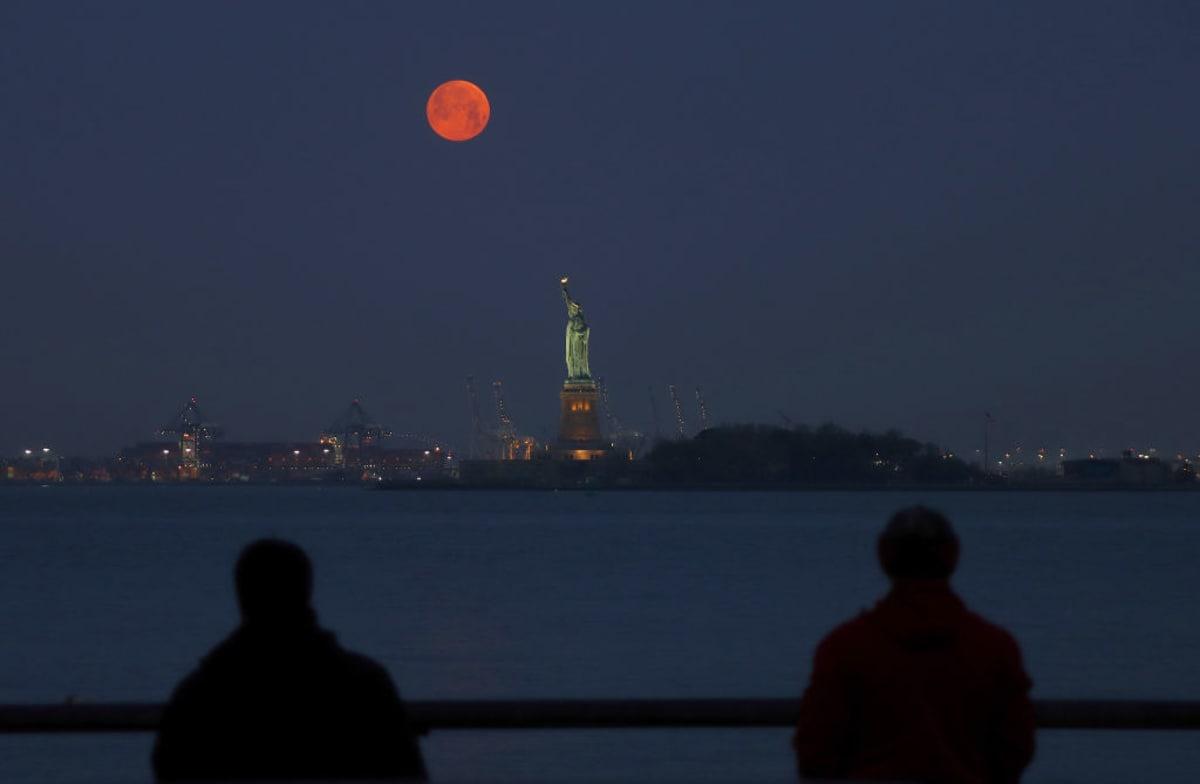
A supermoon seen from NYC.
This year, the Moon's color might be something like an orange-yellow hue, generated by a phenomenon called Rayleigh scattering, where bluer wavelengths of light are deflected while the redder ones pass unhindered, following the moonrise, per Space. Around sunset, the Moon is expected to rise from the eastern horizon; by midnight, it will be bright overhead.
If you are interested in these celestial displays, you can also expect to see some shooting stars along with this Wolf Supermoon. As the day of the supermoon coincides with the peak of the Quadrantid meteor shower (January 2-3), meteors may come hurtling from the Boötes constellation, casting surreal displays of glittering lights. If you missed this year’s Geminid meteor shower or wanted to see more of it, this can be your opportunity.