
Photographer Captures Rare View of Andromeda Galaxy Rising Over Yosemite’s El Capitan
Published Feb. 9 2026, 4:42 a.m. ET

(L) Astrophotographer captured Andromeda Galaxy over Yosemite's El Capitan; (R) M31 Andromeda from the floor of Yosemite Valley
On those dark, moonless nights, when Yosemite is engulfed in quiet spirals of cool mist, magic unfolds in the skies above its towering El Capitan. Rising 3,000 feet from the valley floor, the ancient stone gets bathed in starlight. Swimming in a volcanic silence, zillions of stars look down upon it with their glittering, icy gaze. The sky erupts into fire, and physics shakes hands with poetry as the Andromeda Galaxy, the closest neighbor of the Milky Way, emerges from the vicious blackness of the night, pulsing with dazzling whorls of light, winding helixes of glowing cosmic dust, and twisting streets of starry material. In September 2019, astrophotographer Jake Messner (@messner_photo) happened to be in the right place at the right time to witness the scene. He ended up capturing it on his Sony mirrorless camera.
While the appearance of Andromeda is not an unusual or once-in-a-lifetime event, it’s rare for someone to come across it at the right time and record it in a photograph. Messner was lucky to be in the right place at the right time, and he was able to arrest the deliciously dreamlike sight in a photographic album. He was standing at the entrance of the Yosemite Valley meadow, facing northeast, when his camera took the shot. Apart from Andromeda, his shot recorded another neighbor, the Triangulum Galaxy, which appears beside the cliff in the photo.
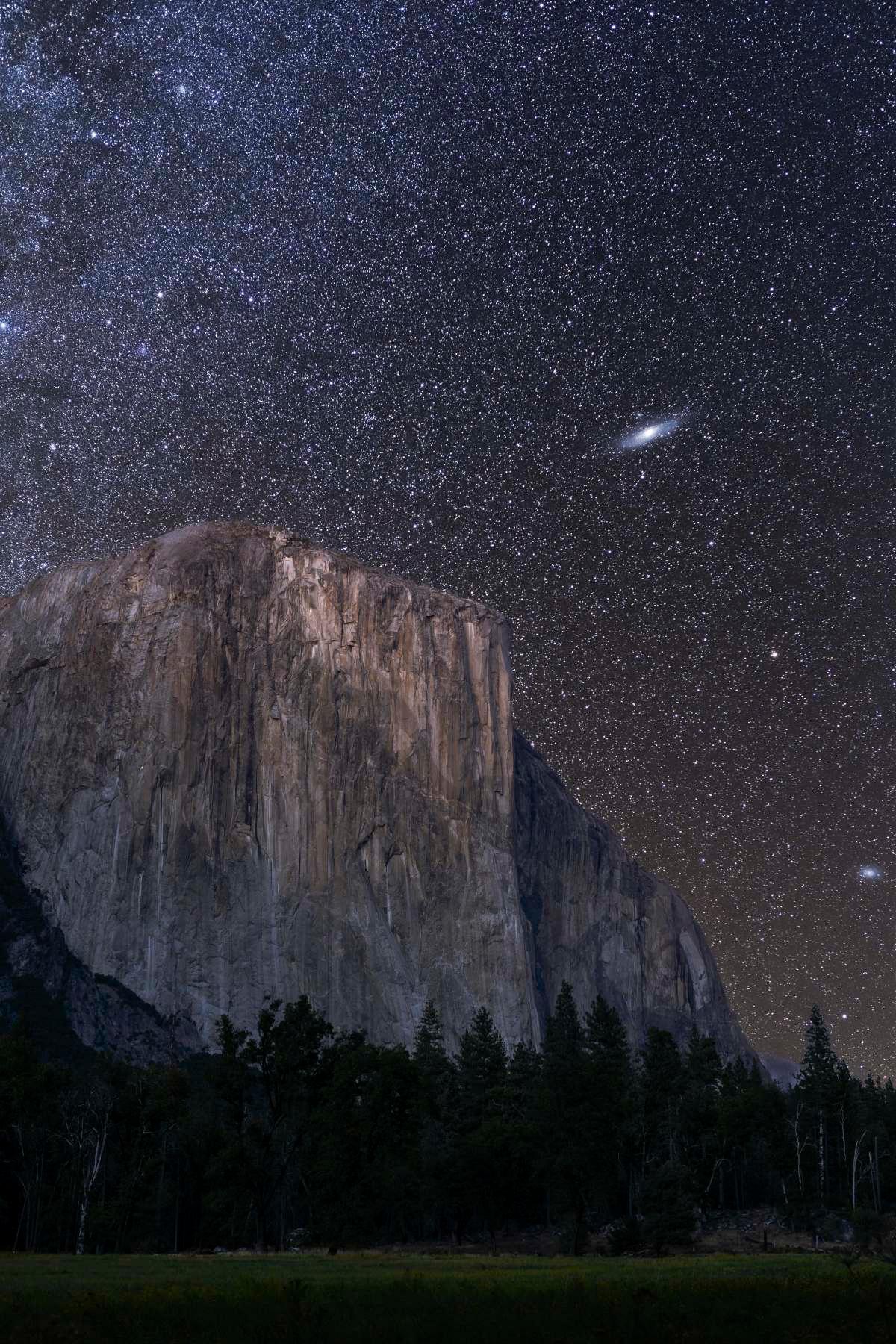
Andromeda Galaxy Over Yosemite's Iconic El Capitan
Located approximately 2.5 million light-years away, Messier 31, or the Andromeda Galaxy, is our nearest spiral galaxy and is usually visible without a telescope. On days when there is the interference of the Moon’s light, the galaxy appears as a fuzzy, faint smudge of light, but on days when the Moon is absent or overshadowed by clouds, the galaxy explodes into full-fledged view. When NASA scientists observed the galaxy with the Chandra X-ray telescope, they detected dense clusters concentrated with trillions of stars and around 26 black hole candidates. Scientists have predicted that about 5 billion years later, Andromeda will enter a collision course with the Milky Way, and the two galaxies will merge into what would be a Milkomeda or a Milkdromeda.
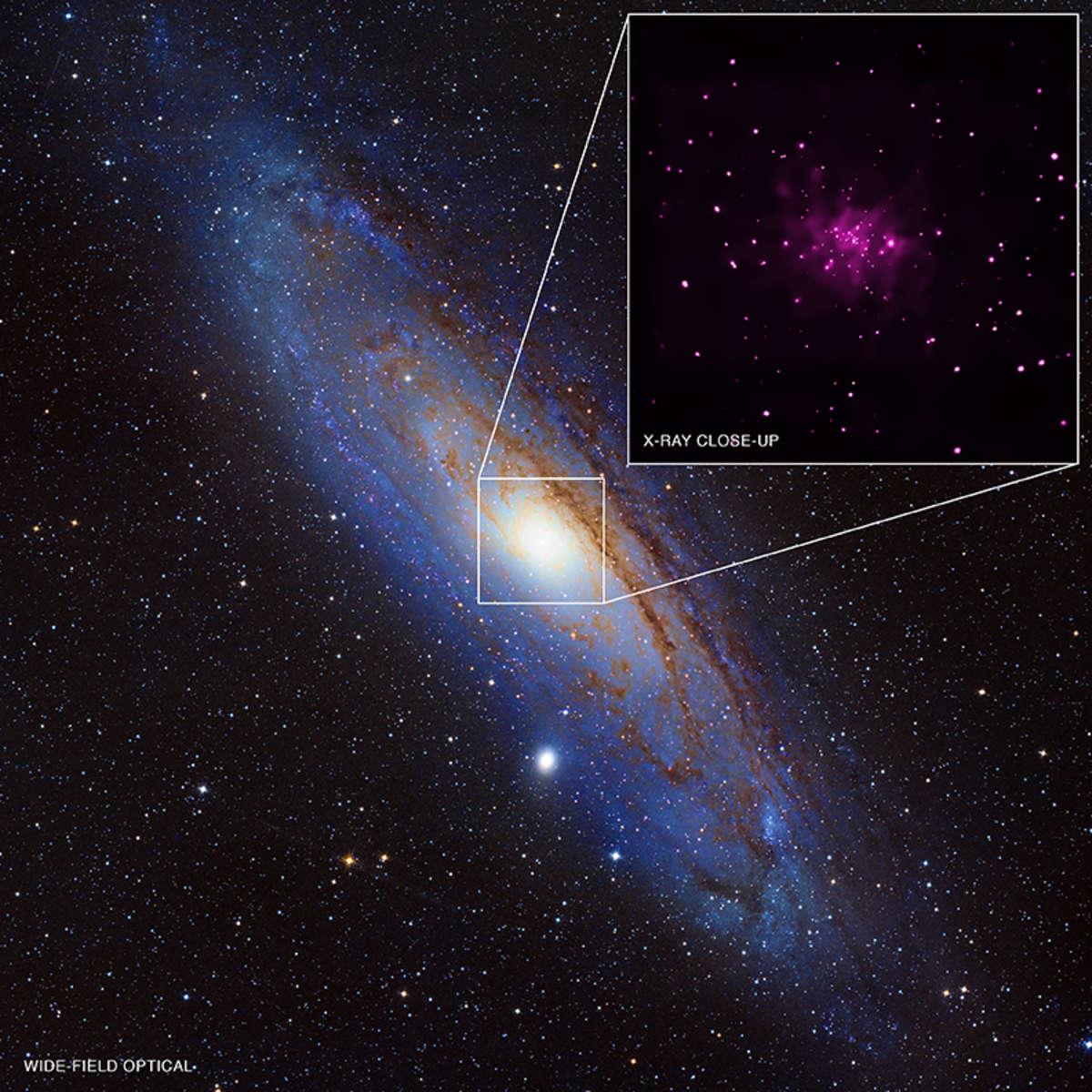
A wide-field view of Andromeda, with an inset containing X-ray data from multiple observations of the central region.
In the image Messner captured, the galaxy emerges as a spiral of purplish halo with scintillating golden glow illuminating the center. Surrounding the purple-golden disk of light is the inky black abyss of cosmos, punctuated with zillions of sparkling dots. Nearby is a tinier disk, likely the Triangulum Galaxy. El Capitan, the jewel of Yosemite’s crown, is painted in a swath of the celestial light. On the floor, where light couldn’t reach, dark silhouettes of trees leap from the shadows.
Calling it one of the “favorite images” he ever captured at night, Messner reflected that it was also quite fascinating since it is “impossible to witness the starscape in this detail with the naked eye.” The quality of visible stars, he said, was “fantastic.” Although the visibility was fantastic, Messner noted that there were traces of light pollution and atmospheric haze stemming from the buildings in the valley. Luckily, the pollution didn’t affect the quality of the image, which succeeded in enrapturing the attention of millions on the internet. On Reddit, one viewer called it “dizzyingly beautiful.” Messner’s iconic photograph is now also available as a paper print on his website.
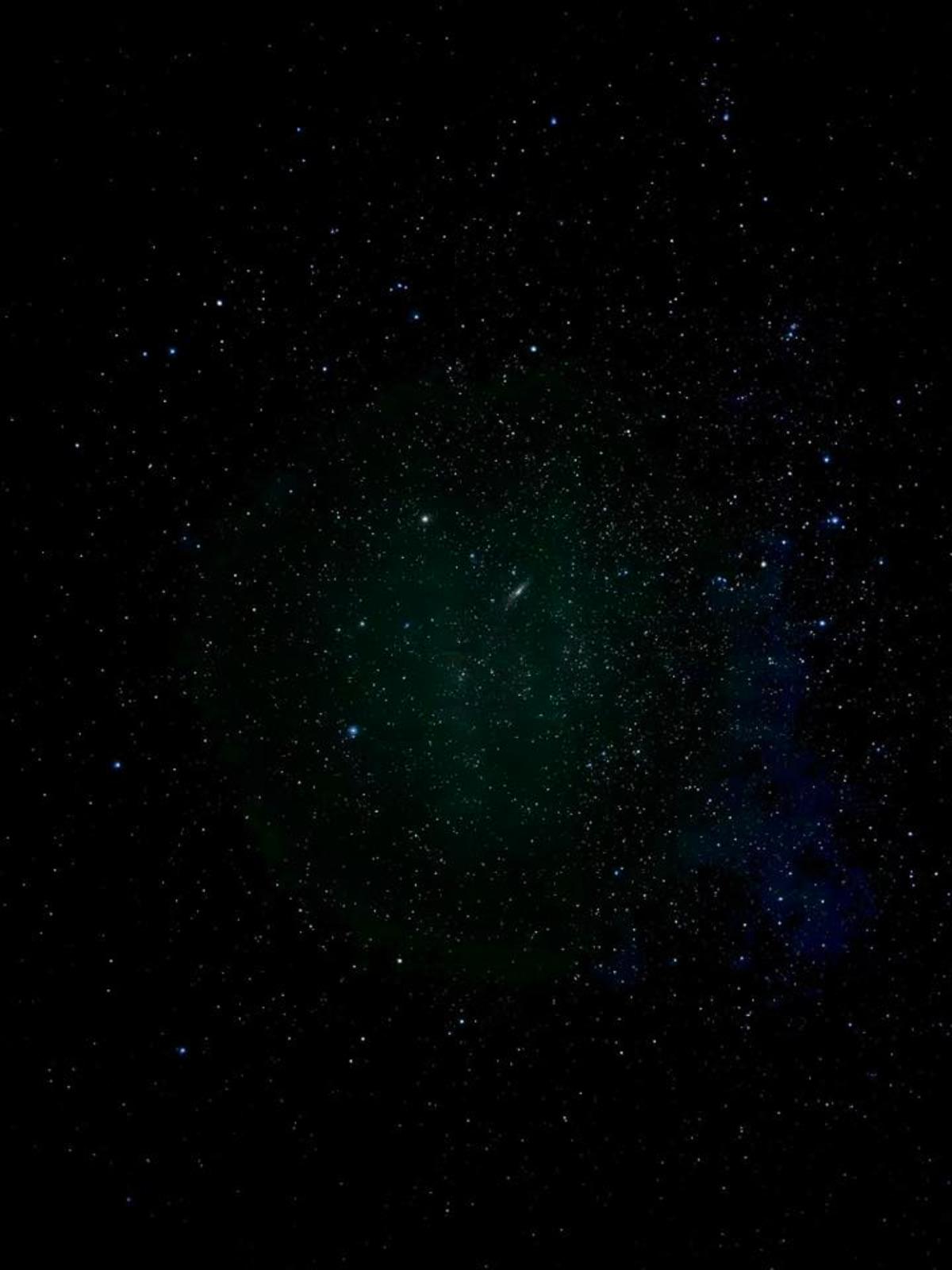
Man captured a night sky snapshot over Yosemite's El Capitan that he believes is Andromeda Galaxy
Messner, however, is not the only one to have witnessed the visual treat up close. Recently, a man named Rob DeLeon, who lives near Yosemite, snapped a picture with his iPhone 17 Pro Max that he believes is Andromeda. Rare or not, shots like these remind us of what one viewer wrote on Reddit: “It’s scary to realize how small and insignificant we are!”