
This Galaxy Is Making Stars 180 Times Faster Than Ours — and Experts Are Taking Note
Published Jan. 9 2026, 2:27 a.m. ET

Distant Galaxy Y1 spotted by ALMA telescope reveals intriguing mysteries of early universe
Full name: MACS0416_Y1; Nickname: Y1; Location: 13 billion light-years away from Earth; Residence: Inside the long, winding river-shaped constellation Eridanus. The biodata of this elusive galaxy is an impressive history book that tells the tales of the universe when it was still in its infancy. During this cosmic childhood, right after the Big Bang, intensely heated clouds of gas and dust triggered a chain reaction of star formation. Although trillions of galaxies are swimming in the cosmic space today, this one galaxy seems to defy everything scientists and astronomers ever thought about the universe.
Playing in its celestial field, the glowing cosmic clouds of gas and dust in this galaxy are captivating storytellers performing in an extremely sophisticated system of star formation. In a study published in the Monthly Notices of the Royal Astronomical Society, researchers documented a glittering stellar nursery that Y1 hosts, which churns out stars. Y1 was first observed by the Atacama Large Millimetre/submillimetre Array (ALMA) telescope, famed for its ability to study distant galaxies. Its exceptional location in Chile enables it to hunt down galaxies residing far, far away and study them with the information revealed by their light. These galaxies often emit powerful streams of light that illuminate the clouds of gas and dust.
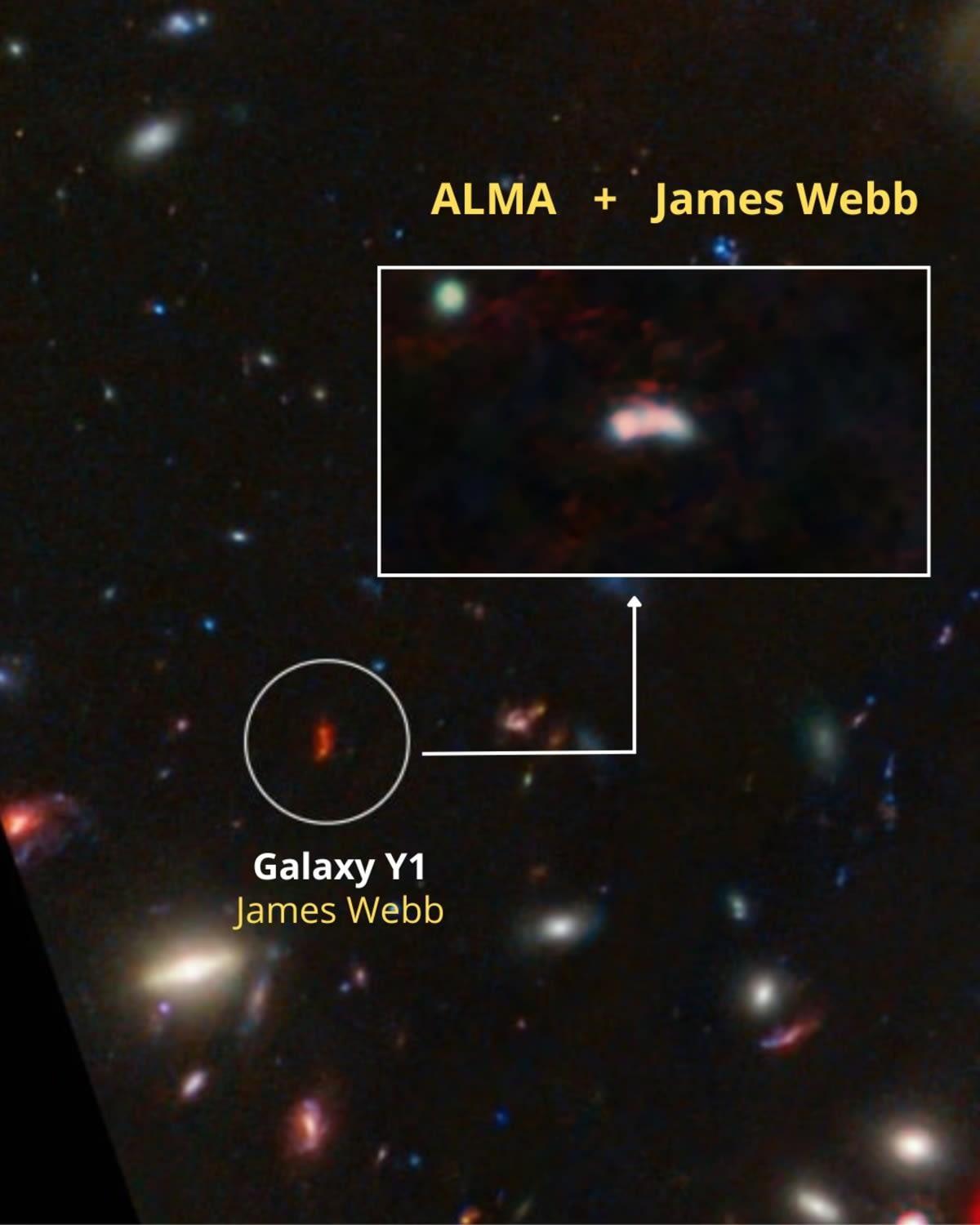
Distant Galaxy Y1 spotted by ALMA telescope reveals intriguing mysteries of the early universe
Like most galaxies, Y1 is also rumbling with billowing clouds of glowing gas and dust, enshrouded in dark matter. What differentiates it, however, from most galaxies is its notoriously high star formation rate (SFR), which surpasses that of even the Milky Way. The Milky Way churns out stars about one solar mass each year. But Y1 grinds out a whopping more than 180 solar masses per year. It’s not just a small-scale mill, but a hulking superheated mass star production factory. “We're looking back to a time when the universe was making stars much faster than today,” said lead author Tom Bakx in a press release. "Previous observations revealed the presence of dust in this galaxy, making it the furthest away we've ever directly detected light from glowing dust,” he added.
The toasted star factory was detected at a redshift of 8.3. Redshift is a measurement that indicates the distance of galaxies as they stretch. The larger the wavelength becomes, the redder the galaxies appear; the smaller the wavelength becomes, the bluer they seem. While Y1 was born only 600 million years after the Big Bang, the light glowing inside it has been travelling for more than 13 billion years to reach us.
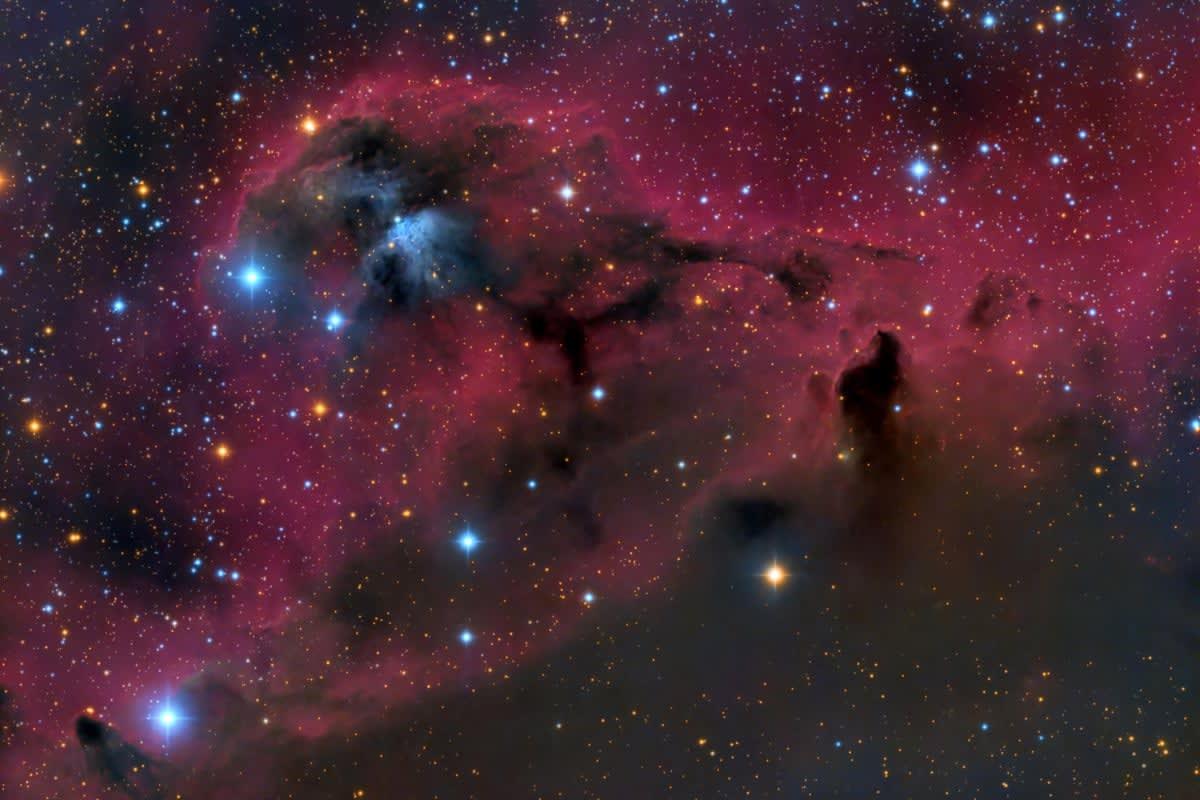
Glowing red nebulae glittering with blue and golden stars
A fleet of other telescopes examined the radio emissions wafting from Y1 and detected a light whose color suggested that it was 4 million years old. Co-author of the study, Yoichi Tamura from Japan, reflected that “it ain’t easy,” the dust is too abundant to have been formed in 4 million years, which is puzzling. He suspects that older stars might be hiding in the galaxy, or they may be previous residents that died out and vanished, according to Japanese media outlet NAOJ.
Such an intense pace of star formation wouldn’t last for too long, though, scientists believe. Eventually, the supplies of dust and gas would run out, and the machinery of the superheated star factory would fizzle out. Though similar to the stellar nurseries observed in the Orion and the Carina Nebulae, this one appears to be approaching a “dust budget crisis,” as Ken Mawatari, a researcher at the University of Tokyo, predicted.
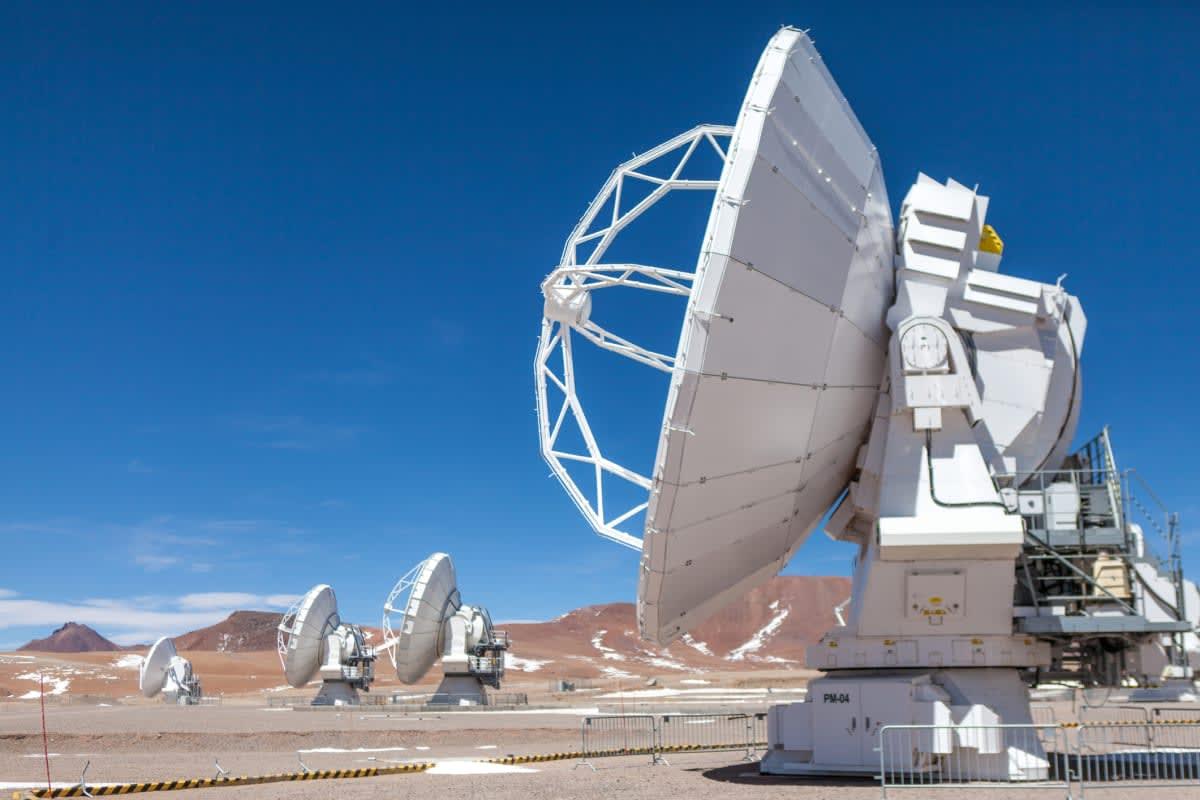
NASA's Atacama Large Millimeter/submillimeter Array (ALMA) in the Atacama Desert in Chile
Still and all, Y1’s discovery comes as a fantastic key to unlock the door of understanding and gaining insights into how star factories work out there. Thanks to ALMA, we can now gaze into the mechanisms of these star factories up-close.