
NASA’s James Webb Space Telescope Confirms First 'Runway' Supermassive Black Hole
Published Dec. 22 2025, 6:29 a.m. ET

A depiction of black hole in space
Supermassive black holes are an anomaly that sits quietly at the centers of galaxies, holding gas and stars closer with their powerful gravity. But now scientists have discovered a mind-boggling phenomenon: a supermassive black hole skyrocketing through space. According to a new study, NASA's James Webb Space Telescope (JWST) captured the runway black hole that measures about 10 million times larger than the sun and moving at a speed of 2.2 million miles per hour. The supermassive black hole pulled away from its galaxy, and is now headed on a potentially endless journey through space. However, the black hole isn't casually strolling through space but doing so while pushing a "bow-shock" of matter, as large as a galaxy, dragging a 200,000 light-year-long tail of new stars from behind.
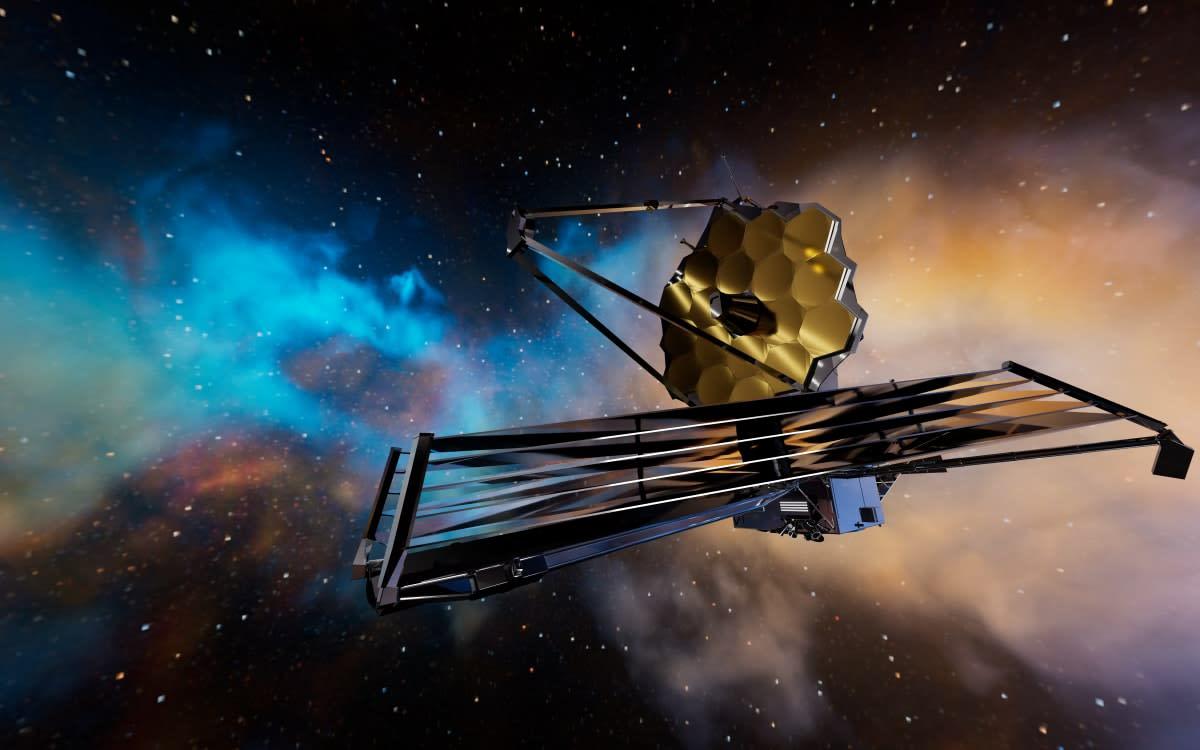
The James Webb Space Telescope exploring deep space
Speaking to Space.com, discovery team leader Pieter van Dokkum of Yale explained why this phenomenon almost sounds unreal. "It boggles the mind! The forces that are needed to dislodge such a massive black hole from its home are enormous. And yet, it was predicted that such escapes should occur!" he added. van Dokkum revealed that this supermassive black hole is the first and only one to escape its home galaxy. "That made it the best candidate [for a] runaway supermassive black hole, but what was missing was confirmation," he added. Thanks to the detailed observation of the JWST, scientists were able to confirm that the black hole has indeed moved far beyond its home, leaving streaks of evidence behind.
Depiction of black hole surrounded by glittering stars
In 2023, van Dokkum and his colleagues used NASA's Hubble Space Telescope and observed strange streaks, but their identity remained inconclusive. "All we really had was a streak that was difficult to explain in any other way," he said. However, the JWST helped them identify that a black hole was at the tip of the streak. Scientists couldn't determine the movement by simply observing the black hole. Since they are black and the boundaries blur into space, capturing a movement would be difficult. That's why they relied on the reaction of the surroundings. "We now know that it drives a shock wave in the gas that is moving through, and it is this shock wave, and the wake of the shock wave behind the black hole, that we see," he said.
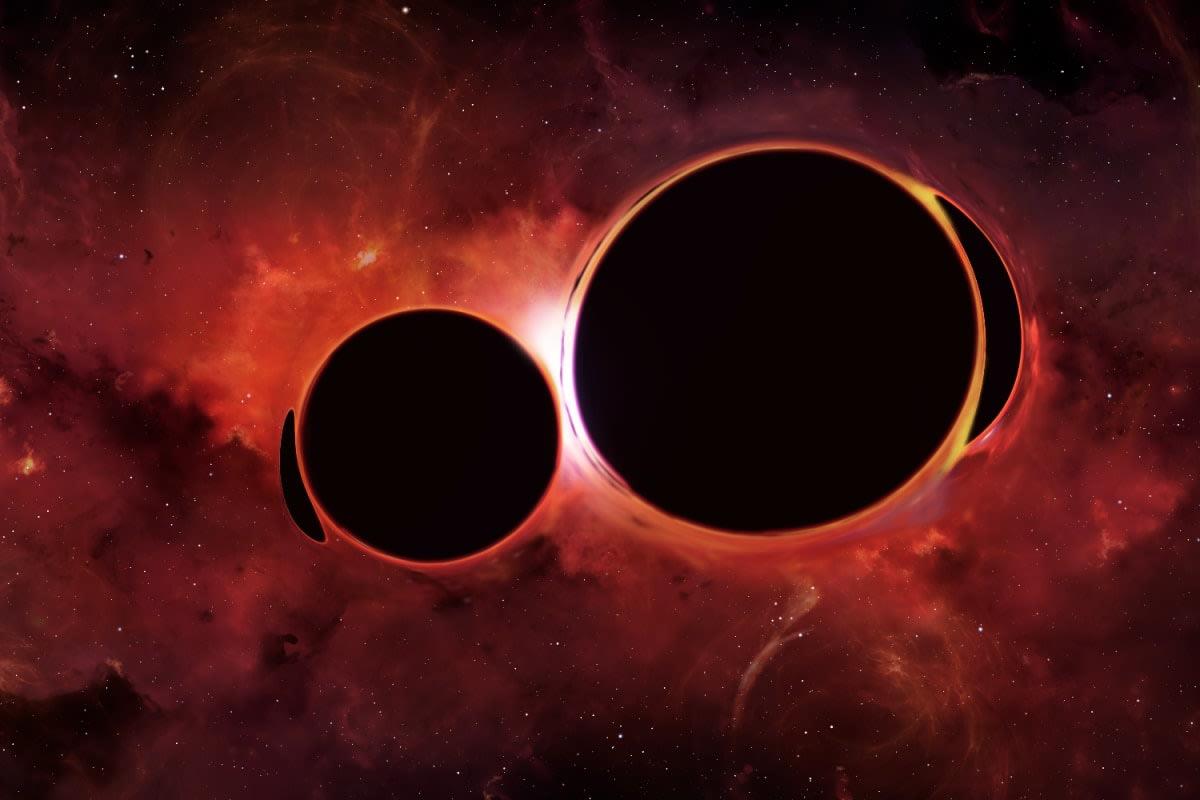
A depiction of black holes merging
In simple words, the passage of blackhole disrupts the gases in its surroundings. "With the JWST, we discovered the huge displacement of the gas at the tip of the wake, where the black hole is pushing against it. The shock signatures are crystal clear, and there is just no doubt about what is happening here," van Dokkum confirmed. What the team captured was the signatures of gas as they left the space at high speed when the black hole created a rift while traveling through them. Scientists proposed two possible explanations behind this phenomenon, and both involve the cosmic collision and merging of two galaxies. In the first scenario, two black holes merge into one, generating gravitational radiation powerful enough to push the black hole beyond the galaxy it was created in.
"The second is a three-body interaction. That happens when one of the two galaxies has a pair of binary black holes at its center," he added. When a galaxy already has two black holes, the entry of a third could trigger instability and push one of the black holes out to space. Scientists believe that the first scenario better supports the idea of the 'runway' supermassive black hole.