
NASA Images Reveal Stunning 'Penguin and the Egg' Galaxies Undergoing Cosmic Collision
Published Dec. 19 2025, 5:11 a.m. ET

An astronomer with a telescope looking at a galaxy
The universe's galaxies have long fascinated scientists, and this discovery is proof of the space's unending mystery. NASA released breathtaking images of galaxy pair Arp142, nicknamed the Penguin and the Egg. The galaxy interaction was first spotted in 2013 by the Hubble Space Telescope. In July 2024, the James Webb Space Telescope noticed a near-infrared light emerging from the same region, making the galaxy appear extra bright. The Penguin is a spiral galaxy, whereas the compact elliptical galaxy has been named the Egg. In the images captured by the agency, the large and the smaller galaxies are in close proximity, almost embracing one another. In the image captured by the James Webb Telescope, an inverted U-shaped light indicates the interaction between the two extremely distinct galaxies.
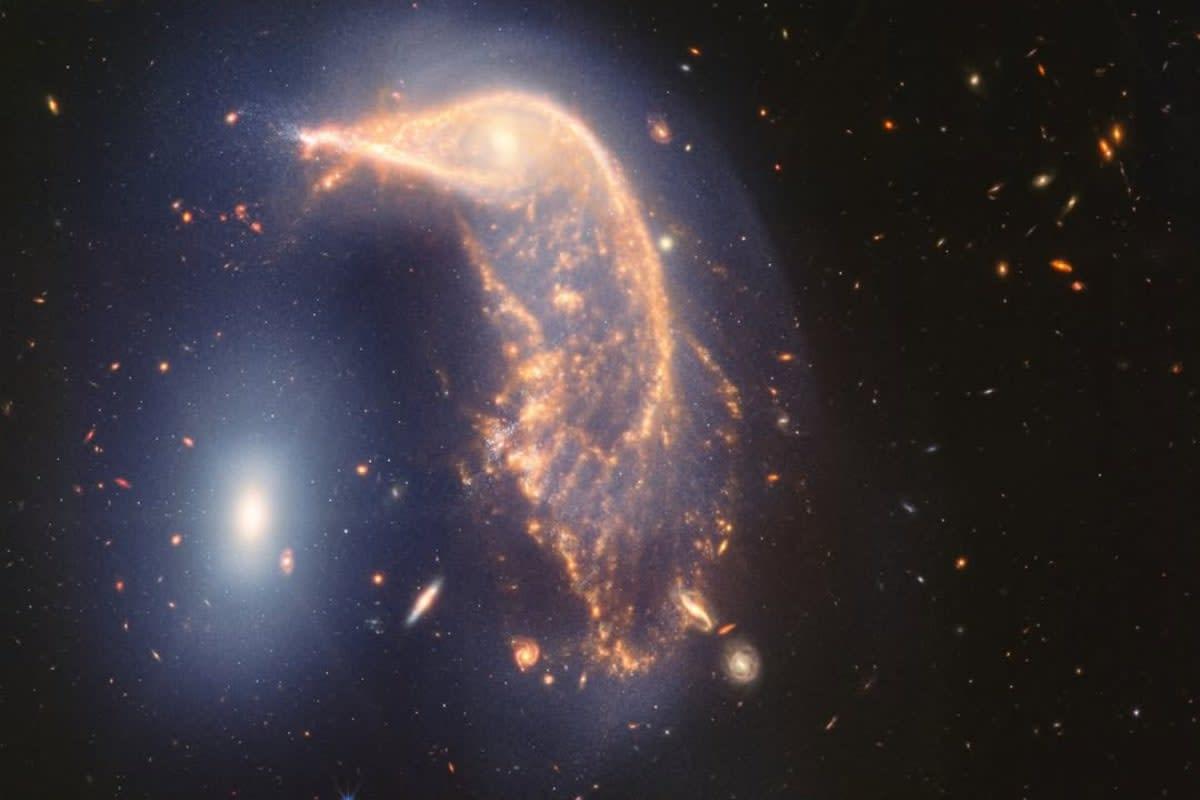
The 'Penguin and the Egg' captured by NASA's James Webb Telescope
According to the space agency, the galaxy pair first came close to each other 25 to 75 million years ago. That close pass triggered intense star formation, which astronomers have described as "fireworks." Whenever two galaxies interact, their gas and dust particles compress, and new stars pop out like confetti. In some cases, the merging of galaxies can create thousands of stars in a galaxy each year, and the process could continue for millions of years. The interaction between the Penguin and the Egg has led to about 100 to 200 yearly star formations in the larger galaxy, which is far more than the Milky Way, producing about 6 to 7 new stars per year. Thanks to the constant activity within the Penguin galaxy, its features have begun to pop up prominently. Its galactic center is clearly visible, appearing like the eye within the head of the galactic penguin.
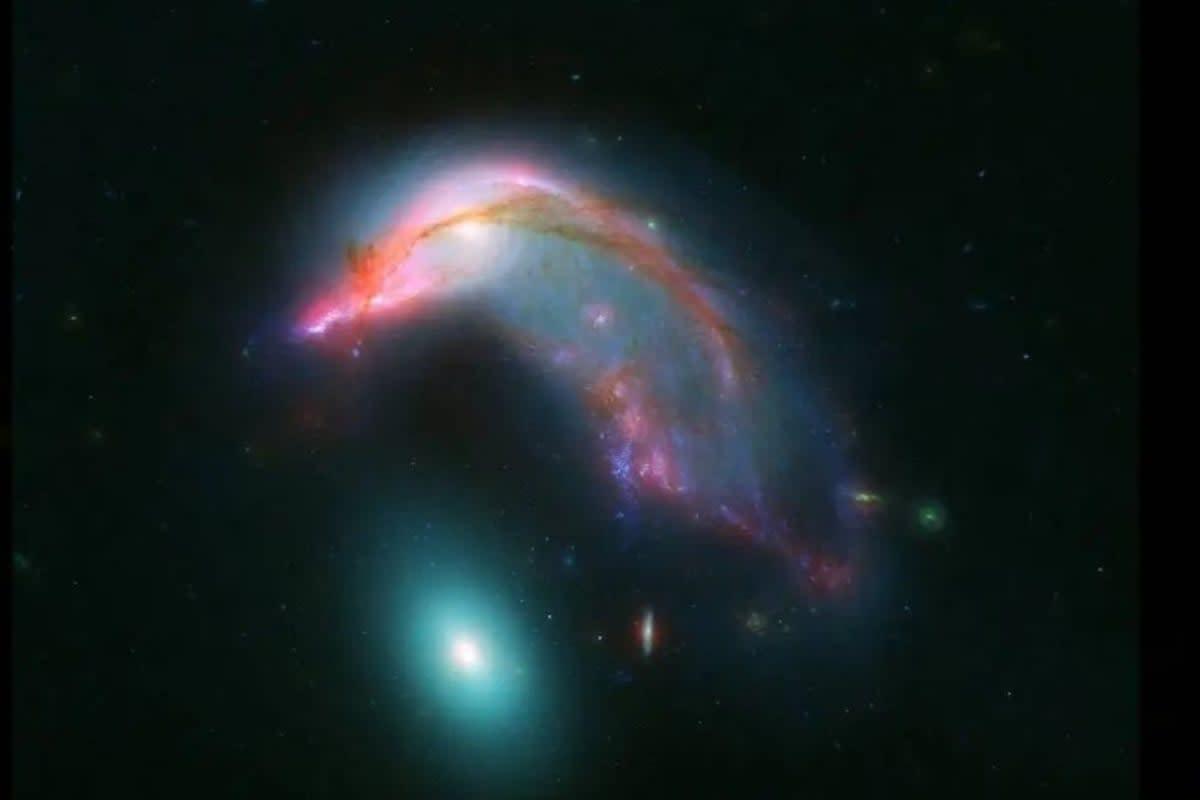
The 'Penguin and the Egg' captured by NASA's Hubble Telescope
The galaxy's starry trails have taken the shape of the penguin's beak, backbone, and fanned-out tail. Visually, the Penguin galaxy is larger than the Egg galaxy, but ironically, their masses are approximately the same. That's precisely why they appear as two distinct bodies despite varying in dimensions. "This is one reason why the smaller-looking Egg hasn’t yet merged with the Penguin," the agency noted. The Egg galaxy contains older stars and comparatively less gas and dust. That's why it doesn't trail off or transform into a weird shape but keeps its sturdy oval structure intact. However, a closer look at the Egg galaxy captured by the Webb telescope shows four prominent diffraction spikes. It indicates the presence of strong and concentrated stars within the compact galaxy.
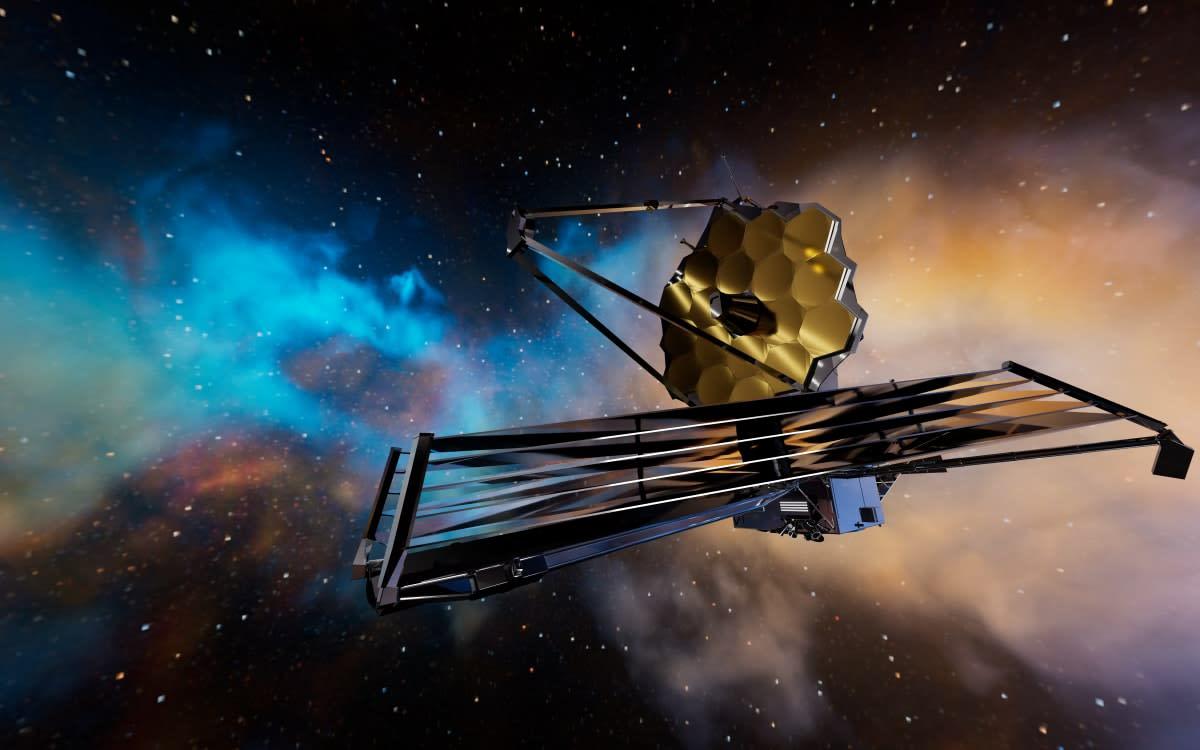
The James Webb Space Telescope exploring deep space
NASA Administrator Bill Nelson opened up about the remarkable research work conducted by the scientists of the Webb Mission Team. “With remarkable images from the corners of the cosmos, going back nearly to the beginning of time, Webb’s capabilities are shedding new light on our celestial surroundings and inspiring future generations of scientists, astronomers, and explorers," he said in a statement. “In just two years, Webb has transformed our view of the universe, enabling the kind of world-class science that drove NASA to make this mission a reality,” said Mark Clampin, director of the Astrophysics Division.