
NASA's Hubble Detects Mysterious Plume of Gas Escaping From an Active Spiral Galaxy
Published Jan. 6 2026, 4:48 a.m. ET

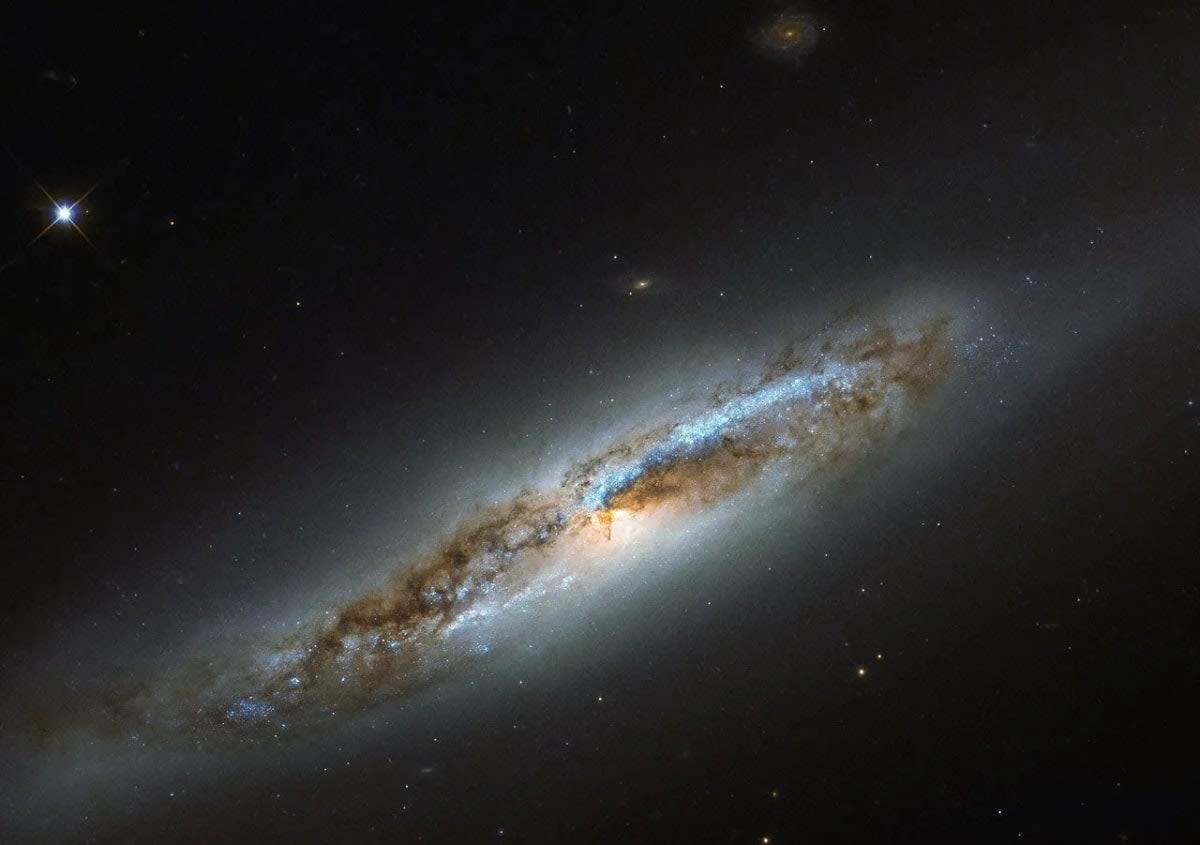
This NASA/ESA Hubble Space Telescope image features the galaxy NGC 4388, a member of the Virgo galaxy cluster.
The Virgo galaxy cluster, located 60 million light-years away from our planet, contains numerous galaxies within. One of them is NGC 4388, an active spiral galaxy which was discovered in 1784, but a recently observed change in the galaxy's position had scientists intrigued. NASA's Hubble Telescope captured the galaxy in a slightly tilted and never-before-seen angle. The unusual position revealed a new feature: a glowing plume of gas released from the galaxy's nucleus, as per NASA. As seen in the lower right corner of the image, the small gaseous object has moved away from the galaxy's disc. Surprisingly, this tiny and glowing feature was a no-show when NGC 4388 was previously captured by the Hubble Telescope in 2016 (pictured below). How did the gas plume flow out away from the galactic disc, and what caused it to glow?
NGC 4388 as seen by the NASA/ESA Hubble Space Telescope’s Wide Field Camera 3 in 2016.
Researchers believe that the answer to the mystery is the space between the galaxies within the Virgo cluster. But the trick here is that the empty spaces aren't really empty, but are filled with hot gas called the intracluster medium. When the Virgo galaxy cluster moves through space, it cuts through this hot gas. Although it manages to pass by, the pressure of the gas strips away materials from the galaxy. In this case, the pressure of the intracluster medium propelled gas out of the galaxy disc. Precisely why a strong gas plume emerging from the center of the galaxy ended up trailing behind while NGC 4388 kept plowing through the space. However, this explanation leaves one major puzzle unsolved. What causes the gas cloud to glow?
Unfortunately, researchers say it remains unclear. But they think part of the energy possibly comes from the galaxy's center, where a supermassive black hole pulls in gas and heats it to an extreme temperature. The superheated disc release radiations and potentially ionizes the gases in the galaxy, making it shine. It could be shock waves responsible for ionizing filaments of gas farther out.
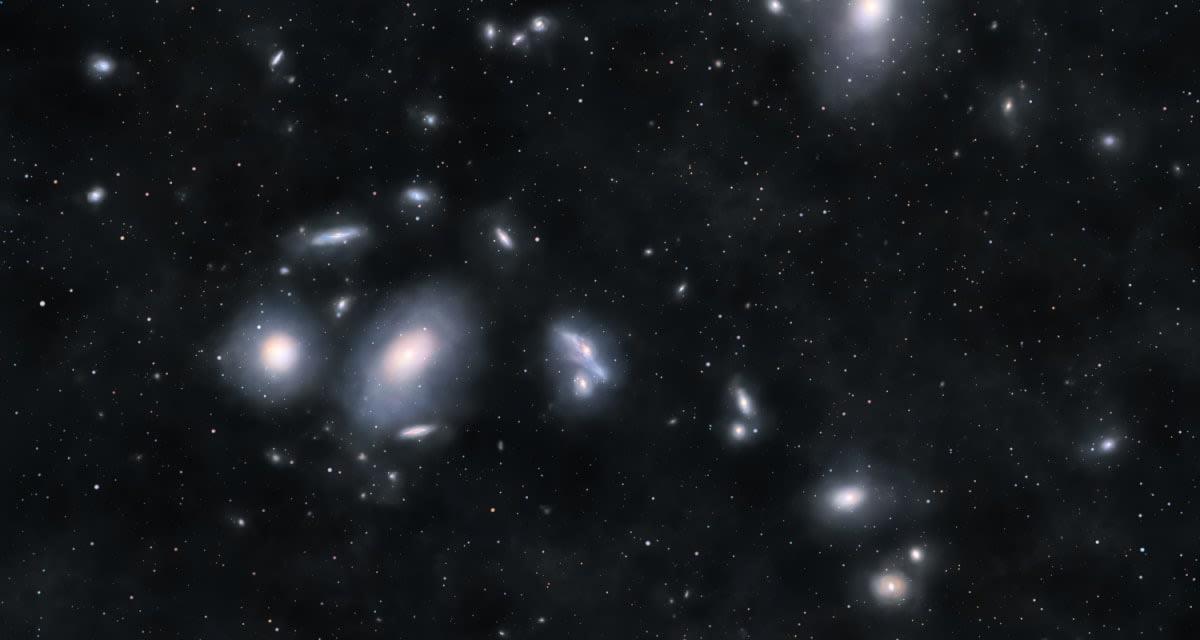
A picture of the Markarian's Chain, a stretch of galaxies in the Virgo Cluster.
The Virgo cluster, despite being millions of light-years away, closest large galaxy cluster to Earth. The Virgo galaxy cluster has been pivotal in the history of astronomical findings. In fact, one of the first pieces of evidence of a massive black hole was identified in the constellation Virgo by NASA's Hubble.
The black hole was identified in the center of the giant elliptical galaxy M87, located within the Virgo galaxy cluster. "If it isn't a black hole, then I don't know what it is," Dr. Holland Ford of the Space Telescope Science Institute and The Johns Hopkins University in Baltimore, said at the time. "A massive black hole is actually the conservative explanation for what we see in M87," another researcher added. According to the space agency, the Virgo cluster is packed with galaxies, more than 1,300 to be precise.