
NASA Is Sending Humans Toward the Moon Again After 50 Years — Sooner Than You Think
Published Jan. 8 2026, 6:54 a.m. ET

The Artemis II crew.
The world has achieved great feats in lunar exploration, including humans landing on the Moon's surface. However, it's been more than 50 years since the Apollo 17 astronauts visited Earth's neighbor in 1972. Fortunately, a whole new crew is gearing up for another much-awaited mission on the Moon. The Artemis 2 crew will board the U.S. space agency's Orion capsule atop NASA's Space Launch System no later than February, as per USA Today. The Artemis 2, the first crewed moon mission in the last 50 years, was announced after the success of the crewless Artemis I. In this mission, four astronauts—Commander Reid Wiseman, Pilot Victor Glover, Mission Specialist Christina Koch, and Mission Specialist Jeremy Hansen—will venture on a trip to the Moon. "Their mission will be to confirm all of the spacecraft’s systems operate as designed with crew aboard in the actual environment of deep space," according to NASA.
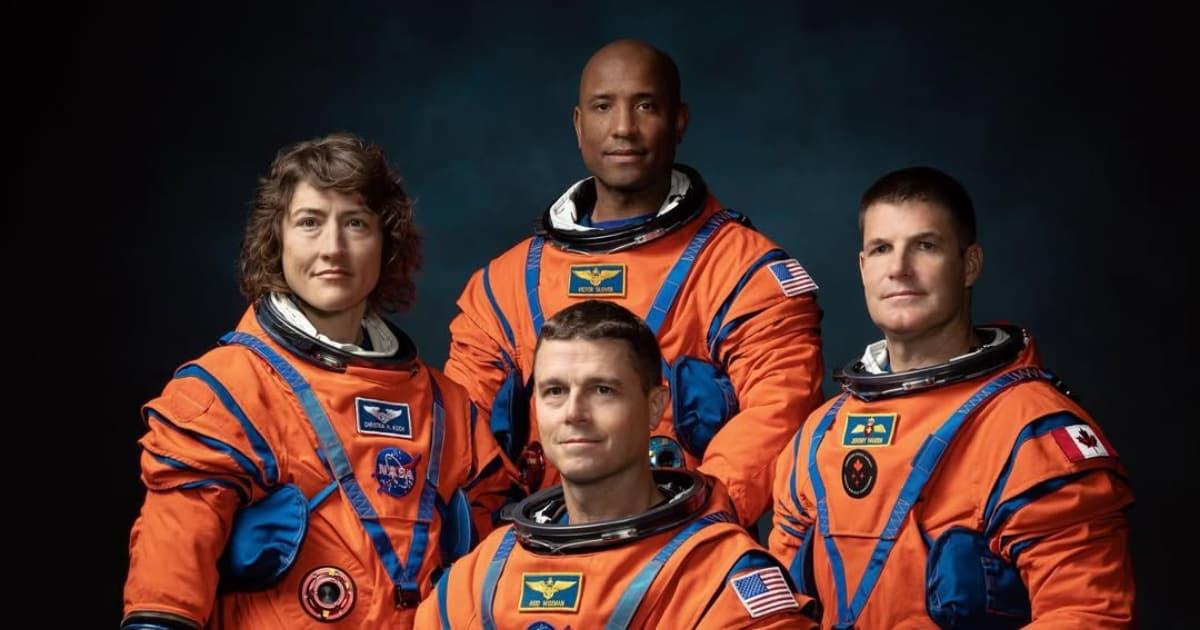
The Artemis II crew.
So far, the mission doesn't have moon-landing on the to-do list. Nonetheless, this mission will play a crucial role in setting up the groundwork for future lunar missions and moon landings. As per the space agency, the crew will soon set out on their 10-day mission from Launch Complex 39B at NASA’s Kennedy Space Center in Florida. As per their mission's timeline, mission specialists will conduct through check of the Orion’s systems in the first two days in space. They will perform a "targeting demonstration test" while still being closer to Earth. Once these smaller targets are achieved, the spacecraft will begin its journey towards the moon. They will be propelled to the far side of the moon, "where they will ultimately create a figure eight extending more than 230,000 miles from Earth."
For reentering the Earth, the crew will let gravity do its job. They will endure speed and temperature on their journey back home before splashing in the Pacific Ocean off the coast of San Diego. At the site, a recovery team will be awaiting the team's arrival and will bring the crew members back to the shore.
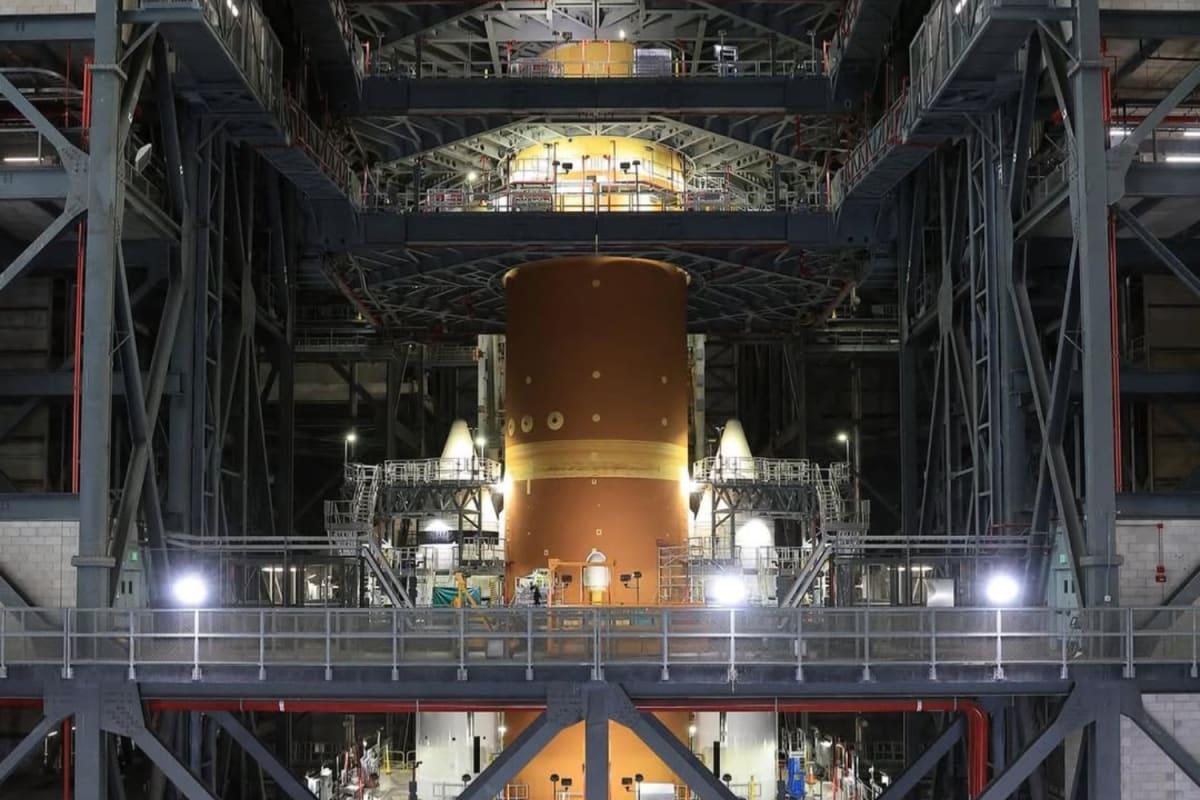
NASA’s Artemis II Orion spacecraft, with its launch abort system, is stacked atop the agency’s SLS (Space Launch System) rocket at NASA’s Kennedy Space Center.
The first-ever moon-landing in 1969 had turned NASA astronauts Neil Armstrong and Buzz Aldrin into historic figures. The mission that led Armstrong to famously utter the now-iconic line "One small step for man, one giant leap for mankind." After more than half a century, what brought scientists back to the Moon? NASA intends to build a scope and opportunities for future exploration that will benefit the world. "We’re going back to the Moon for scientific discovery, economic benefits, and inspiration for a new generation of explorers: the Artemis Generation."
The plans have already been laid out for future moon missions, which include Artemis III and Artemis IV. The former will mark the first moon-landing mission in more than 50 years. The Artemis III mission plans to send astronauts to the lunar surface to explore the region near the lunar South Pole with the launch aim of 2027. For Artemis IV, the scientists envision humanity’s first lunar space station, Gateway, where astronauts will live and work. This mission will play a key role in astronomers' future aim to send humans to Mars. "The mission will bring together an intricate choreography of multiple launches and spacecraft dockings in lunar orbit, and will feature the debut of NASA’s larger, more powerful version of its SLS (Space Launch System) rocket and new mobile launcher," according to the agency.