
NASA Uses Math to ‘Hear’ Music of Stars and Track Their Movements for the First Time
Published Dec. 31 2025, 8:19 a.m. ET

This data sonification maps a near-infrared image of the Cosmic Cliffs in the Carina Nebula, captured by NASA’s Webb Telescope, to a symphony of sounds.
The universe is made of tiny-tiny pixels. Each pixel sings a melody. Each melody has its own unique rhythm, energy, and vibration. The stars, the galaxies, the glowing clouds of gas, the little grains of glittery dust; everything swimming around in the dark, depthless ocean of space is pulsing with a mysterious melody. But just as a guitar chord can’t be played without a guitar, these pixel melodies can’t be heard without a proper instrument. A team of curious NASA scientists designed, for the first time, an instrument that enables humans to “hear” the cosmos as a musical being of light, energy, and pure mathematics. In a project called “The Universe of Sound,” scientists assigned sounds to cosmic pixels, creating melodious compositions. Thanks to mathematics, pixels of the cosmos can now be heard as sounds.
The first-of-its-kind project works on the principles of data sonification, utilizing mathematics to map pixel values of celestial objects into sounds. In the first step, data is collected by NASA’s various telescopes, including Chandra X-ray, Webb, Hubble, and Spitzer. Elements like light, position, and temperature are extracted into images. Then enters the picture, music composer Sophie Kastner. Kastner reviews the image from various perspectives, focusing on short vignettes, as she described to NASA. It's like “approaching a piece as if writing a film score to accompany the image,” she said.
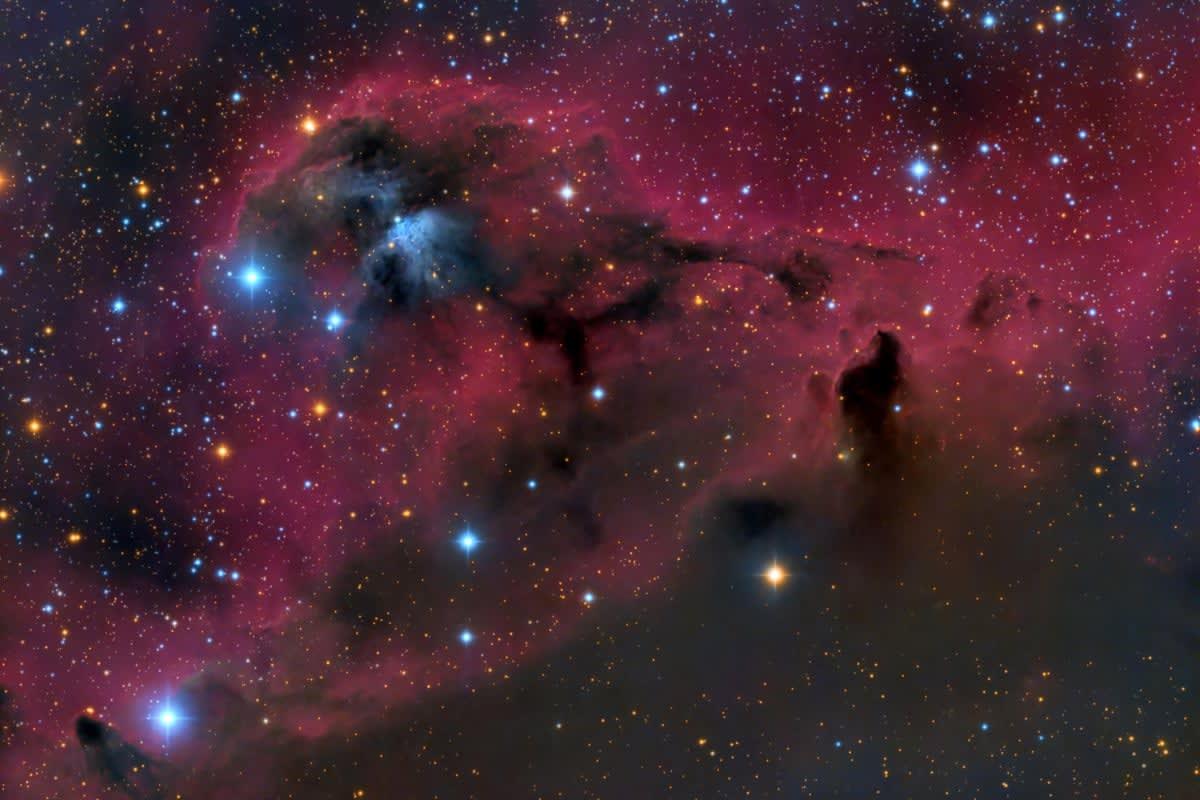
Glowing red nebulae glittering with blue and golden stars
The celestial bodies are exploding with information, and each speck of this information, each pixel of its visual representation, is a precious prompt for Kastner to improvise a new score. Brightness, for example, is often translated to volume while pitch is linked to position or color. Red areas in the images become lower pitches, blue ones higher, and background stars become water-drop sounds. Other factors like tone and rhythm are meticulously integrated into the musical piece. "It's like writing a fictional story that is largely based on real facts," remarked Kastner. "We are taking the data from space that has been translated into sound and putting a new and human twist on it." So far, the musician has created three pieces of sheet music in collaboration with NASA scientists, including one for the Milky Way.
The Milky Way’s song was composed from data collected by Hubble, Spitzer, and Chandra telescopes, an intricate triptych highlighting the features of three astronomical objects or moments in the image. A blue and violet section of X-ray binary formed contrast, while the energetic arched filaments became the shimmery texture of harmonic glissandos. The supermassive black hole Sagittarius A* formed the repetitive, metered gestures, generating a sensation of energy spiraling towards the epicenter.
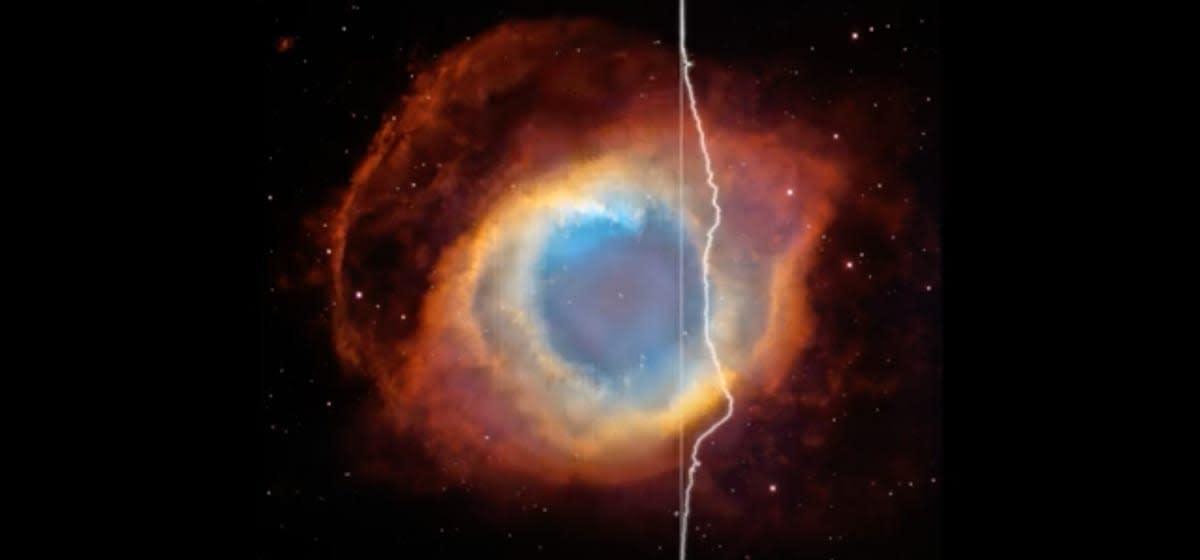
In the sonification of the Helix Nebula, which scans from left to right, red light is assigned lower pitches and blue light is assigned higher pitches. Just as the frequencies of light increase from red to blue, frequencies of sound increase from low to high pitches.
Another piece, titled Crab Nebula: Return to Dust, unfolds to reveal the song of the chaotic remnant of a dying star. The piece opens with a burst of percussive strike and follows through a sequence of twinkle-like sounds generated with a layered mix of flute, clarinet, strings, and piano. A pattern of rising and falling mimics the high-speed spin of the pulsar in the nebula’s core. After a brief interval of silence, comes a percussive strike again, which is followed by a series of resonant chords and darker textures of marimba and strings.
The third piece was composed by the pixels of what scientists call the Eagle Nebula, dubbed the Pillars of Creation. The piece starts with eerie, almost ghostly, tones sculpted by winds. The tones deepen as if representing the nebula’s infamous dense gas columns rising like glowing towers in the cosmic space. Sequences of layered harmonies and spiraling rhythms take us to the center of the nebulae, where high-pitched notes mark the appearance and disappearance of stars. Clink, clank. An ensemble of booming bass notes registers the transformation of energy into light.
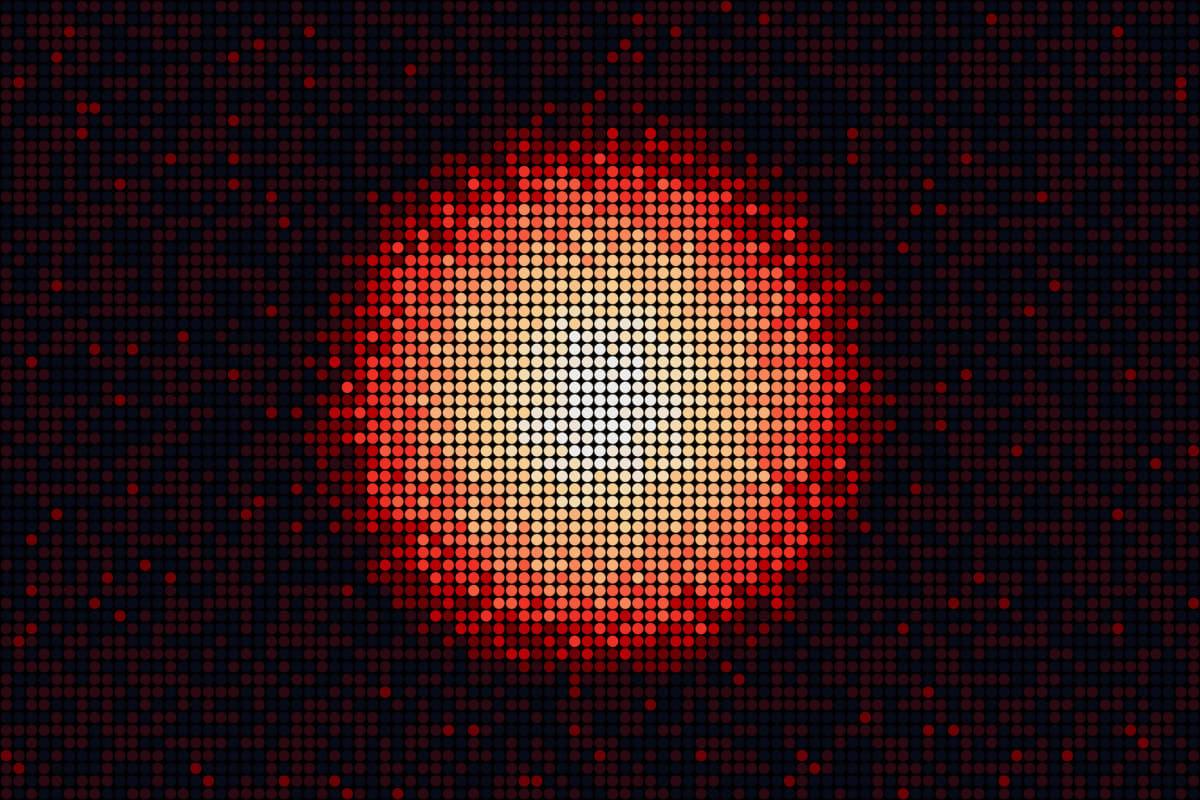
Celestial object captured in pixelated form
Though just three, these musical pieces have unlocked a fascinating possibility for scientists to explore the cosmos in a way never done before. NASA also believes that the project will facilitate cosmic exploration for those who can’t see with their eyes and can only hear. Stars are composing sonatas, celestial nebulae are whipping up jazz, and the Milky Way is orchestrating Indian ragas. Can you hear the music yet?