
5 of TIME's Most Striking Space Photos of 2025, From Galaxies to Northern Lights
Published Dec. 23 2025, 7:06 a.m. ET

Surreal images that made it to the list of TIME's top space photos of 2025 (Cover Image Source: (L) ESA/Webb, NASA & CSA, G. Mahler; (R) Samil Cabrera / NASA APOD)
Sending your camera on an odyssey through space is like hitting the theatre to watch an immersive cosmic drama. Troops of stars hang around in clusters having glittery chitchats, while the curtains of glowing colors surrounding them twist, drape, and pulsate. Every once in a while, there’s an explosion or a collision that sends truckloads of energy hurtling towards the Earth. Space photos are so remarkable because they aren’t just cosmic postcards snapped in time, but also fresh perspectives that make us look at space, at Earth, and at life in ways we never thought possible. Recently, TIME rolled out its list of the best space photos of 2025. Here are some of these.
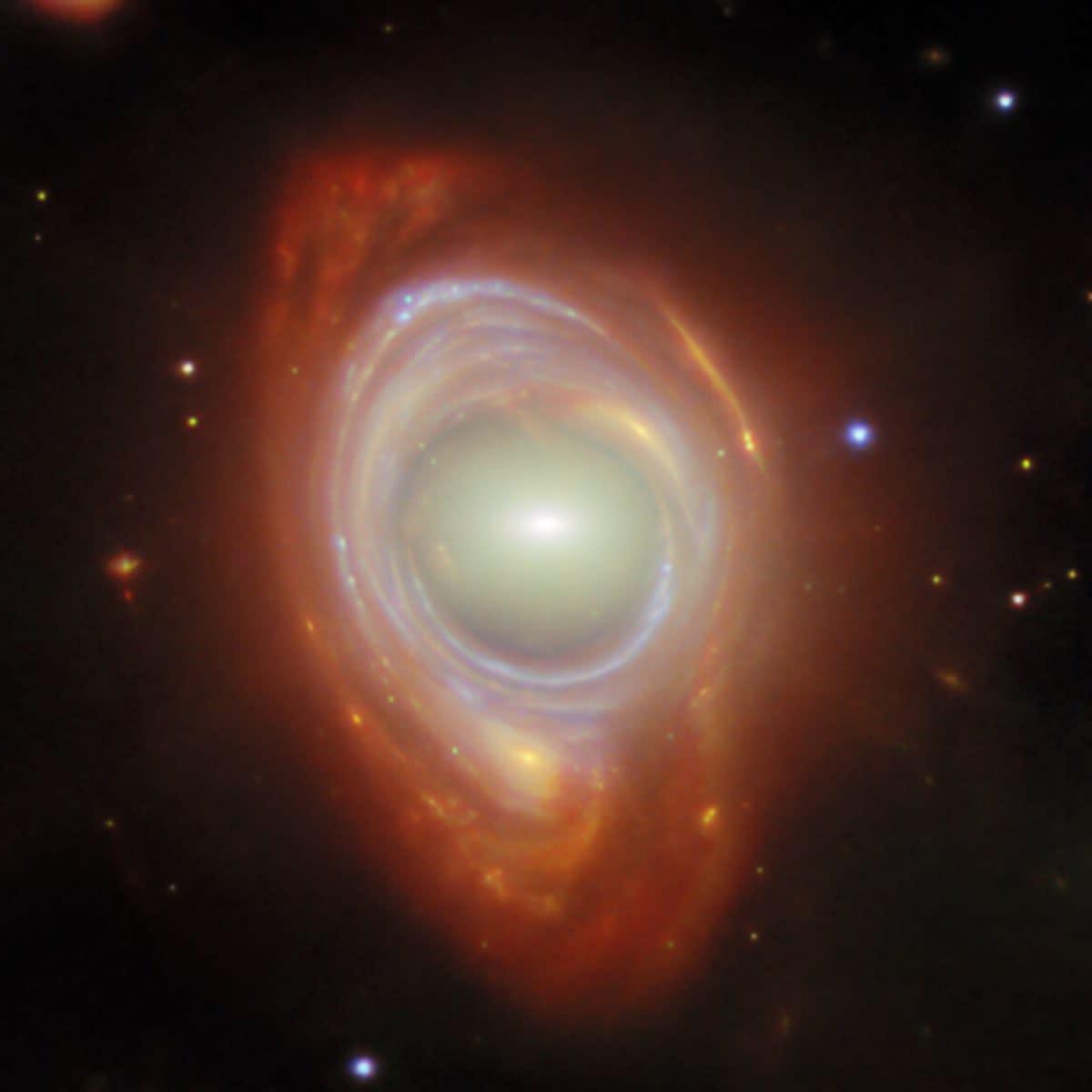
Einstein ring
Named "Galactic Monocle," the above photograph is from the NASA/ESA/CSA James Webb Space Telescope. This photograph is a fantastic physics laboratory for those interested in understanding concepts of gravitational lensing and the Einstein ring. At first glance, the picture looks ordinary, but a closer look might make you think that there’s something unusual, because there is. Imagine placing a smaller circle of red paper at the center of a larger circle of red paper and then looking at the whole thing in aerial view from straight above. What appears as a giant singular galaxy is actually hiding a smaller galaxy in the foreground. NASA calls this an Einstein ring, a phenomenon in which light from a background object is bent by the object in the foreground.
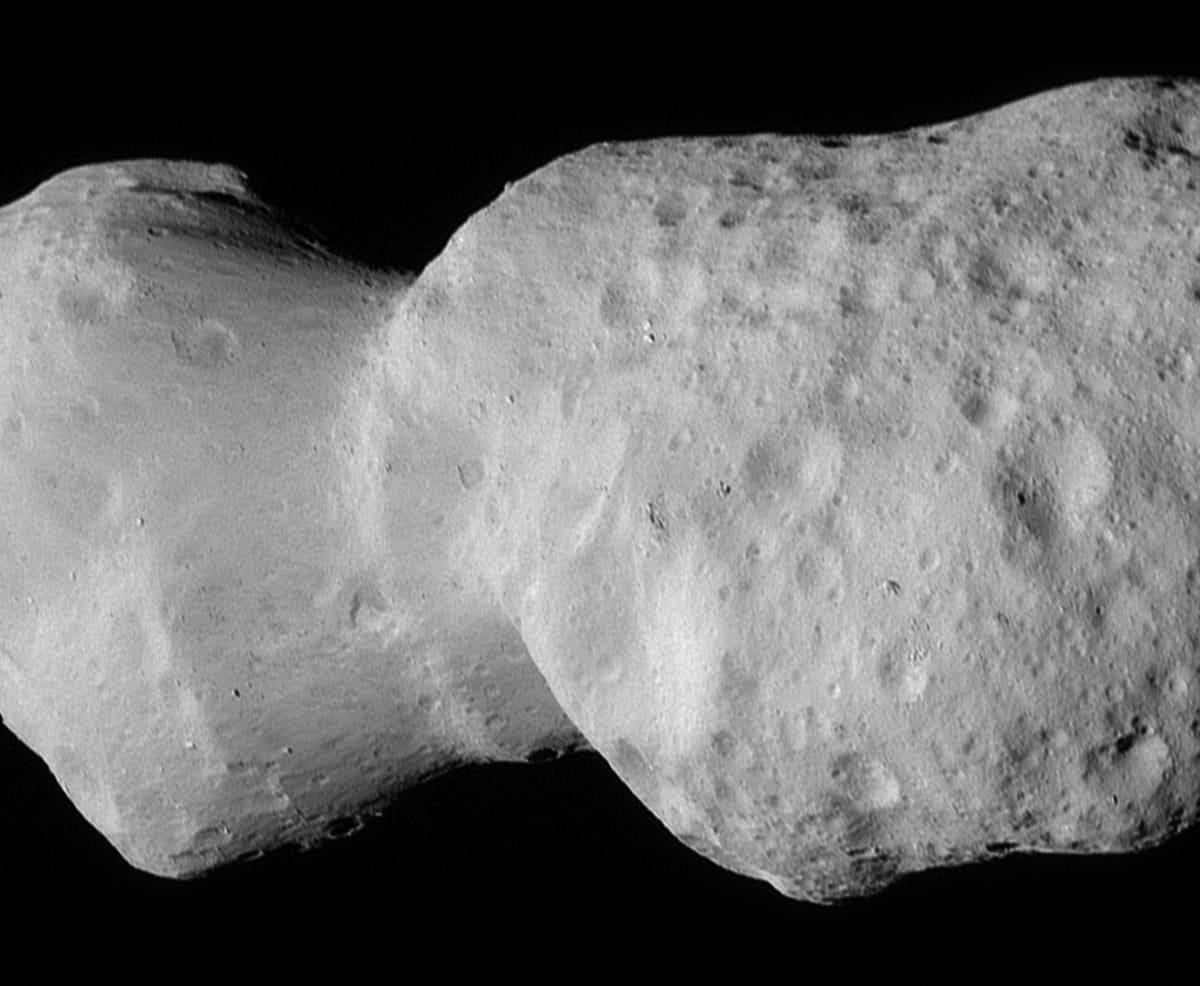
The asteroid Donaldjohanson as seen by the Lucy Long-Range Reconnaissance Imager (L’LORRI)
Now imagine someone travelling to Jupiter and suddenly stopping on the way after encountering an unusual piece of white rock. That’s what another photo is about: "A Rock Gets a Visit." NASA’s spacecraft Lucy was trundling towards Jupiter when it spotted this fragment of the 150-year-old asteroid Donaldjohanson in April 2025. Lucy captured as many photos and stop-action footage of the asteroid.
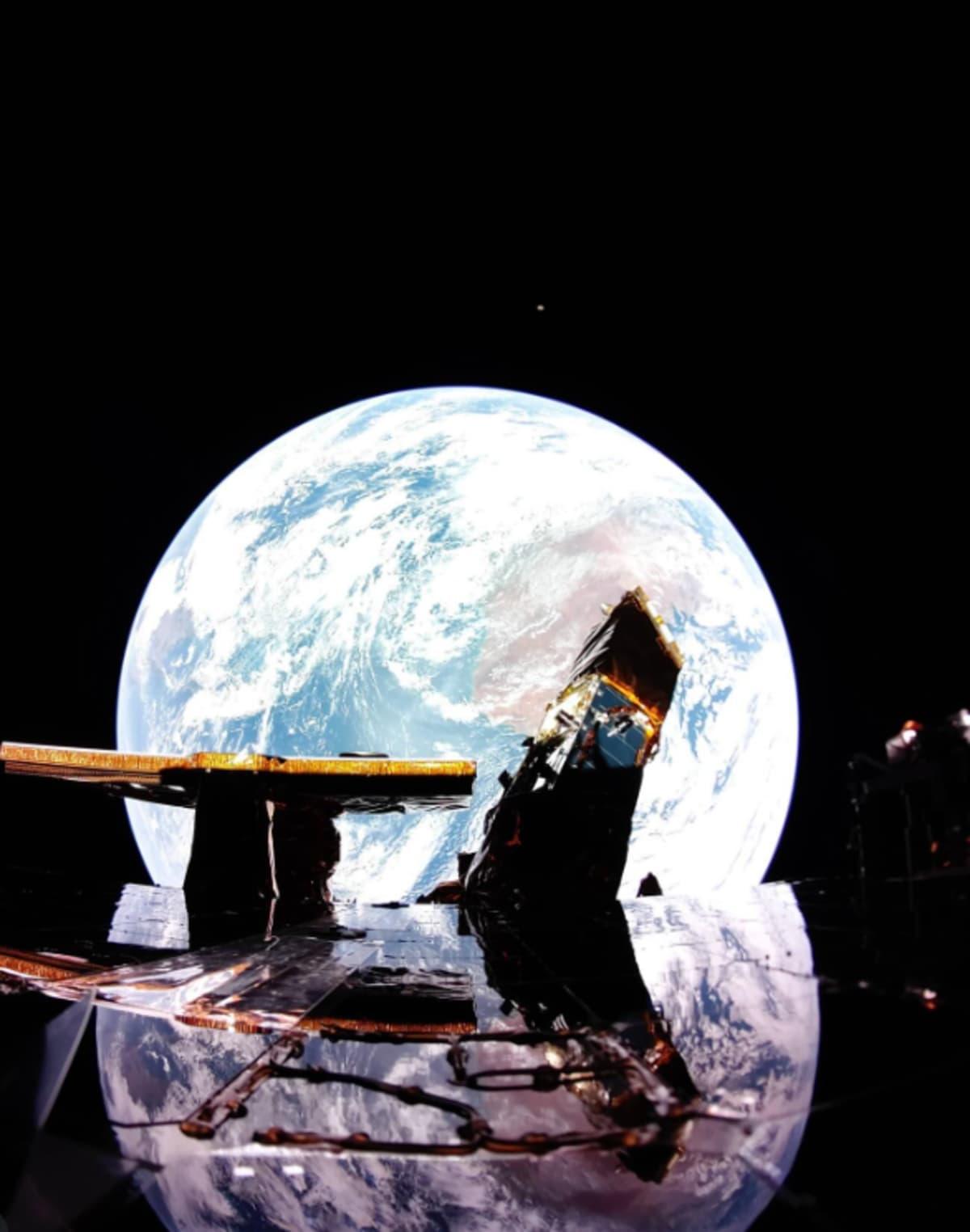
The Blue Ghost spacecraft snaps an image of Earth
Another picture TIME’s editors loved is a glowing shot of Earth recorded by Firefly Aerospace’s Blue Ghost Mission and NASA. Dubbed "Moonbound," the picture shows Earth captured by Firefly’s Blue Ghost lander. The Moon can also be seen on the horizon above Earth. What’s striking is the reflection on the solar panels that gives the impression that there’s a second Earth.
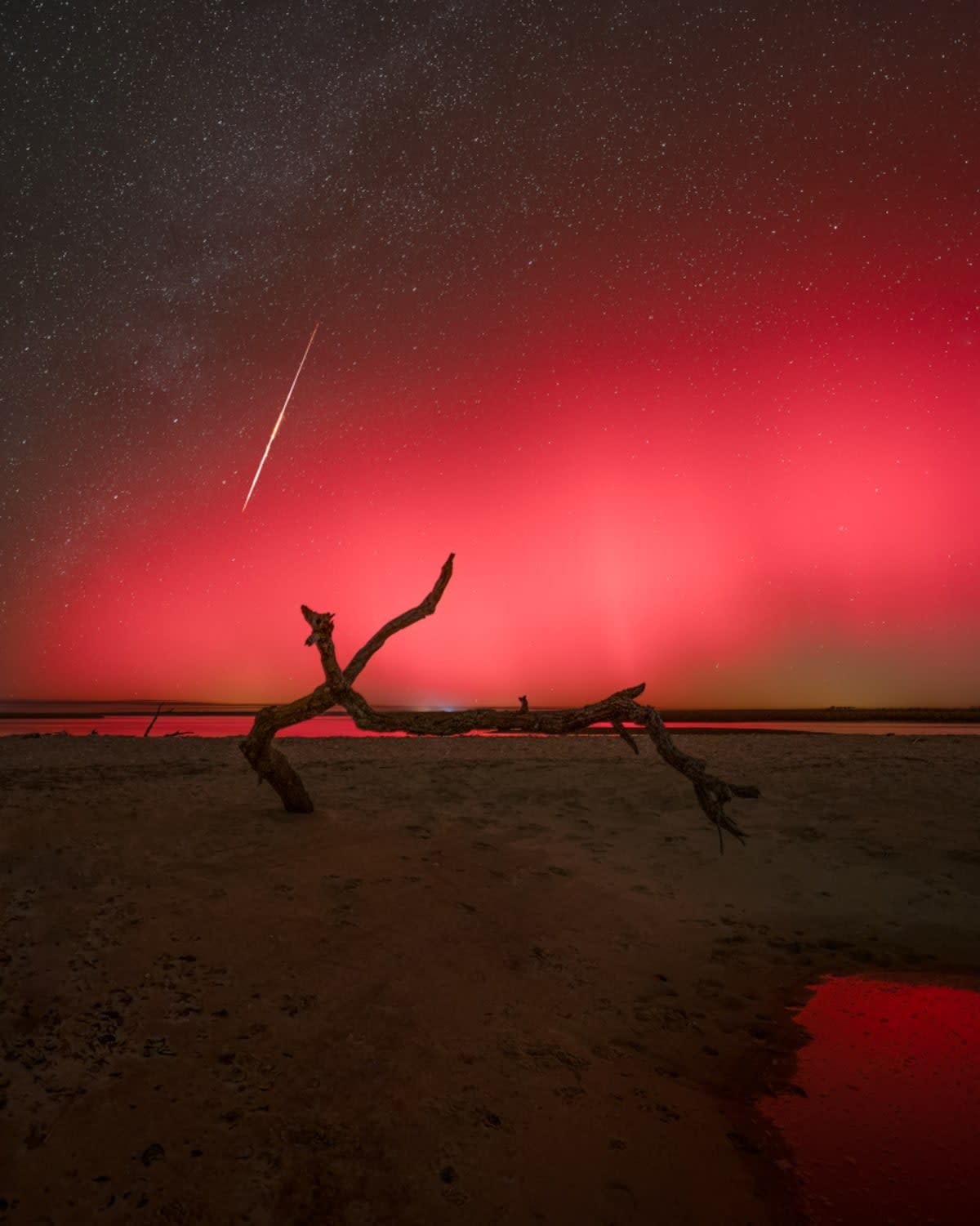
Northern Lights in Florida skies
TIME also featured a picture ("Northern Lights—Down South") from NASA that captures Northern Lights from down South, in Florida. The picture, NASA says, was taken by Samil Cabrera. It reveals a riot of red color, as it dances at maroon in the dark, starlit sky, and then shifts into a ballet of candy apple red, before spilling itself on the mud-covered ground and washing away a pool of water into a delicious furor of electric, rosy red. The silhouette of a leafless tree makes the spectacle even more suspenseful. The uncanny shape of a branch makes it look like a contemporary dancer is doing a contract-and-release move, spotlighted by the red glow of auroral skies. Above, a shimmering streak shoots through the reddening sky, which is the Northern Taurid meteor shower that occurred in the South on November 11.
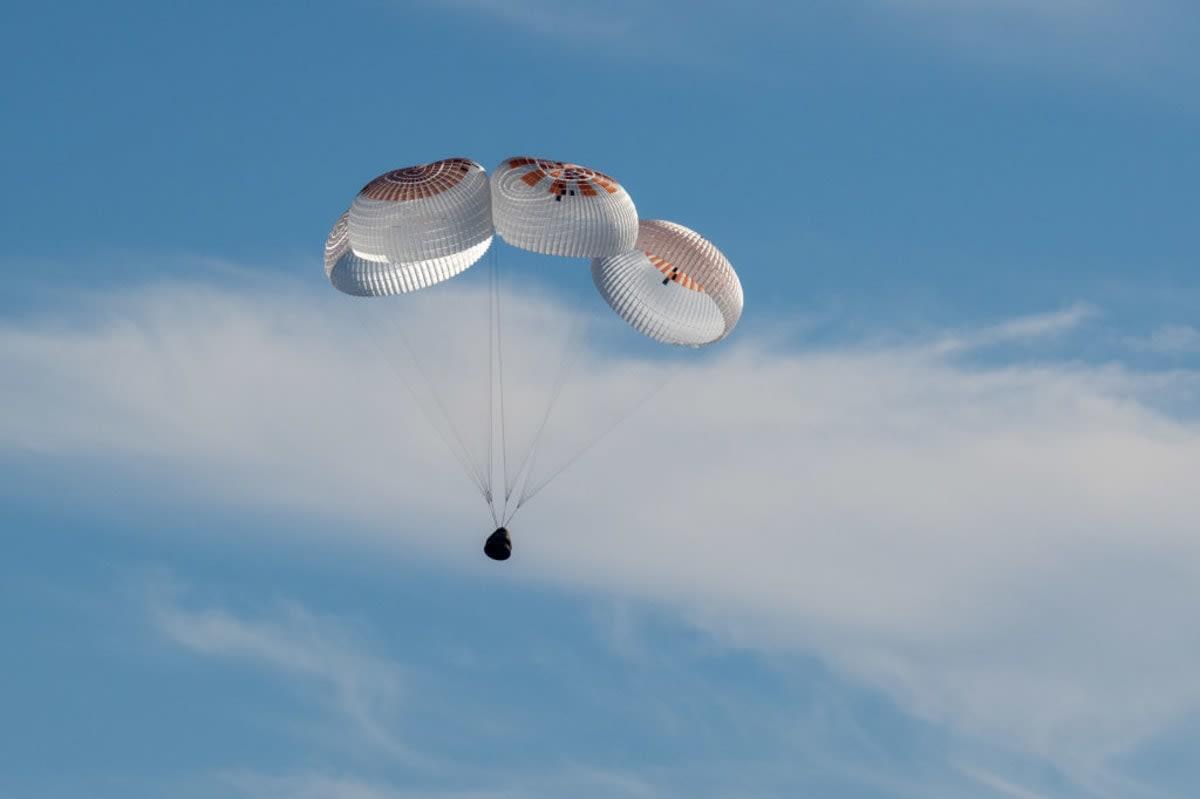
NASA astronauts Sunita Williams and Butch Wilmore return after a long space trip in March 2025, aboard SpaceX's Dragon spacecraft
Imbibing both the visual appeal and emotional sentiment, this photo, called "Home At Last," definitely deserved a spot on the list of top space photos of 2025. The photograph shows a distant view of SpaceX’s Dragon spacecraft bringing home the astronauts Sunita Williams and Butch Wilmore after a long space mission. The photo in itself is ordinary; a dome-shaped toy suspended by a white-and-orange parachute plummeting through white clouds in the azure sky. However, it’s the emotion of homecoming that makes it extraordinary.