
Experts Say This Famous Gravity-Defying Rock in Arches National Park Will Fall Soon
Published Jan. 15 2026, 7:33 a.m. ET

Balanced Rock in Arches National Park.
Arches National Park has a myriad of unique rocky structures, some fallen, while others still standing strong. One of them is the gravity-defying rock perfectly balanced on top of a larger rock structure. The 3,600-ton rock, about 128-feet high, does not go unnoticed by the visitors, but the Balanced Rock will soon bite the dust. According to the National Park Service (NPS), erosion will get the best of it over time, making it tumble down and land on the dusty surface of the park. Erosion continues to shape the landscape of Arches, and it is only a matter of time before the Balanced Rock crashes down. Although the overall structure appears illustrious, the rock and the pedestal it sits on are two different types of rocks.
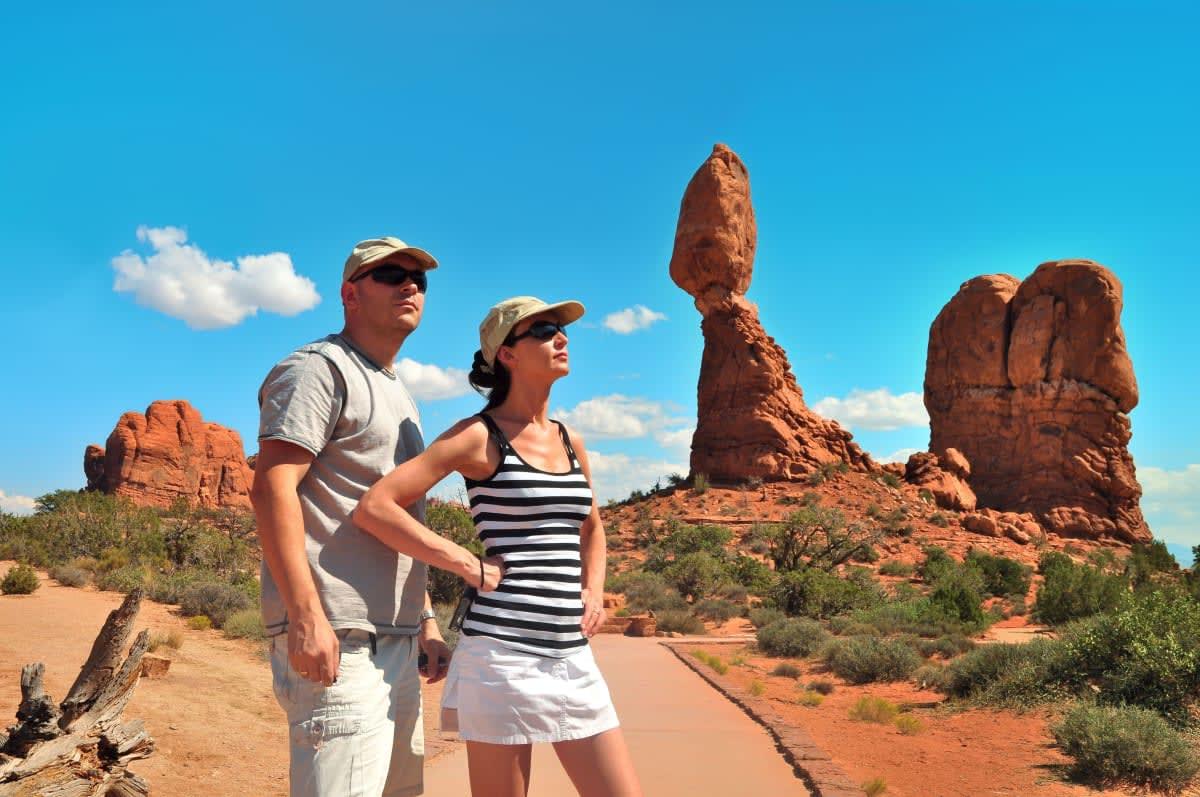
Couple near Balanced Rock in Arches National Park.
The massive gravity-defying boulder is Entrada Sandstone, and the throne it sits on is the Dewey Bridge Mudstone. According to geologists, the latter is more prone to erosion, which will eventually leave nothing for the boulder to hold on to, ensuing a freefall. Erosion constantly changes the park's landscape, creating or breaking down new rocky structures that are unique to Arches only. Across the 76,500 acres of vast landscape, you will find various unique and mystical structures. The park also has a history of witnessing some iconic boulders and arches collapse. In the winter of 1975-76, "Chip-Off-the-Ol'-Block"—a smaller sibling of the Balanced Rock—fell and irreversibly changed a portion of the landscape.
It is a reminder that witnessing the glory of present-day Arches is crucial, as it may transform in the future completely. Instead of awaiting the ultimate doom of the Balanced Rock, you can plan your next picnic trip there. During sunsets, the rock is saturated in a deep red-orange, creating a stunning sight for tourists to witness. If you are a night owl, plan a stargazing party in the area near Balanced Rock, as it is far away from city lights and has a sky amassed with stars. In 2008, the collapse of the iconic Wall Arch created quite a buzz. A group of tourists sleeping at Devils Garden Campground that night heard something like a giant thunderstorm, according to the NPS.
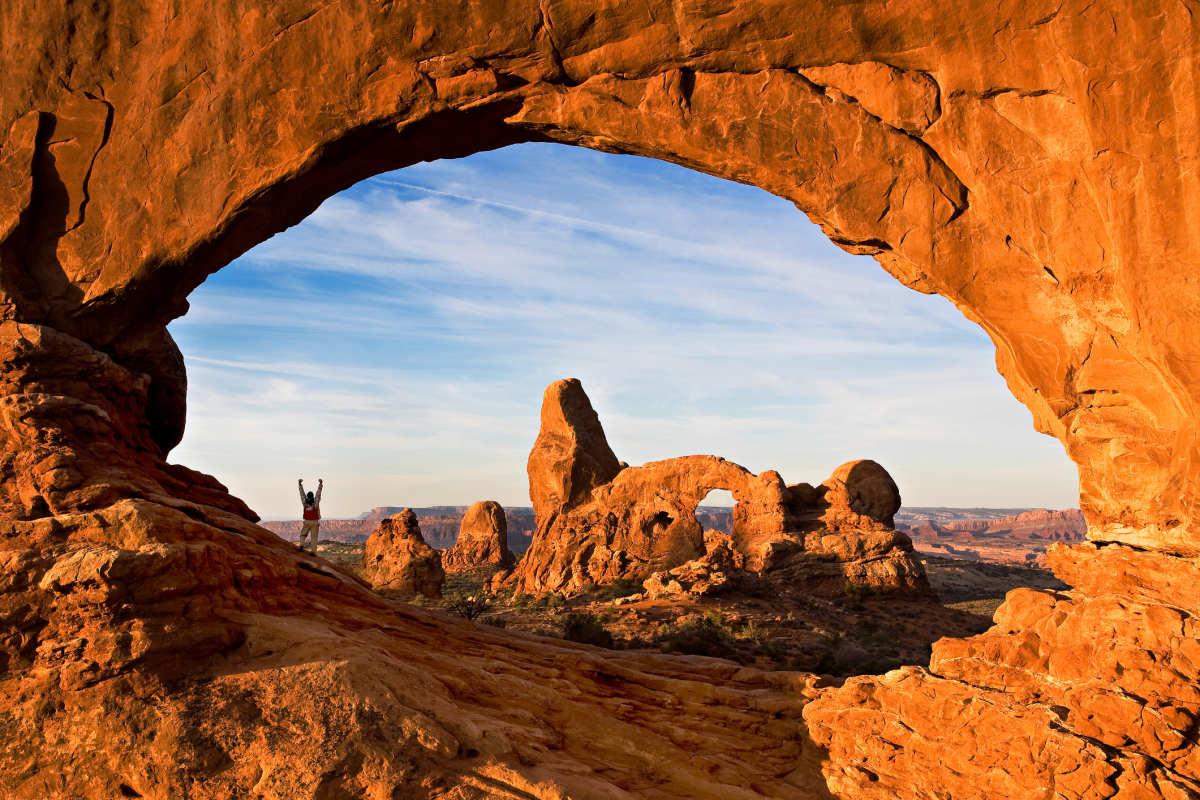
North West Arch at Arches National Park
But finding a clear sky over the tourists' heads left them puzzled. They realized what happened after tiny boulders of sandstone came crashing down: a large rocky structure collapsed. The crumble of a structure as large as the Wall Arch—the 12th largest arch in the park at the time—on the Devil's Garden hiking trail was quite shocking. Its overnight destruction was proof that, regardless of its size, erosion and gravity will always reign supreme. Rainfall and groundwater, among other natural resources, gradually seep away the natural calcium or cement that holds the sand grains of these structures together. Once there is not enough cement to keep the structure glued together, it disintegrates. However, unfortunate it may seem, it is part of a natural process that no one can change.
In a positive light, it can be viewed as creating space for new things to form. The sandstones, mudstones, shales, salts, and limestones stacked in the rocks act as nature's journals tracking environmental changes over millions of years. Sandstones with records of wind-blown dunes or shale stacked layers showing evidence of a swampy river floodplain. Overall, the rocks are part of the Arches' glory, not only for constantly changing the landscape but also for keeping track of past ecological evolution.