
Drugs, Cancer-Linked Chemicals Found in Popular National Park’s Water — Experts Flag Concern
Published Jan. 12 2026, 9:08 a.m. ET

Close-up view of a cute squirrel standing on a rock formation along the Bright Angel hiking trail, South Rim of Grand Canyon National Park.
Carcinogenic "forever chemicals" have been found at the Grand Canyon National Park, raising concern for visitors. Despite being a federally protected site, the place didn't remain safe from human-caused pollution. In December 2025, the U.S. Geological Survey (USGS) and the National Park Service (NPS) released an assessment report detailing the chemical traces identified at the site. The contaminants of emerging concern (CECs) due to wastewater mismanagement were found in large quantities at the South Rim of the national park. "These springs are located north of Bright Angel Wash, an ephemeral channel that receives treated effluent from the South Rim Wastewater Treatment Plant (SRWTP)," the report read. Although the flow of treated wastewater is directed against the Grand Canyon, it flows in through cracks anyway.
In April 2021, the CECs sampled at the national park also included several per- and polyfluoroalkyl substances (PFAS) and pharmaceutical compounds. One of them was the cancer-causing "forever chemicals" whose presence could increase the threat to the visitors threefold. According to Outside, PFAS are used in waterproof gear and nonstick cookware and are often linked to serious health conditions. The experts revealed that even though small traces of chemicals are present in freshwater sources around the world, they have no regulatory standards. In simple terms, there's no scale to measure how much of the chemicals is too much.

A couple on top of the mountain looking at the beautiful landscape of the South Rim of Grand Canyon National Park.
Mike Fiebig, southwest river protection director for the nonprofit American Rivers, emphasized that the low quantity of the chemicals doesn't negate the risk it poses to wildlife whose lives depend on these water sources. Even if the animals survive, exposure to these chemicals can cause hormonal imbalance, potentially disrupting their sexual and reproductive functions. “Not only could these cause problems for the reproductive systems of sensitive species, but backcountry recreationists likely don’t want to be exposed to these chemicals either, even though they are at low levels,” said Fiebig. The CECs might be common in water bodies, but they are nevertheless concerning. “Being common doesn’t mean that it’s OK," he added.
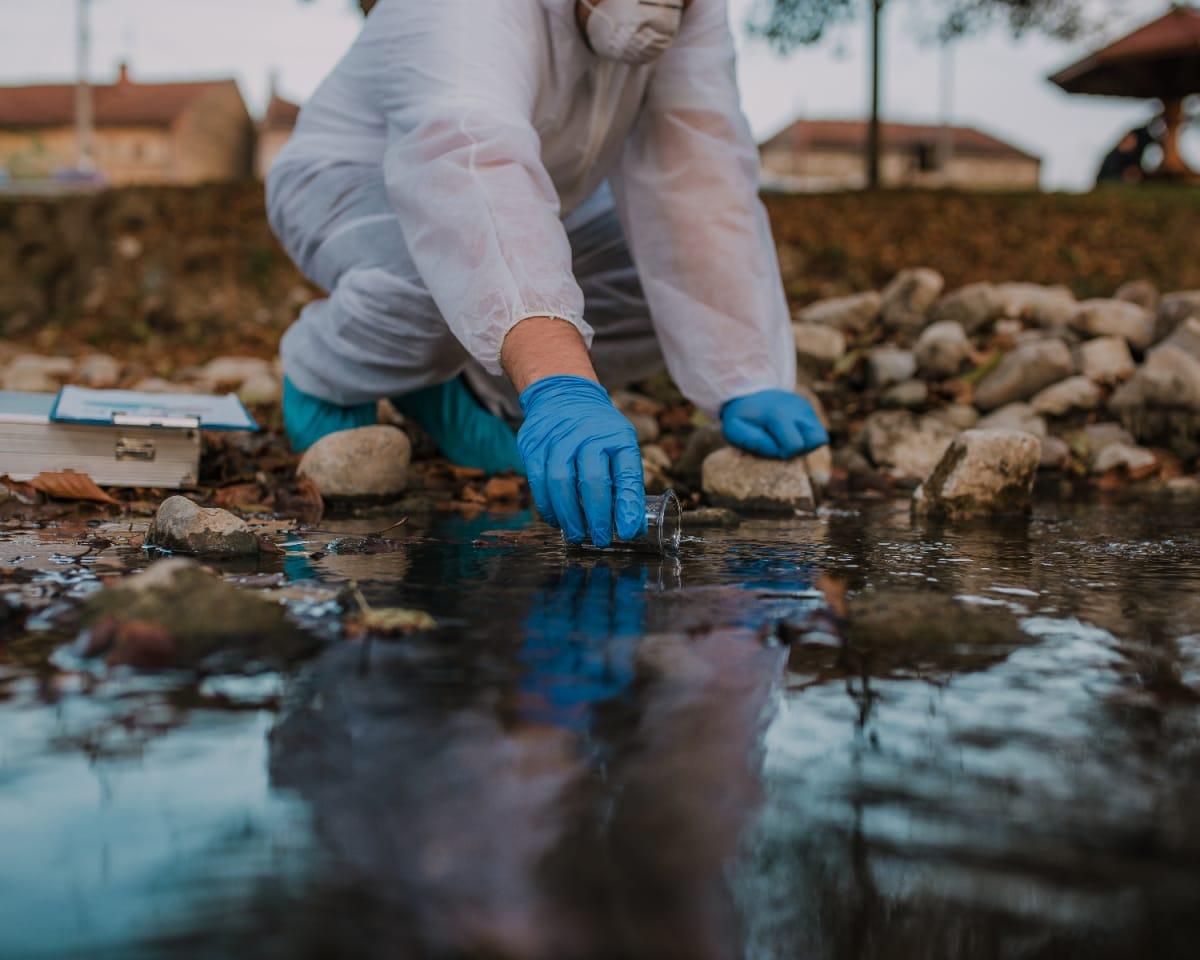
Ecological water sampling.
The CECs in natural environments are a growing area of concern across America because they can escape wastewater treatment plants. These plants are built to degrade biological contaminants, such as feces, and not chemicals. The National Park Service is aware of the situation, but unfortunately, it can't do much to bring it under control. The budget cuts by the federal government and the staff furloughed amid the 2025 shutdown might be the reason why the NPS is just a hopeless spectator at this point. “The NPS might not have the funds or the staff remaining to implement such a fix,” Fiebig said. Although the wastewater was treated with the removal of contaminants, like PFAS, traces of "forever chemicals" might still be found.
“Pharmaceuticals most often travel to the wastewater treatment plant through urine, which is unavoidable,” Fiebig explained. The treated yet contaminated wastewater is a problem that's grown exponentially in recent years. In the Grand Canyon, it can pose a threat to the wildlife as well as the human visitors. Nevertheless, authorities are determined to get rid of these stringent chemicals in the future. “The springs, seeps, and tributaries of the Grand Canyon are very sensitive desert ecosystems, and we’ve committed to protecting them at a high level,” he added. Ecosystems like those of the Grand Canyon require protection against these chemicals, regardless of how harmless they can be at present.