
Scientists Find a 500-Million-Year-Old Ecosystem in Grand Canyon That They Didn't Expect
Published Jan. 5 2026, 5:08 a.m. ET

A couple on top of the mountain looking at the beautiful landscape of the South Rim of Grand Canyon National Park.
A remarkable ancient community of organisms was discovered through a fossil trove found at the Grand Canyon. In 2023, a team of researchers, led by Giovanni Mussini of the University of Cambridge, found an array of fossils along the Colorado River. They grabbed the samples, brought them back to the lab, and further study revealed why it was one of its kind. According to the findings published in Science Advances, the fossils embedded in the rocks of Grand Canyon were found with their soft tissues preserved. The tiny crustaceans, mollusks, and a strange toothy worm named Kraytdraco spectatus showed surprisingly exceptional preservation that got the scientists thinking.
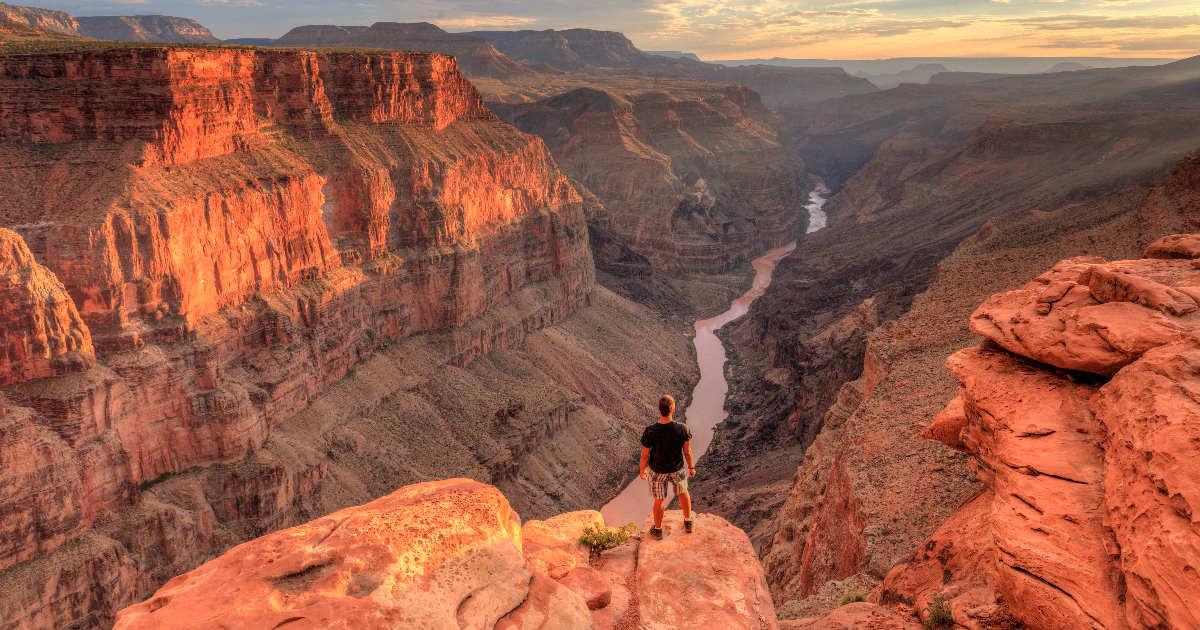
A hiker standing on the cliff edge of Grand Canyon National Park (North Rim), Toroweap (Tuweep) overlook
It would have made more sense if the discovered fossil belonged to an anoxic environment, deprived of oxygen. Because in that case, decay is prevented, giving a reasonable explanation behind the preserved soft tissue. However, the species' fossil found at Grand Canyon thrived in an oxygenated environment and storm-prone shallows. Despite the condition not favoring it, the fossil body was non-mineralized, highlighting that the species had a unique way of living. These fossilized species date back to 507 and 502 million years ago, a period known as the Cambrian explosion, which marks a time of rapid evolutionary development.
“These rare fossils give us a fuller picture of what life was like during the Cambrian period,” Mussini said in a statement. "By combining these fossils with traces of their burrowing, walking, and feeding – which are found all over the Grand Canyon – we’re able to piece together an entire ancient ecosystem," he added.
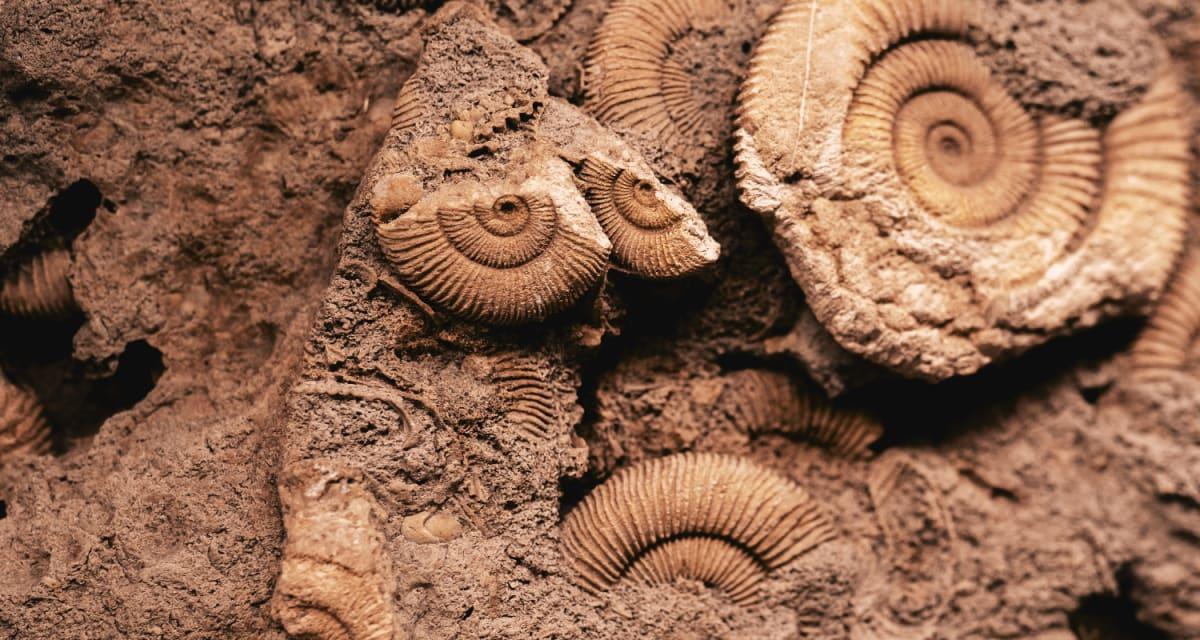
Ancient fossil imprints on a rocky surface
The fossil discovered at the Grand Canyon was surprising for the researchers because the place doesn't have a record of Cambrian fossils. Trilobites and biomineralized fragments have been found at the site, but the discovery of soft-bodied creatures has been rare. However, scientists believe that there's scope to discover similar fossils at the Grand Canyon. "The geology of the Grand Canyon, which contains lots of fine-grained and easily split mud rocks, suggested to us that it might be just the sort of place where we might be able to find some of these fossils," Mussini added. In addition to Kraytdraco, named after the fictional krayt dragon from Star Wars, the researchers found fossils of crustaceans with molar teeth, which suggested it belonged to a group that includes brine shrimp.
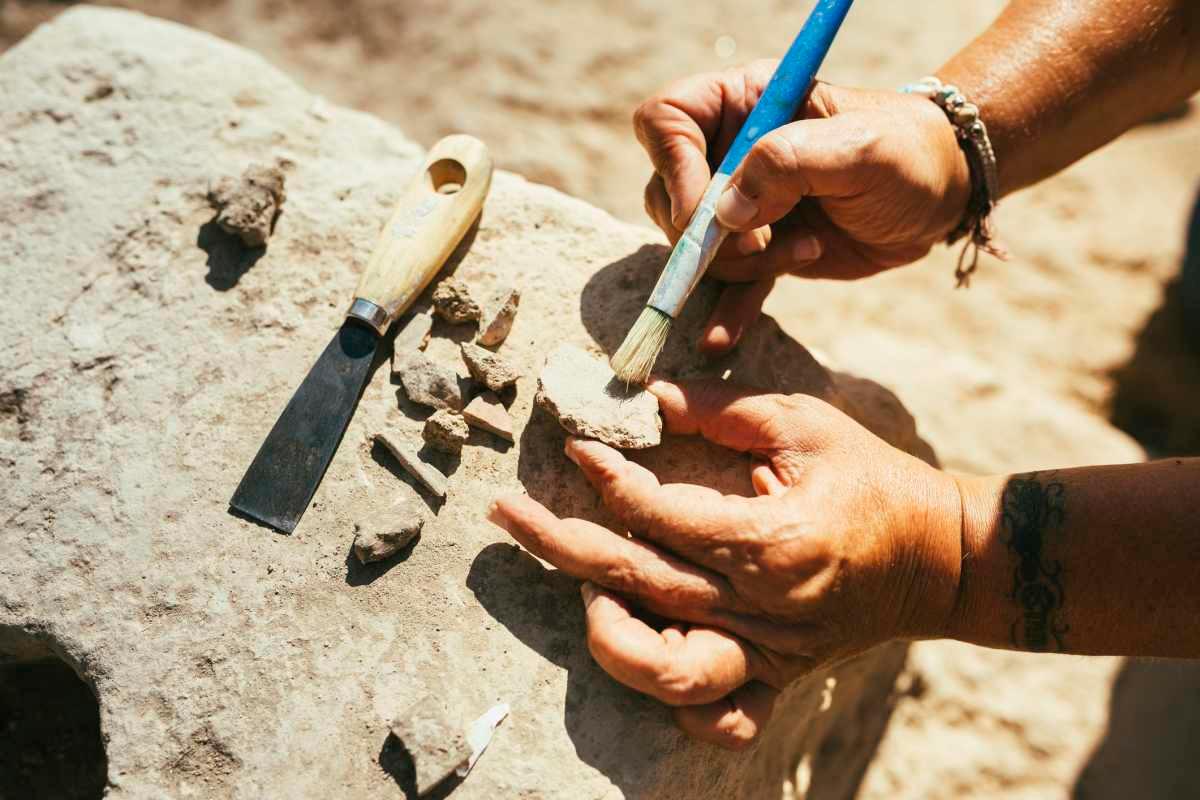
Scientist analyzing a fossil sample with a tool
Fossilized slug-like mollusks were also discovered at the site. The creatures were identified with rows or belts of teeth and appeared similar to modern-day slugs or snails. Researchers believe that the teeth helped the mollusks scrape algae or bacteria off rocks. Mussini pointed out that the variety of fossils found at the site provides insight into their distinct feeding style, way of processing food, and more. He said that some species "have modern counterparts, and some that are more exotic." According to the study, the Grand Canyon during the Cambrian era had the perfect conditions to support a wide range of organisms.
The oxygen-rich water not only provided surplus nutrients and oxygen but also protected the creatures from UV ray exposure. That's why it is not far-fetched to presume that the comfortable environment prompted organisms to take evolutionary risks. “Animals needed to keep ahead of the competition through complex, costly innovations, but the environment allowed them to do that,” said Mussini. “In a more resource-starved environment, animals can’t afford to make that sort of physiological investment," he explained.