
Conservationist Spent 10 Years Chasing Angola’s Mysterious ‘Ghost Elephant’. He’s Finally Filmed It
Published March 9 2026, 9:30 a.m. ET

(L) 'Ghost' elephant spotted on the highlands of Angola; (R) Conservationist who searched for the elusive animal.
Elephants brought glory to the Angola highlands until the 1975 civil war. Soon enough, the giant mammals turned into assets with price tags for body parts. The population that was once a staggering 70,000 had diminished drastically, with thousands of elephants dying and losing their natural habitats to human greed. Although most of the population either perished or migrated to neighboring countries, a small number of elephants remained in some of the remotest regions of the Angolan highlands. Signs like footprints, dung, and scraping on the trees had given enough hope for conservationists to venture further in search of the mighty animals. Conservationist and National Geographic Explorer Dr. Steve Boyes was one of the curious adventurers who was up for the challenging task: search for the elusive animal in hard-to-monitor areas.
Relying on heat-sensitive cameras and microphones for capturing the elephants, Boyes ventured into the less-traveled areas on foot, by bike, and occasionally by boat. It was indeed a challenging task, as for the longest time, his gadgets didn't record even a hint of the animals. “You could smell the elephants, but you don’t see them. You can sense them, but you can’t hear them. They’re ghosts," he told IFL Science. Nevertheless, Boyes kept the hunt going for 10 years, and his efforts finally bore fruit. For many years, the trap cameras in the forest didn't capture anything, but one day the conservationist received a message from fellow scientist and explorer Kerllen Costa.
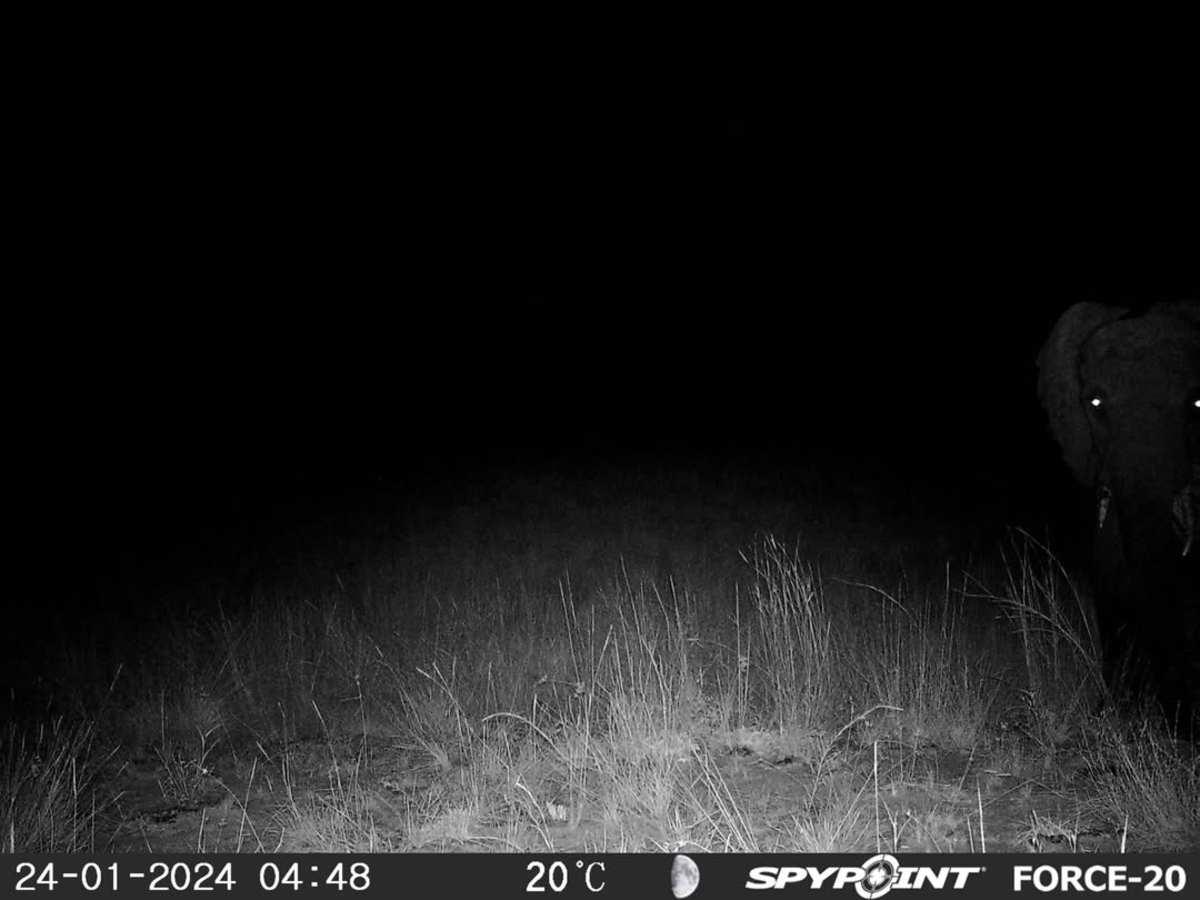
A 'ghost' elephant was filmed through a trap camera in Angola.
The message contained images of “elephants, with eyes glowing,” Boyes said, as per the Motion Picture Association. “I had to pull off the road. [Costa] had just pulled the cards from the 180 motion-sensing cameras we had out there, with 100 microphones. We’d been listening for seven years and nothing. We photographed every other animal, but not elephants. Now we get these pictures. I told Werner, and he could see in me that now this person is going to repurpose everything he’s doing and go live in those valleys," he added. The highlights from Boyes' decade-long adventure have been documented in the new National Geographic film written and narrated by Werner Herzog called Ghost Elephants.
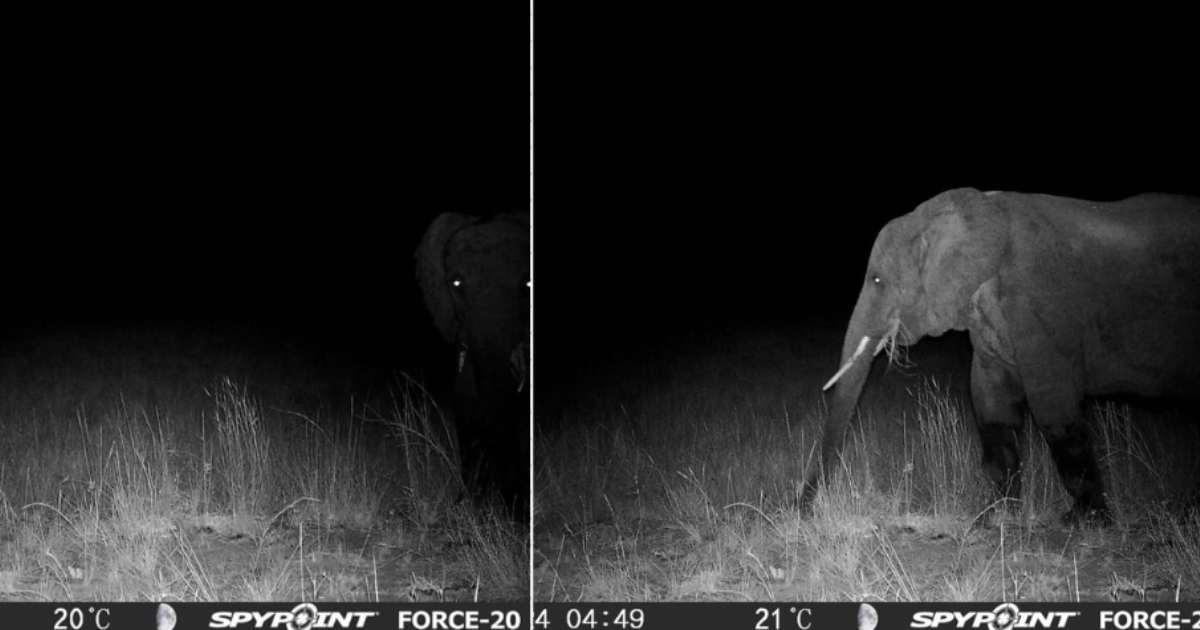
The elusive 'ghost' elephant captured by trap cameras placed in the highlands of Angola.
Why is the search for these elusive animals of high priority to the conservationists? Boyes believes that the elephants living in Angola could be the descendants of Henry, the world's largest known elephant, who weighed more than a T. rex. Although the giant animal was ruthlessly killed in 1955 by the Hungarian hunter Josef J. Fénykövi, some of its remains are still preserved at the Smithsonian Institution. Experts believe that the ancestral elephant had a unique genetic trait that could explain why the elephants of Angola are so distinct from regular elephants. “We went off into Angola for three months searching. It is the most extraordinary place on earth, and I have been everywhere,” Boyes said. “I’ve never experienced a place like those valleys," he added.
However, the explorer didn't shy away from admitting the challenges of their on-ground mission, calling it "torture" while simultaneously stressing its importance. Boyes also revealed that the female elephants in the region are more elusive. “I spent a huge amount of time in those valleys, and the only experience you are going to get with those elephants is an indirect one. The females, the breeding herds, the matriarchs — they are the ones that never left the valleys," he said, adding, “The true ghosts are the matriarchs, the old mums.”