
Trail Cameras Catch Rare Sight of Two Elusive Cats Not Seen in Decades in Minnesota National Park
Published Feb. 12 2026, 7:51 a.m. ET

Trail cameras captured footage of two elusive bobcats bounding down a forest path in Voyageurs National Park
They creep around, like elusive ghosts through the deep, dense forest woods, their folded ears vigilant of every sound, their eyes alert, their oversized, padded front paws and gangly legs tracing quaggy trails, and their black-tipped tails flailing behind. They scramble through remote mountain meadows, digging paws in snow, often with a dead squirrel or snowshoe hare dangling from their mouth. Wary of humans, these slippery cats, a.k.a. lynx, are notoriously and stubbornly difficult to catch.
With just 200 or so in Minnesota, things have been getting harder for wildlife scientists. Even when they spotted one, it seemed to be alone, solitary, and in a transitory mood, already preparing to move to a location that would offer it better feeding and breeding opportunities. Minnesota is increasingly becoming less favorable for these predators. That’s why when some scientists recently observed two lynx kittens galloping down a trail, they couldn’t be more thrilled, Voyageurs Wolf Project shared on Facebook.
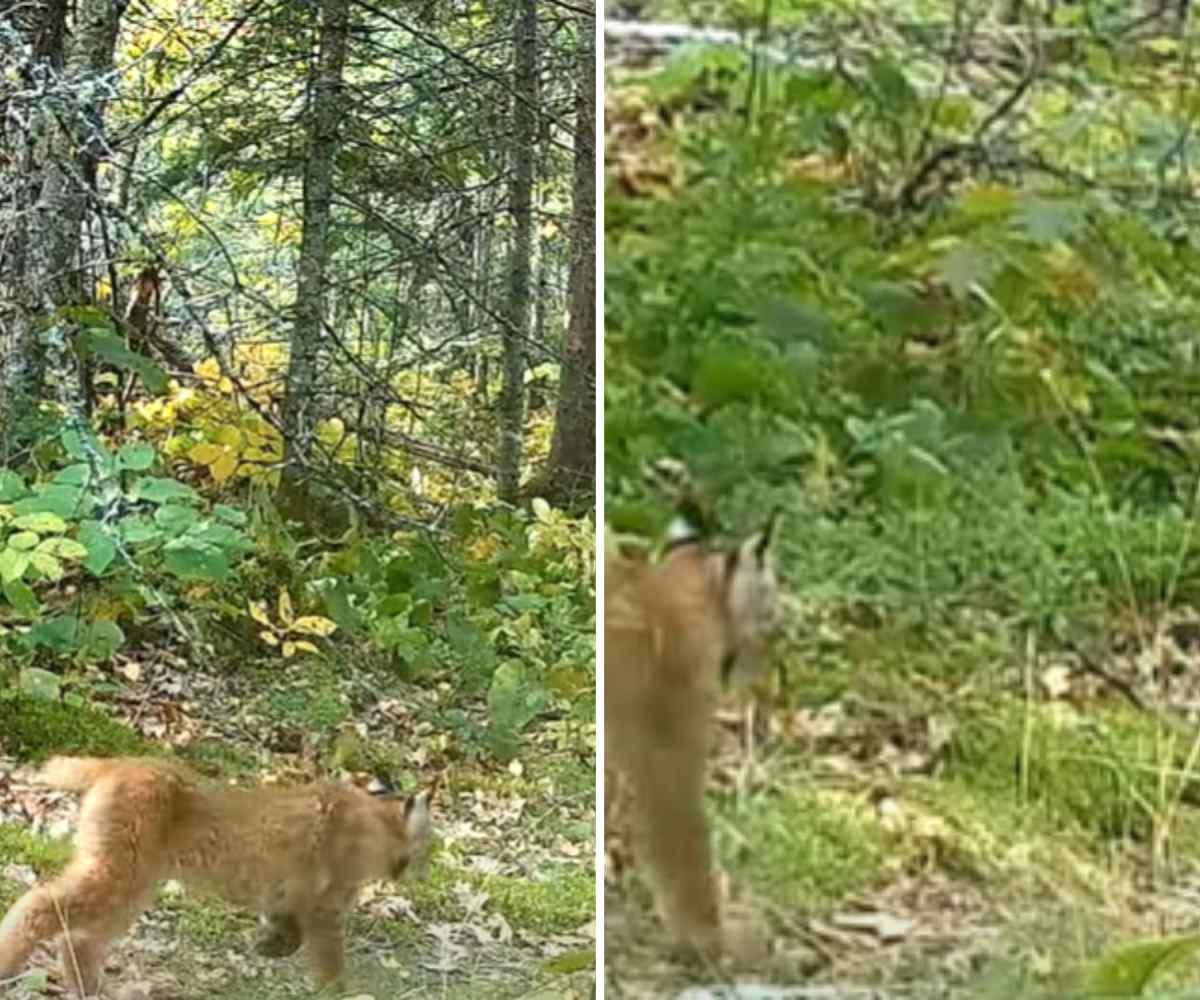
Trail cameras captured rare footage of two lynx kittens bounding down a forest path in Voyageurs National Park
In Kabetogama Peninsula, tucked within a lush pocket of the southern fringe of Minnesota, this is the first time a pair of these cats has been recorded in years. The two cats were merrily scrambling down the trail, while their mother patiently sat and waited. The sighting, researchers say, marks the first confirmed evidence of lynx reproduction in Voyageurs National Park’s history. Thanks to the trail cameras set up in the park, scientists are relieved to know that the cats still prefer this habitat and have enough prey to eat, a suitable environment to reproduce.
The footage was captured in September 2025, but the cameras weren’t originally supposed to record these cats. Tom Gable, a wolf researcher from the University of Minnesota, who captured the footage as part of the Voyageurs Wolf Project, told The Minnesota Star Tribune that they were supposed to study dozens of wolves. Over 400 cameras were installed, with funding from lottery revenue through the state’s Environment and Natural Resources Trust Fund. Apart from wolves, the cameras recorded movements of beavers, moose, spawning white suckers, and black bears lazing around. Churning through months of videos from hundreds of trail cameras, researchers detected two kittens. “It’s just not a common thing,” Gable remarked.
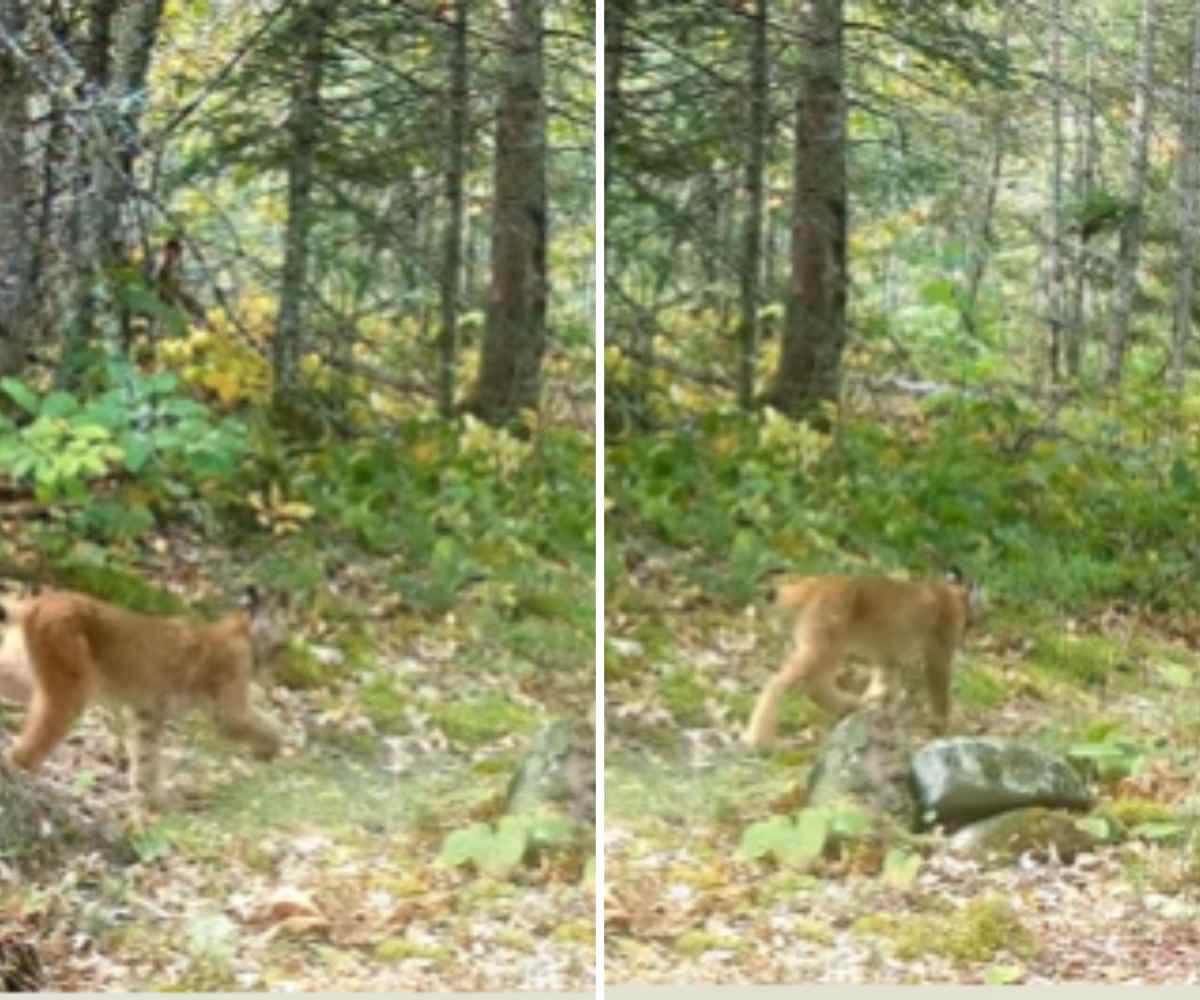
Trail cameras captured rare footage of two lynx kittens bounding down a forest path in Voyageurs National Park
Even the biologists at the park and the US Forest Service endeavoring to catch them with several experiments since 2000, but they obtained no hard evidence. The lack of sufficient prey in the area likely put off the cats, and their inclination turned towards other areas. The environment was not favorable enough to make them stay. Sharing the statistics, biologist John Erb reflected that the lynx’s population follows the snowshoe hare populations, which boom and bust every 7 to 10 years. Over the last few years, however, the hare population graph has been a bit muted, not swinging that much. “You still get these little blips, but it’s just not as strong as a cycle,” he described. As a result, these cats are seldom seen.
Minnesota’s winters are to blame, too. The winters here have gotten warmer and milder. And these evasive cats are finding it difficult to make space to simply exist, let alone survive. In such a scenario, this footage of the lynx family offers hope. “It’s always a good sign when you confirm reproduction in areas where you haven’t in the past,” commented Erb.