
Camera Traps Film Extremely Rare Pigmy Hippos. Footage Gives Unseen Peak into Their Secretive Lives
Published March 4 2026, 5:02 a.m. ET

Researchers set camera traps in the dense rainforest along Ivory Coast and captured rare footage of two pigmy hippos grazing in a field and dipping in a lake.
Night after night, researchers from the Institute for Breeding Rare and Endangered African Mammals (IBREAM) spied on the footprints carved out in mud and pored through the recordings from camera traps they set up in the dense rainforest of Tai National Park, southwest of the Ivory Coast, bordering Liberia. The intention was to catch at least one glimpse of one of the area’s most elusive creatures, the pygmy hippo. Seeing this hippo has remained “virtually impossible until now.”
No one had seen them with their own eyes. Researchers had been attempting to track them since 2010, but in vain. On the last day of the 2026 expedition, however, IBREAM’s Associate Professor Monique Paris spotted something she will never forget. After nearly half-an-hour of observing them, the chubby animals popped into view: a mother hippo and her calf. The footage, Paris says, makes them hopeful for the future.
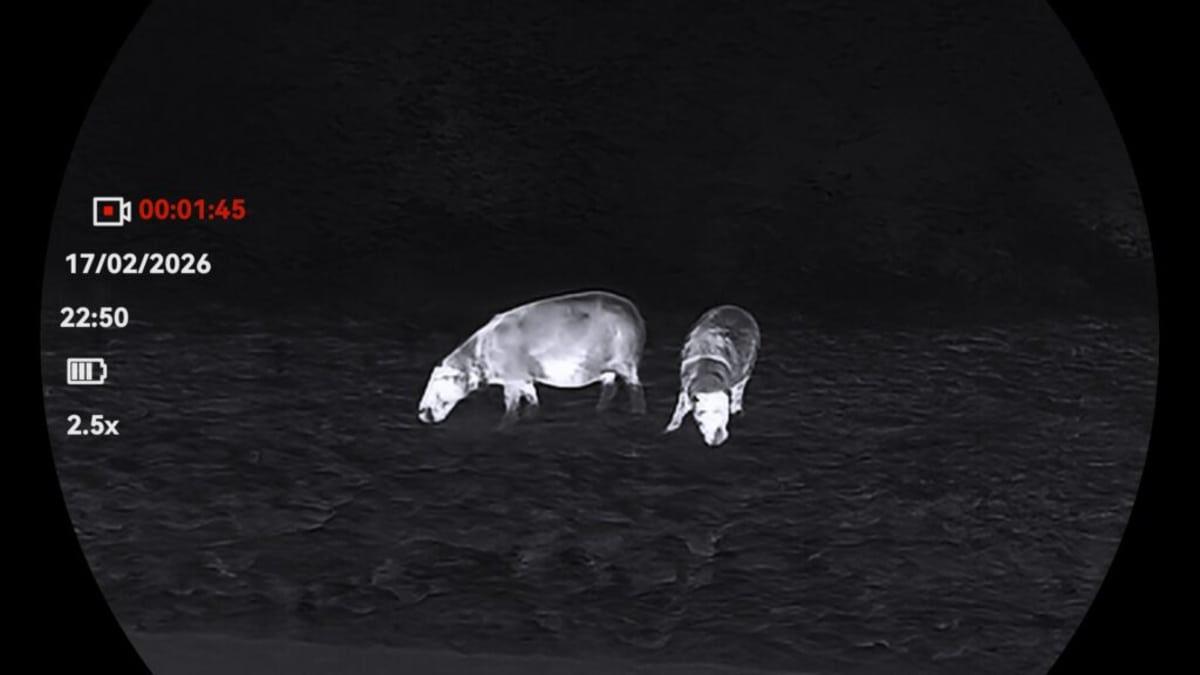
Black and white shot of two chubby pigmy hippos captured on a camera trap set up by researchers
The 50-second footage, captured in black-and-white, opens with the two hippos trotting through a forest, the small-sized calf following its bigger-sized mom. They seem busy munching on the grasses and fallen tree material. For about 11 seconds in the video, their bulky frames rip and chomp down the vegetation. At 12 seconds, the mother descends from the edge into a lagoon. The calf follows. For another few moments, they guzzle down water from the lagoon, sending ripples through the water. At 32 seconds, they dip inside the water, completely disappearing from view. After several cool dips, they emerge from the water, refreshed for the hypnotic night.
IBREAM says there are fewer than 3,000 wild pigmy hippos left. In 2015, the International Union for Conservation of Nature (IUCN) estimated the figure to be closer to 2,500. The purpose of the latest expedition was not just finding them, but also to test tracking collars in remote wooded environments and determine whether they would be able to dispatch radio signals to their computers. For years, using a collar in a rainforest so dense has remained challenging. In this case, luckily, the collars have responded well in the remote environment, evoking hope for the wild pygmy hippos.

Researchers on the Ivory Coast studying the movements of pygmy hippos
The hippos are fascinating storytellers who tell a mosaic of tales about how life can thrive in the most isolated of environments and how each organism is special and just as cosmic in its own way. Pygmy hippos, for instance, are extremely sensitive. Hot days can hurt their skin, which is why they remain close to water. As a defense mechanism, their skin releases shiny pinkish-red material in sweat that acts as their sunscreen. They also have a specialized architecture system they use to construct their dens, carving out space from rivers, beneath the root systems of old trees, and in gaps left in vegetation; their hometown is in western Africa.
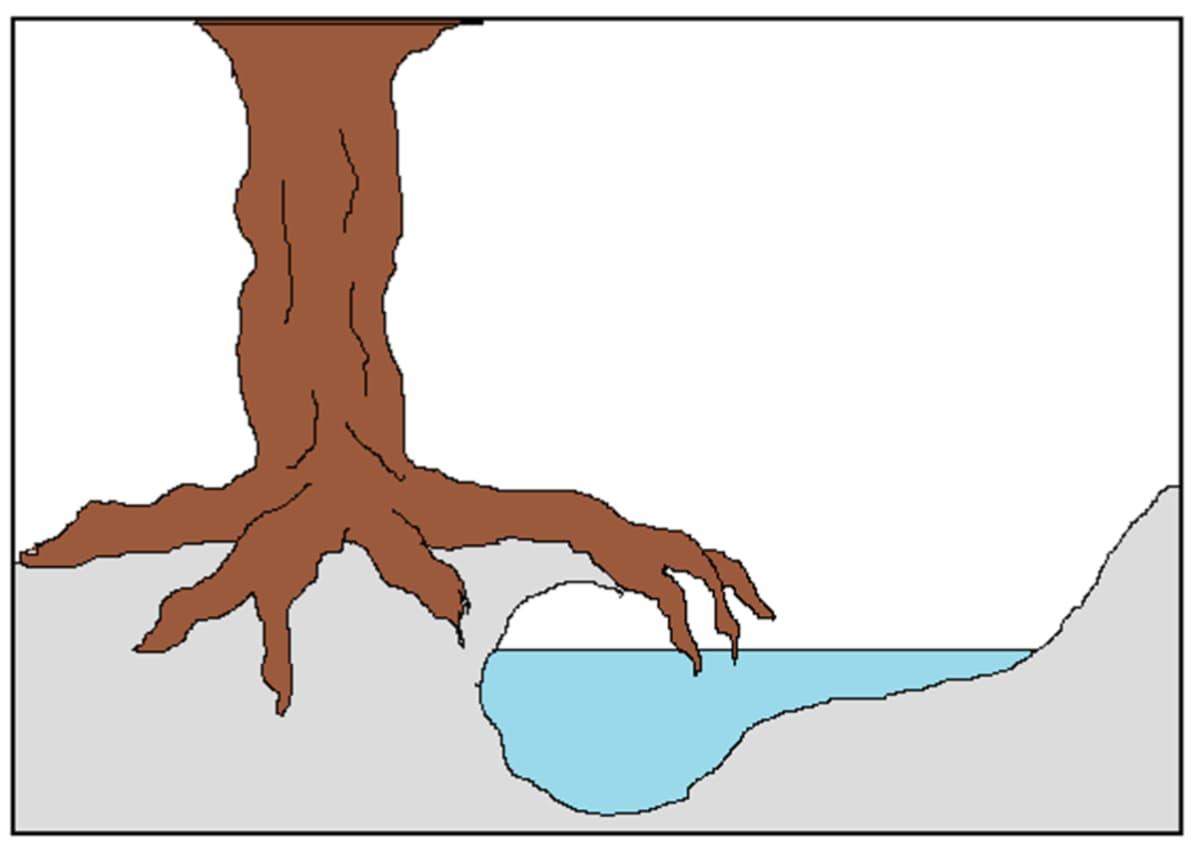
Schematic illustration of a pygmy hippo's den
While adults just need the den to rest and relax, juveniles need it for protection against predators and harsh weather conditions. Researchers often use information from features, like skin creases, scars, malformations, and color patterns, to identify individuals and separate one from another. In this case, the team deployed heat and motion-detecting infrared thermal cameras. In addition to understanding their movements and lifestyle, the goal of the camera traps was to delve deeper into their gender bias. Previous studies on captive hippos have suggested a distinctive female bias in breeding populations.
A troop of detector dogs has also been trained to identify pygmy hippo droppings, even in thick undergrowth. By detecting hippos’ poop samples, these dogs will help researchers conduct a deep analysis of their DNA and identify gender, family groupings, and overall resident sites. All this is not merely to satisfy curiosity, but to ensure their survival, which is increasingly getting eroded by agriculture and encroached by humans.