
These Tiny Elusive Creatures Are Helping Scientists Gather Hidden Data in Antarctica
Published Feb. 12 2026, 9:04 a.m. ET

Weddell Seal Looks Out From Hole in Antarctic Ice
A team of researchers has found surprising support for seals when it comes to exploration. These seals are giving them a view of places previously inaccessible in Antarctica. They are gathering these observations through pocket-sized devices attached to the Weddell seals' heads. The process of attaching these devices to the seals is called “tagging,” according to The New York Times. The devices gather data on their movements and the quality of water through which they are moving. They are hopeful that the insights will shed light on how the ocean’s increasing temperature is impacting the diving and foraging behavior of seals.
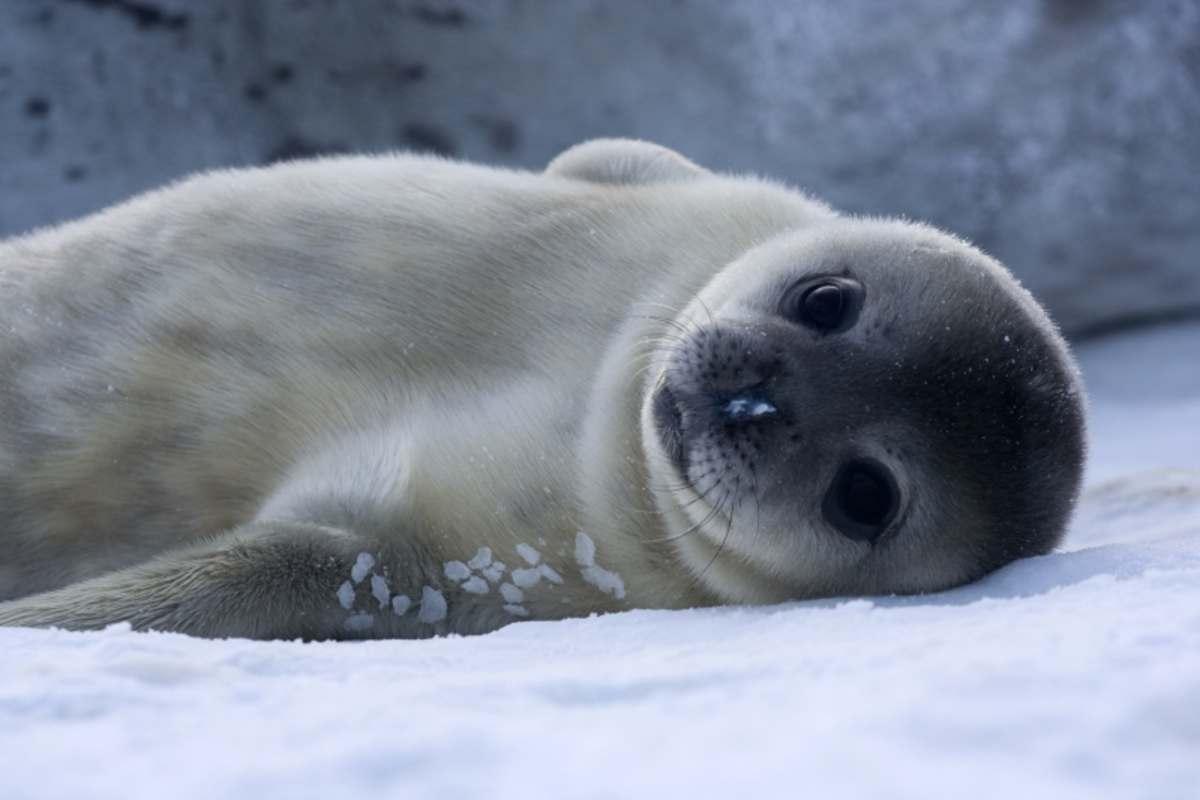
Baby Weddell Seal in Adélie Land, Antarctica
Scientist Ji-Yeon Cheon and behavioral ecologist Hyunjae Chung have been tagging seals since the beginning of 2026. Seals do not have any assigned predators on ice. They typically do not display attacking behavior when faced with a scientist. Despite this, the process sometimes gets murky for both scientists and seals. Firstly, the pair nudges the seal towards the center of an ice floe, with the help of a chopper’s movement and noise. They try to get the seal to the ice floe’s center, as it gets difficult for animals to escape from that position. After the seals are locked, the pair lands from the helicopter.
Cheon distracts the seal with different impressions, while Chung approaches from another direction. Whenever the pair feels the situation is apt, Chung injects a sedative into the seal with the help of a 2.4-inch needle. After receiving the sedative, the seals start whipping their tail, their jaws fly open, and a little roll comes out. During all of this, the pair goes far away, where they can keep an eye on the creature. Slowly, the seal loses its consciousness and goes completely still.
The pair again comes to the scene, cover the creature, and fit the devices on the seal’s head. The tags are made keeping in mind the comfort of animals. Each device weighs just 1.3 pounds and has an antenna poking out. If the seal becomes uncomfortable at any point, the process can easily turn violent. Hence, it is important to be careful at every step. The gathered data is sent to satellites, from where it is transmitted to experts.
The seals the team chose live on frozen sea patches around Antarctica’s Thwaites Glacier. They opted for this location because it is currently witnessing a multitude of environmental changes. One such change has been noted in the water that nourishes fish and other creatures, which the seals prey on. The water contains a higher amount of iron, as well as several other nutrients, than before. These extra nutrients get transferred from the seafloor when the water erodes Thwaites Glacier.
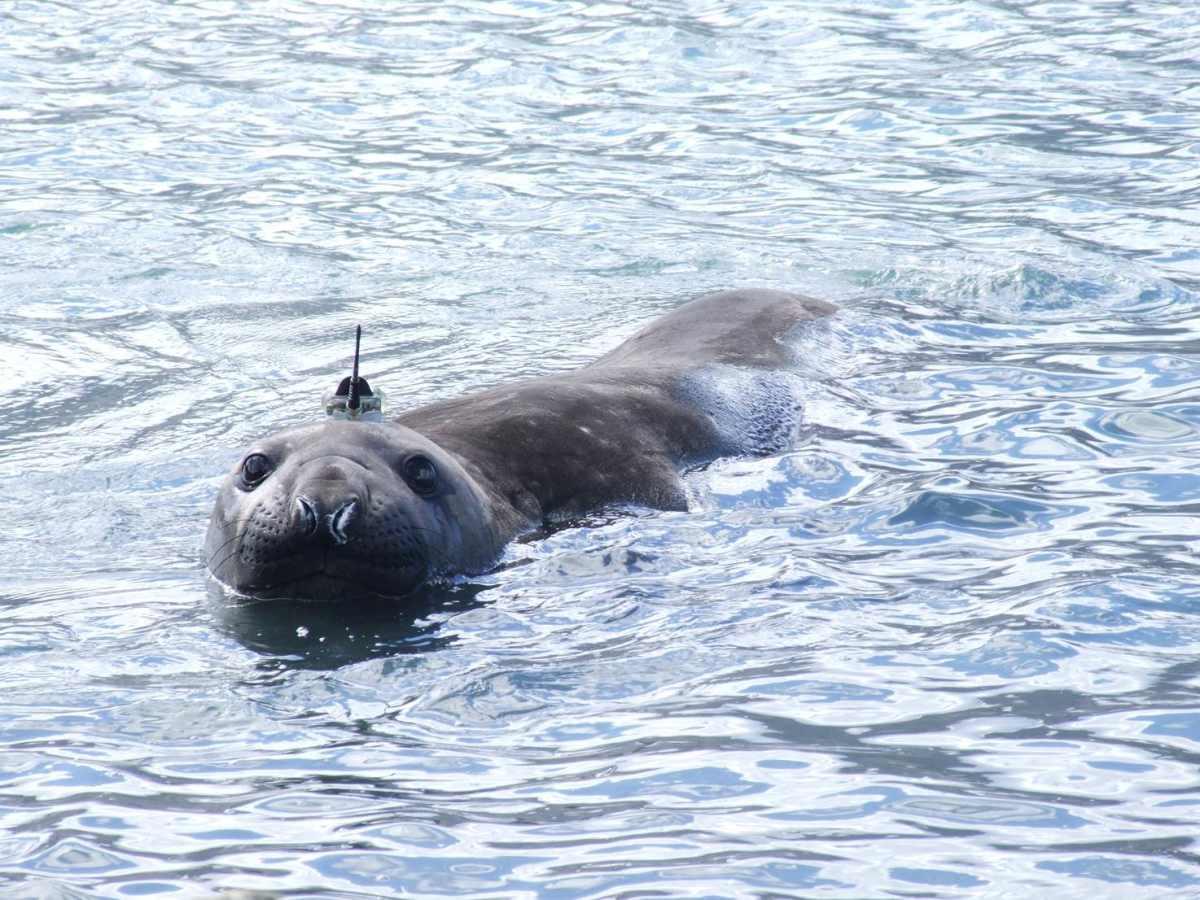
Elephant seals will collect data from where the glacier meets the ocean.
Through tagging, researchers want to monitor seals as they dive, swim, and feed in the coming months. The insights will help them understand how environmental changes in the Amundsen Sea, especially near the Thwaites Glacier, are affecting Weddell seals. Such findings reveal how animals respond to changes in real-time and whether these behavioral changes are contributing to their sustenance. Even though Weddell seals are not recognized as vulnerable, they remain an important creature in Antarctica’s ecosystem. Therefore, it is essential to understand whether their sustenance strategies are working.
It is not the first time seals have acted as messengers in Antarctica. In 2019, the creatures were also tagged in the first ship-based research expedition to Thwaites Glacier in West Antarctica, according to the British Antarctic Survey. “Weddell and elephant seals like hanging out near the ice front or under sea ice, places we find really hard to access. The sensors record details about the seal’s immediate physical environment, which gives us a clearer picture of current oceanic conditions in these remote and inaccessible places,” Lars Boehme, a specialist in animal-borne technology at the University of St. Andrews in Scotland, explains why Weddell seals are used for tagging.
The gathered insights will also help scientists investigate ocean physics around Antarctica in winter. Weddell seals can dive two-thirds of a mile in water. This region is difficult to access and requires assistance. Seals make the pursuit easy. Boehme claims that over the years, seals have sent considerable data from the Thwaites Glacier and surrounding areas. “It’s good data, necessary data, that really helps you to understand the ocean and the climate,” he shared.