
One of the Biggest Celestial Events of 2025 Sets Off This Week— How to Watch the Geminids Meteor Shower
Published Dec. 5 2025, 3:22 a.m. ET

Man beholding a glittering meteor shower in the night sky
When an asteroid circling around the Sun gets too close, the seething radiation of the Sun breaks it apart into crumbs of gas, dust, ice, and rock. These crumbs scatter all around, and over time, create their own elliptical orbit in which they revolve around the Sun. Every once in a while, this orbit clashes and intersects with the orbit of the Earth. And as it does, the frictional forces exerted by Earth’s gravity cause these rocky pieces to become agitated and overwhelmed. The rocks become excited with heat and start zipping towards the Earth at thousands of millions of miles per hour. To someone standing on the ground on Earth, their dashing sprints paint a surreal canopy of glittery, shooting stars that scientists call “meteor showers.” The month of December this year is filled with exciting opportunities for stargazers as the Geminid meteor shower is expected to cast its fiery naked display over the dark skies, reports Space.com.
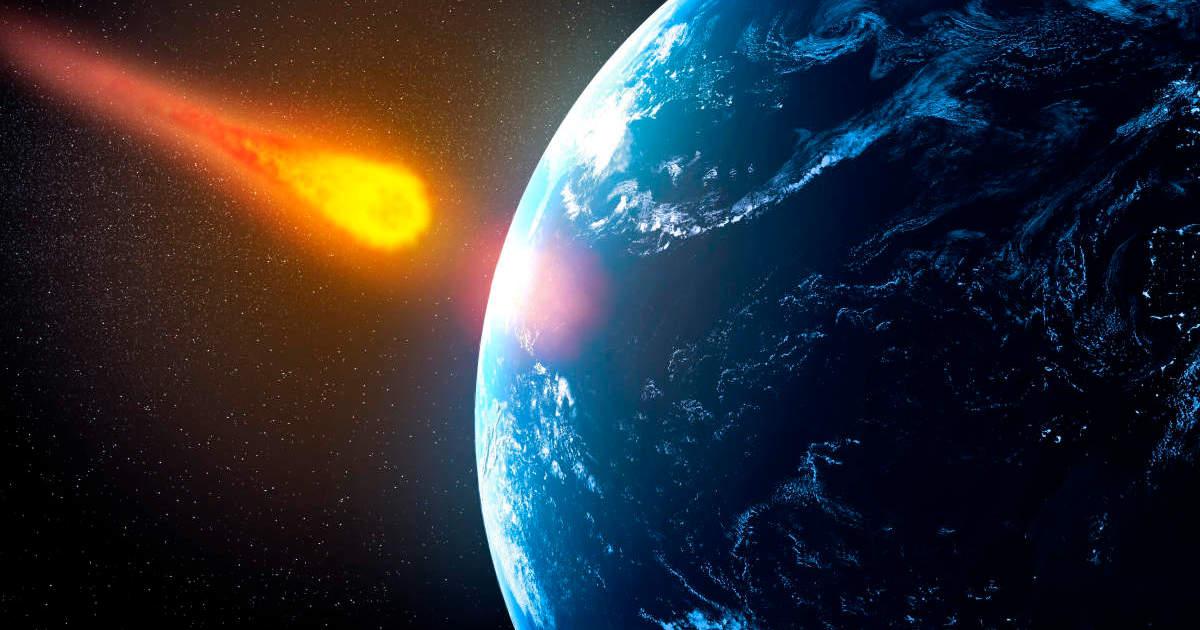
Asteroid zipping towards Earth
Until about 4.6 billion years ago, space was just a swirling mass brimming with gas, dust, and fading carcasses of dead stars. Then, a gigantic cloud of dust and gas collapsed under its own gravity, and a burst of rocky fragments shot into space, dispersing all around and eventually birthing our solar system. The rocky fragments that couldn’t become a part of the solar system kept hanging there in a belt that now stretches along the orbit between Mars and Jupiter. These lone fragments were named “asteroids.”
Today, millions of asteroids revolve around the Sun. When one gets too close, it crumbles and sometimes comes shooting towards the Earth, fired up. This month, the Earth will be passing through the trail of debris ejected by the asteroid 3200 Phaethon, setting forth the spectacular “Geminid Meteor Shower,” that is likely to become active from December 4 to December 17, reaching its peak on December 13 and December 14, per the American Meteor Society. Scientists predict that this is going to be the “biggest meteor shower of the year” and “one of the most spectacular shooting star events” with more than 150 meteors racing in our skies, dripping with fathomless sparkle.
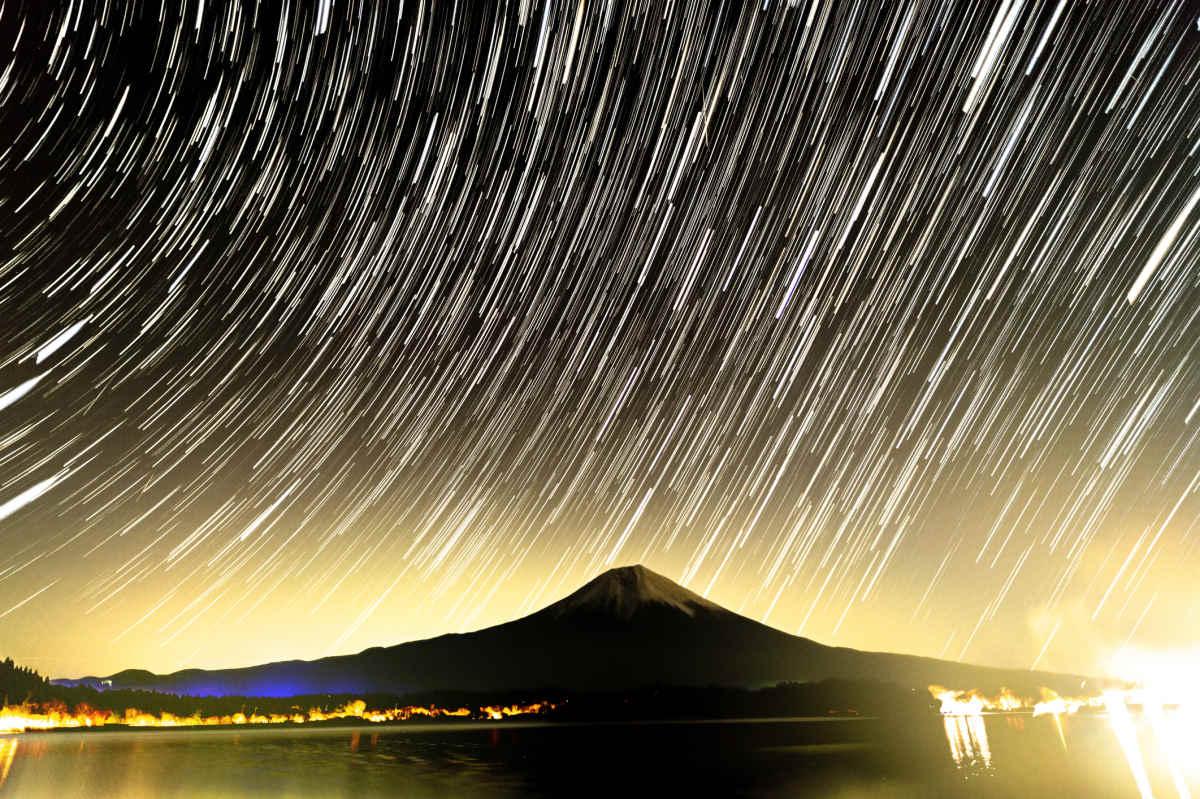
Dazzling meteor shower exploding above a mountain
This is one of the best celestial spectacles, but it isn’t the only one to happen. National Geographic explains that Earth usually experiences nearly 21 meteor shower events every year, typically between August and December. Each shower is named after the constellation from where its meteors appear to streak from. In this case, it’s the Gemini constellation, famous for its twin stars Castor and Pollux. The meteors race towards Earth at speeds ranging from 25,000 miles per hour to 160,000 miles per hour, with sizes ranging from that of a pea to a pebble, sometimes a boulder.
The best time to gaze at the Geminids’ sparkling shower is when the Moon is not there, and the sky is pristinely dark, preferably around 10 pm on December 13 and in the pre-dawn hours. The shower will involve hypnotic bursts of colors, including red, yellow, orange, white, and even cyan-like blue, Big Think describes. According to the BBC, this impressive palette is provoked thanks to the presence of small amounts of metallic materials like sodium and calcium in the meteors, the same elements that give fireworks their color. The upcoming Geminid shower will be most prominent in the Northern hemisphere, but you will also be able to witness it in the Southern hemisphere.
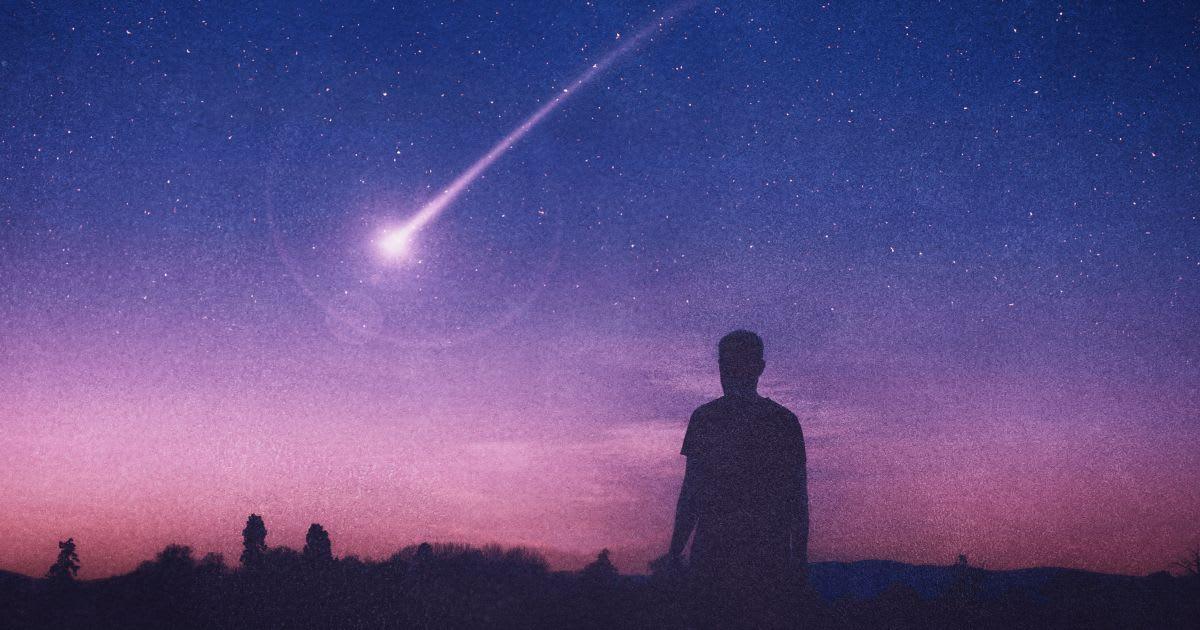
Silhouette of a man watching a shooting star in the night sky
This shower is not the end of the excitement, though. NASA reports that the celebrity interstellar comet 3I/ATLAS is now making its closest approach to Earth on December 19, which means stargazers have another chance to take out their tripods and capture some cosmic sparkle. Meanwhile, Moon and Jupiter are also planning to buddy up and come closer on December 7.