
Interstellar Comet 3I/ATLAS Ejects Enormous ‘Ice Volcanoes’ as It Departs From the Sun
Updated Dec. 2 2025, 5:25 a.m. ET

An image of Comet 3I/ATLAS. (Cover Image Source: NASA, ESA | David Jewitt (UCLA), Joseph DePasquale (STScI))
There is a fuzzy orb with a long, glittering tail that's keeping millions of eyes hooked ever since it arrived in our solar system this July. Named 3I/ATLAS, the interstellar comet is currently about 186 million miles away from Earth. After having a brief meeting with Mars, followed by one with the Sun, it is now heading towards Jupiter. This cosmic interloper seems to be the first and last of its kind. Scientists have churned out legions of studies, both eager and curious to document every dab and dot of this glowing visitor before it departs from our solar system forever. A study published on the arXiv server reported a mysterious behavior displayed by the comet when it moved closer to the Sun. Images captured by a fleet of NASA telescopes reveal eddies of icy jets shooting from the surface of 3I/ATLAS. The study explores what they are.
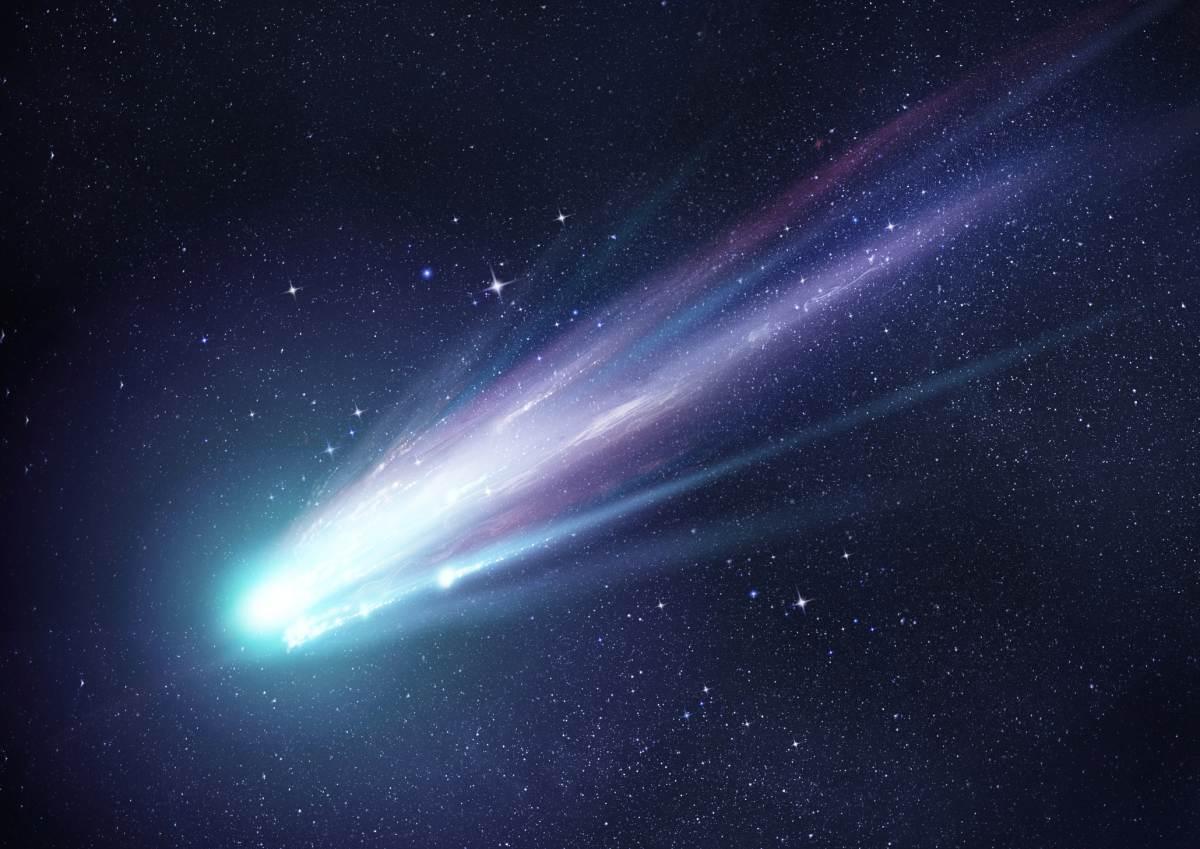
Bright glowing comet hurtling in space
3I/ATLAS is a mischievous cosmic vagabond that has been wandering in space even before our solar system formed. The ancient materials trapped in its body are so irradiated that scientists are finding it almost impossible to trace its origins. But one thing is clear. It is a foreigner. No one knows how exactly it swept into our solar system, but its unusual behavior has been constantly puzzling scientists. Its high tensile strength, rich metallic interior, never-seen-before trajectory, and a tendency of hotfoot travel; scientists are eager to investigate these features before it skedaddles away from our home environment into an unknown world where human cameras can’t reach.
When it was first spotted, NASA scientists latched their most advanced instruments to keep a constant eye on its activities, behaviors, and travel pathways. Some of the most decorated telescopes, including MAVEN, Psyche, Lucy, PUNCH, Mars Perseverance rover, and others, were recruited for its photometric surveillance. Recently, after the longest-ever government shutdown broke open, NASA released a set of images these devices captured. While investigating the images, an uncanny behavior displayed by this comet came to notice.
On October 29, when 3I/ATLAS was about 137,000 miles from the Sun, at the closest point called perihelion, it started ejecting gusts of icy jets from its rocky surface. The comet was too fast to be bound by the Sun’s gravity, yet it couldn’t prevent itself from being influenced by the seething heat. The length of the icy jets measured somewhere between 1,400 feet and 3.5 miles, which means they were as small as four football fields laid end-to-end, and as large as the Forest Loop Trail in an Oregon National Park.
It is not uncommon for comets to display unusual behavior when they fly near the Sun. Sun’s heat melts away their ice and turns them into gas, in a process called sublimation. But when 3I/ATLAS was about 235,000,000 miles from the Sun, it underwent a staggering sublimation followed by an intensely brightening glow and a phenomenon scientists call “cryovolcanism.” This cryovolcanic behavior made scientists think that the comet is behaving like a pristine Trans-Neptunian Object, an object that whizzes around Neptune and Pluto.
The aggressive jets of ice and gas indicate the comet’s elevated metal abundance and also an abundant water ice supply nestled in its coma and nucleus. Cryovolcanoes, also known as ice volcanoes, usually become activated due to a specific chemical structure that 3I/ATLAS has. “We were all surprised,” lead author Josep Trigo-Rodríguez told Live Science. Trigo-Rodríguez and his team studied the comet’s chemistry using the Joan Oró Telescope in the Montsec Observatory in Spain. Analysis revealed that the cryovolcanism in this case is being triggered due to the corrosion of abundant metallic material sitting in the comet’s innards.
The comet crossed the threshold at which the Sun’s heat sublimates ice into carbon dioxide. As a result, oxidizing liquid seeped into its interiors, where it started melting metals like iron and nickel locked inside. Comparisons revealed that the comet contained traces of “carbonaceous chondrites,” which are remnants of ancient dust that swirled around in space even before the formation of the Milky Way, which means it holds the primordial cosmic material that laid the initial foundations of life on Earth.

Glowing comet zipping past Earth
From the very beginning, scientists have suspected that everything about 3I/ATLAS seems unusual. “This object is a comet. It looks and behaves like a comet,” NASA Associate Administrator Amit Kshatriya, contemplated in an interview with BBC, “but this came from outside the solar system, which makes it fascinating, exciting, and scientifically very important.”