
Climate Change Threatens Tiny Rich Ecosystem Thriving Deep Within Snow Covers
Published Jan. 21 2026, 8:25 a.m. ET

Northern Pika peeking from a snow-covered landscape.
When thick layers of snow cloak a landscape, the world appears to be in a standstill. But unbeknownst to us, a whole ecosystem thrives between these layers. It is called the “subnivium,” a tiny insulated ecosystem between the snow and the ground that survives on its own, harboring roots, microbes, insects, small mammals, and birds. It acts as a safe space, protecting these creatures against the ruthless winter storms. From breeding to hunting, they rely on the seasonal ecosystem for all kinds of purposes. However, sadly, with climate change increasing exponentially, winters have become warmer, which is far from suitable to sustain the subnivium ecosystem. Earlier, precipitation would bring more snow, but due to global warming, it happens in the form of rain.
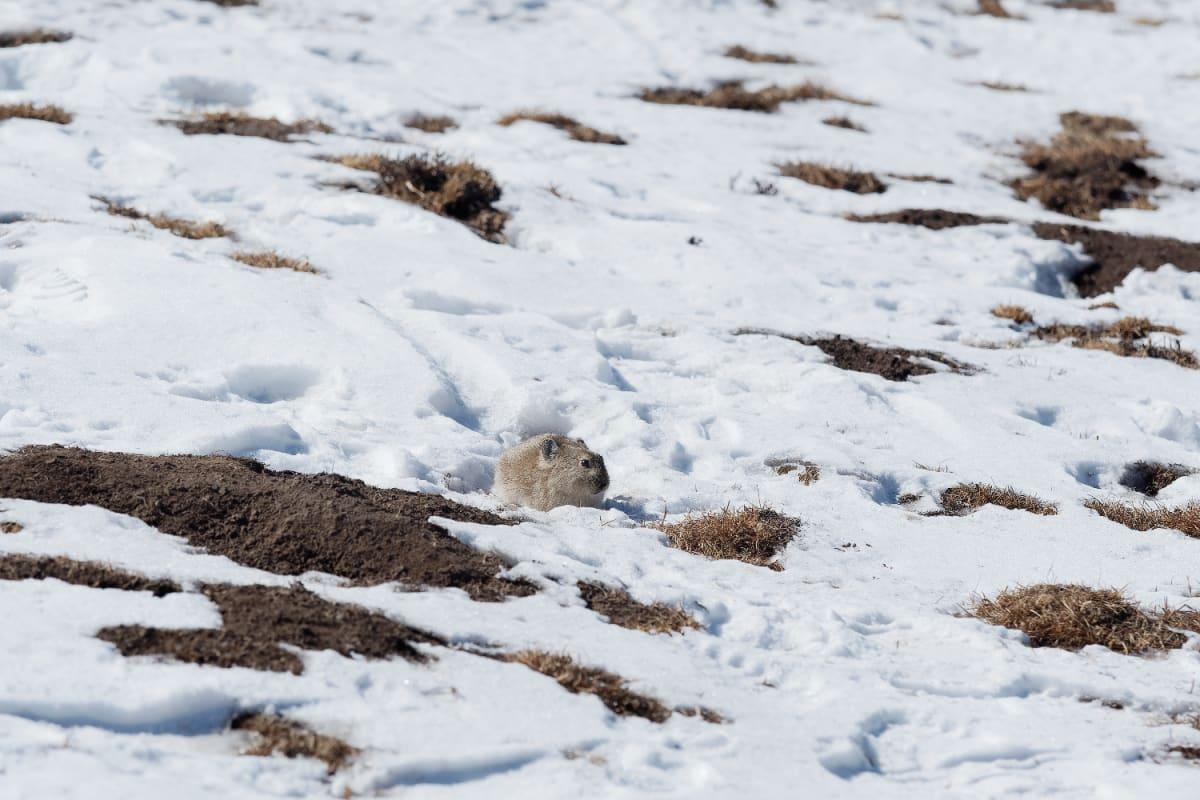
A tiny rodent peaking out from within a snowy land.
Between 1979 and 2012, the snow cover in the Northern Hemisphere decreased by 2.2% every decade, as per Science News. 2020 witnessed 2.5 fewer days where lands were covered with snow as compared to 2016. If the rain continues to replace snowfall and the snow-covered lands reduce significantly every winter, it will uproot a whole ecosystem from existence. According to community ecologist Jonathan Pauli of the University of Wisconsin–Madison, a subnivium is formed when fallen snow compresses under its own weight and pressure, forming snowpacks. When the compressed snow reaches about 0.49 feet (15 centimeters) deep, it becomes ideal for animals to form an ecosystem within them. The snowpack does not go any further down, acting like a tiny igloo and insulating the animals within.
Pauli explained that even if the temperature above the snow surface might range somewhere from 68° to 39° F (20° to 4° C), the subnivium will be saved from cold air. The insulation provided by the snowpacks will consistently keep the land temperature 34° F (1° C), one degree above the freezing point, which evidently makes all the difference. Scientists believe that the hidden ecosystem under the snowpacks gives an entirely different perspective on animals living in the cold lands. While larger animals, like penguins, polar bears, and more, freely roam frozen lands like the Arctic, several smaller organisms protect themselves deep within these ice covers in the winter.
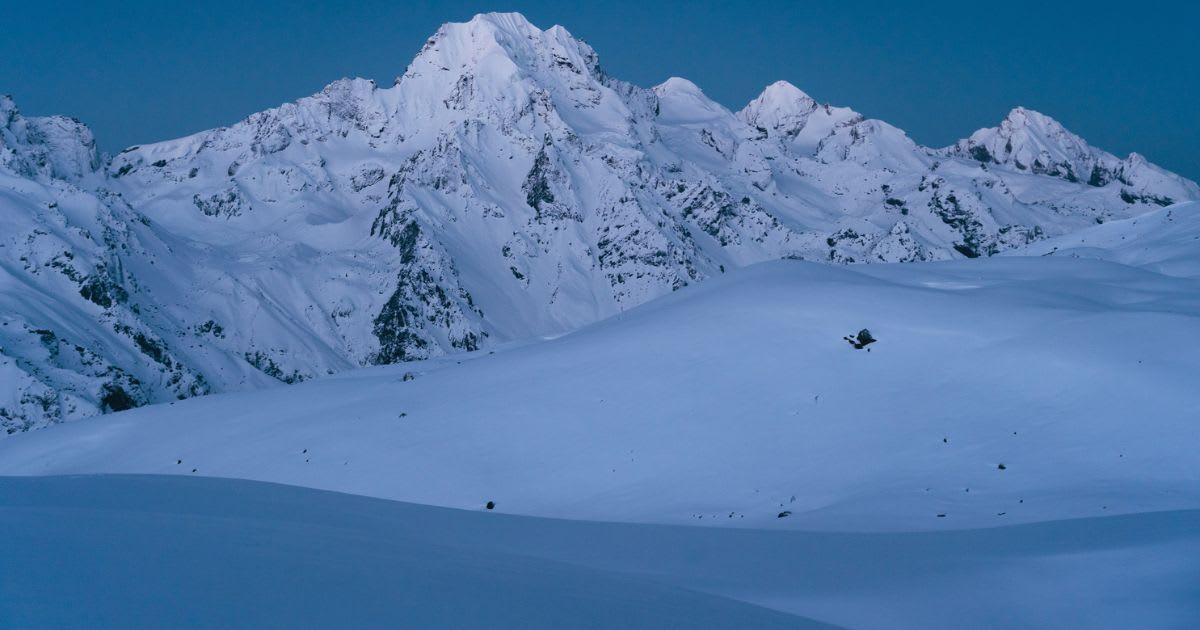
A landscape covered in snow.
Ecosystem ecologist Alix Contosta of the University of New Hampshire in Durham believes that these underground ecosystems have redefined how experts study winter environments. Contosta’s interest in studying the subnivium peaked while she was still a student in the 1990s. At the time, winters were colder, much quieter, and “a dormant season,” where a lot was not happening. But the fact that a warmer environment beneath the snowpacks continued to exist, completely dissociated from the cold winds above, was something Contosta found fascinating. Not just animals, these ecosystems also allow bacteria and fungi to stay and grow comfortably by feeding on dead plant material accumulated in the autumn season. “As long as those microbes stay alive, the carbon that’s in their biomass is part of soil,” Contosta said.
According to a 2020 research paper published in Scientific Reports, the depth of a snowpack impacts how many microbes survive in the habitat. The microbes perform a process known as soil respiration in which they release carbon dioxide into the soil. When winter fades and warmer seasons arrive, the snow covers melt, and the nutrients from the microbes seep into the soil. “All of these nutrients, all of these carbon molecules, it’s ready for [plants] when they wake up,” says soil scientist Kaizad Patel of Pacific Northwest National Lab in Richland, Wash. “In that sense, the microbes help regulate that [nutrient cycling],” Patel added.