
Scientists Launch First Ice-Core Library in Antarctica to Preserve Vanishing Climate Records
Published Jan. 16 2026, 6:04 a.m. ET

Scientists created the coolest library on Earth that keeps an archive of ice cores from across the world
In 2015, a group of scientists braved the stinging katabatic winds of East Antarctica and ventured on a first-of-its-kind mission to save the planet, with a snowplow. With tractor wheels rolling and grazing the sunlit snow, engines whirring, and metals clanging, the snowplow pierced through thick layers and punctured a 115 x 16 x 16 feet corridor in ice. While some members pondered what to do with the mounds of ploughed snow, others started pumping gas in a big blue balloon. Once the balloon inflated to a monstrous size, they covered it with snow. The snow hardened, and the balloon's ceiling became stabilized. That’s when they pumped out the gas. The balloon collapsed in a slouchy blue heap while the hardened ice formed the entrance of what they call “the coolest library on Earth,” according to The Conversation.
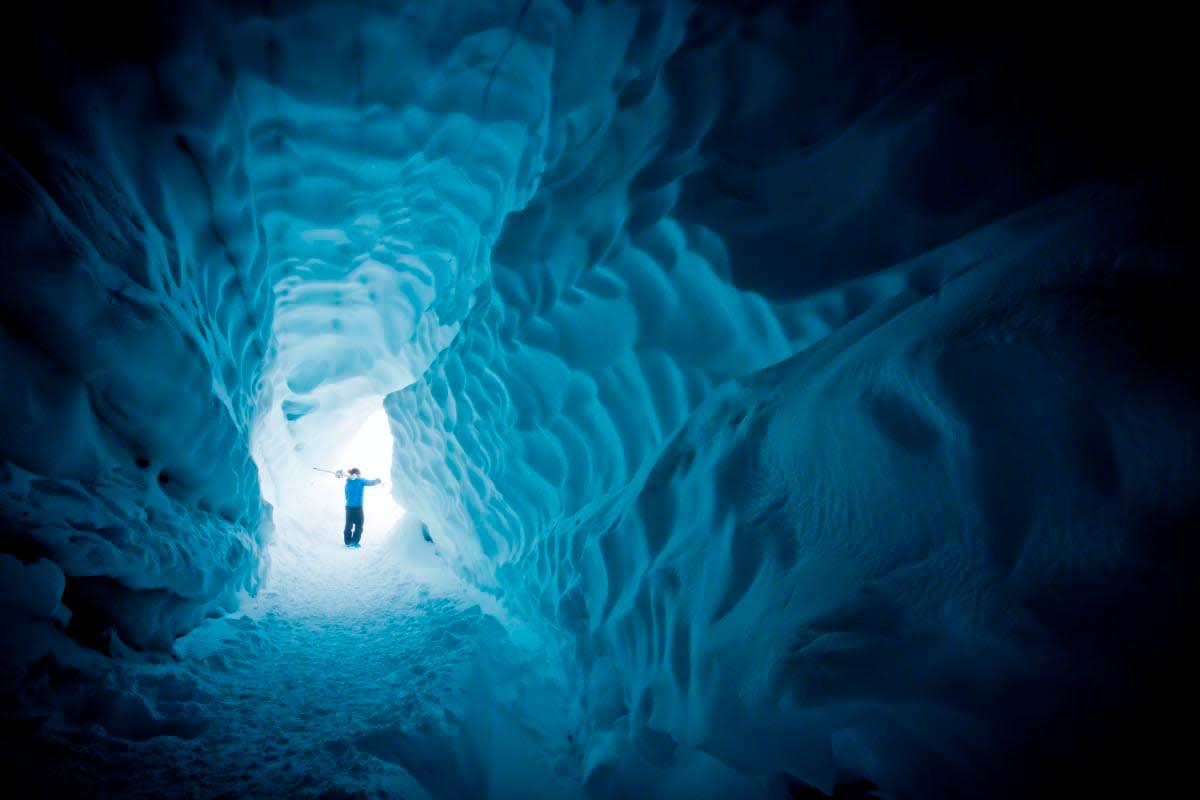
Man exploring an ice cave
The enigmatic library sits in the middle of the coldest place on the planet, about 1,040 miles from the southernmost point of the planet and 10,607 feet above sea level. Hiding somewhere near the H-shaped towers of French-Italian Concordia research station, the library had been under construction since 2015, but was inaugurated only recently, on Wednesday, January 14, 2026. Scientists and officials gathered at the entrance of the frozen cave and conducted a ribbon-cutting ceremony, while others were seen hauling truckloads of boxes. These boxes are filled with the pieces of ice collected from across the world. These pieces, like storybooks, will sit around inside the frozen library, preserving stories of our planet for generations to come.
Ice talks. Unlike humans, it doesn’t have a brain, but it has memories. These accumulated memories are rumbling with the information and stories of past climates, wind patterns, geological events, and everything else that the ice experienced, including the events that transformed the ancient water into this ice. Scientists like Thomas Stocker know how to have “dialogues” with these memories and retrieve the treasury of details that the ice hides. With this idea in mind, scientists created this library.
Man exploring an ice cave
Named “Ice Memory Sanctuary,” the library maintains a cache of ice cores from across the world under a temperature of minus 52 degrees Celsius. The sanctuary is part of a long-term initiative where scientists intend to create a database of ice cores, so whenever they need some information for research, they will fetch the related ice core, have dialogues with it, and reconstruct the series of historical events from the memories accumulated inside it.
Say, if a scientist working on research 50 years from now wants to have information about the concentration of a chemical in the Himalayas of the European Alps in 2026, all he would need to do would be to visit this library, retrieve the 2026 ice cores, and collect the information. Each hunk of ice is like a storybook that records stories of atmospheric gases, ancient bubbles, dust, pollutants, aerosols, organic matter, maybe even tiny microbes. They are like crystalline windows that enable scientists to travel back in time to millions of years ago and illuminate the events that sculpted them.
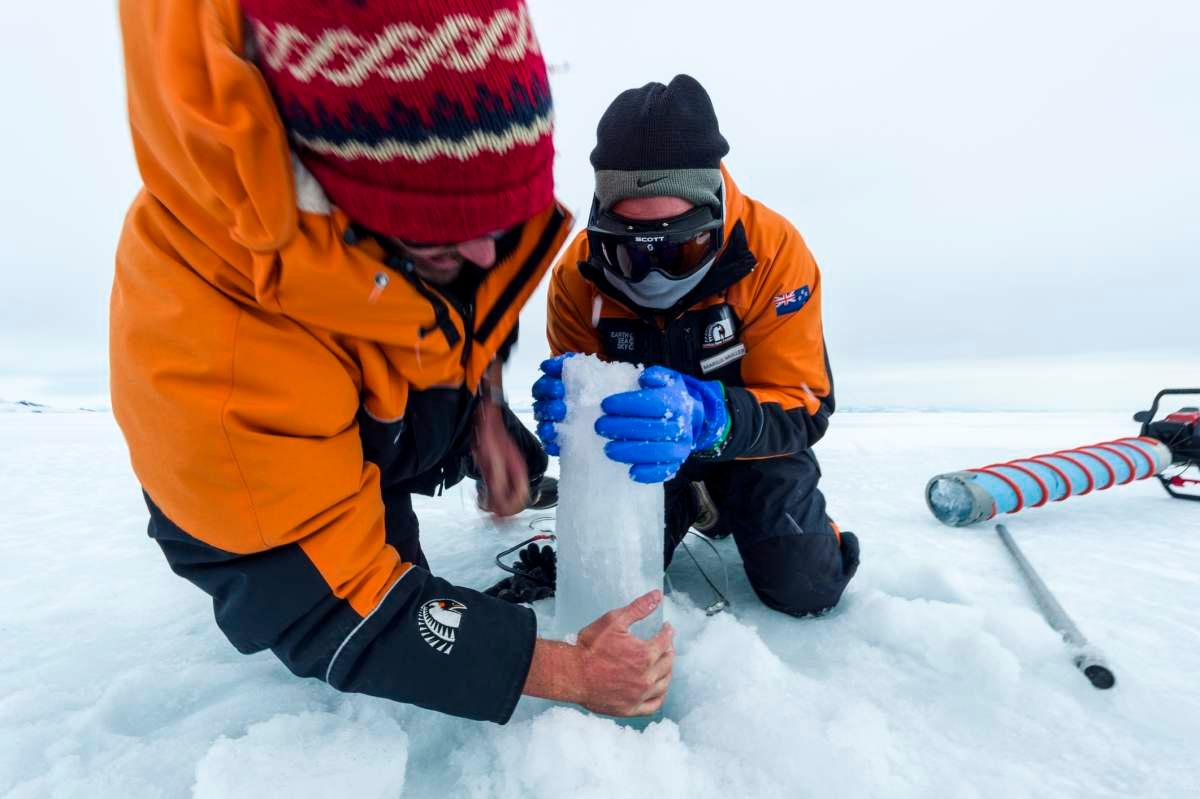
Scientists drilling an ice core from thick Antarctic Ice sheet
These days, unfortunately, ice is not too happy. As global warming intensifies its grip, the ice is becoming more and more vulnerable to meltdown. Little by little, it is dripping and surrendering itself to the mists of time. A study in Nature Climate Change predicted that glaciers, too, will vanish by 2024. Scientist Celeste Saulo told DW News that every year, more than 273 billion tons of ice are lost, an amount of 30 years of global human water consumption. It’s a “kind of crisis,” she said, with worry.
In such a scenario, the Ice Memory Sanctuary, launched by a consortium of European research institutes, emerges as a breath of relief. But these ice cores are not “relics,” Saulo reflected while speaking to Associated Press. They, she said, are “reference points” that will allow scientists to understand “what changed, how fast and why.” The first ice cores deposited in the Ice Memory library came from France and Switzerland. Looking ahead, scientists are urging other nations to donate a piece of their ice to be preserved here, and frozen in time. Tajikistan has already donated one.