
Climate Change is Quietly Shrinking Salaries in America by About 12%, New Study Finds
Published Jan. 19 2026, 6:59 a.m. ET

A dollar currency sign made with grass on soil.
Imagine buying goods at a higher-than-usual price because another state experienced unpredictable rains. That might sound unfair, but it is the harsh reality today. Climate change has increased exponentially, with each season becoming harder to predict. Surprisingly, the unprecedented weather has an adverse effect not just on the environment but also on a country’s economy. A recent PNAS research paper revealed that climate change has reduced U.S. income by 12% since 2000. This figure reveals the financial loss the country bore over two decades. “If we can’t figure out what climate change is already costing us with the data we have, projecting the future becomes almost hopeless,” Derek Lemoine, a professor of economics at the University of Arizona and lead author of the study, said in a statement.
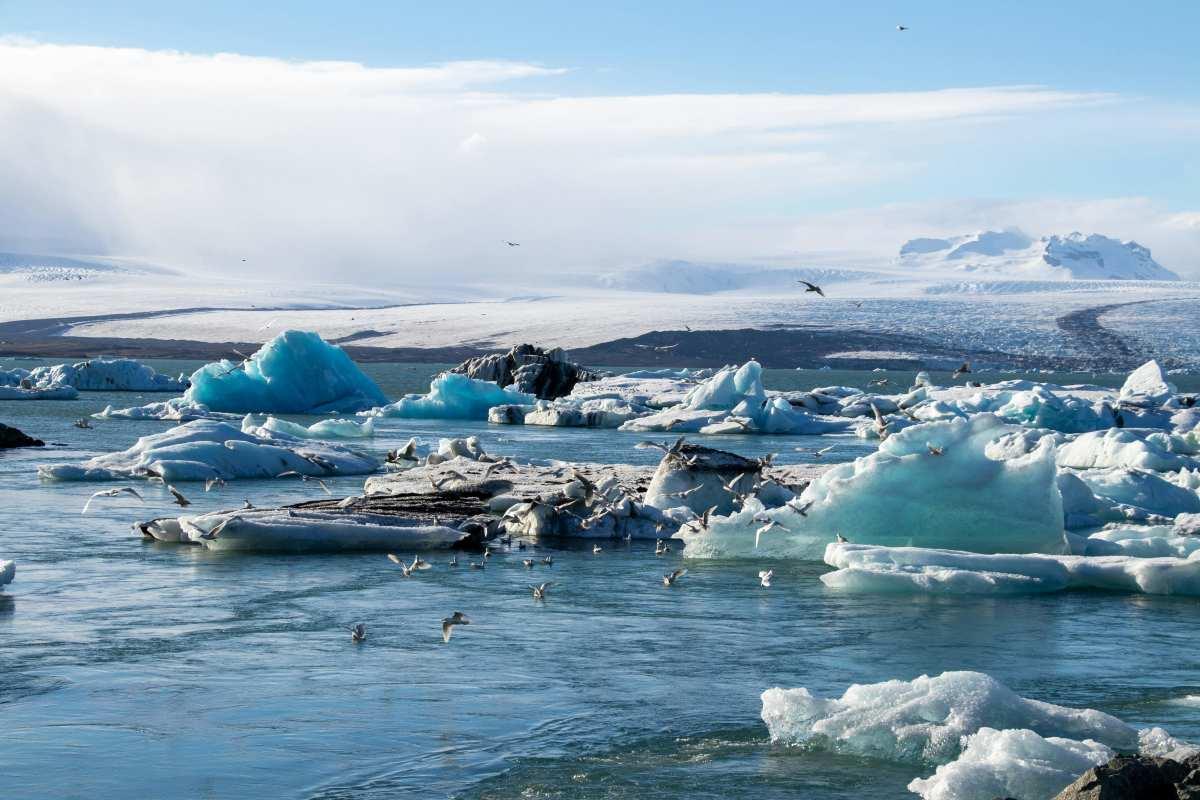
Melting ice shelf in Antarctica indicating climate change
In a previous study, Lemoine had only accounted for local weather changes, and it had less than 1% negative impact on the U.S. economy. Eventually, he realized that the economy and climate change, both are deeply intertwined regionally and nationwide. The recent study included this correlation in the calculations, and the percentage of negative impact was bumped up to 12. Since places are linked through trade, climate change in one region, say Arizona, can impact regions it’s associated with. “A lot of the real cost comes from how temperature changes across the whole country ripple through prices and trade,” he explained. “It’s not just about the weather where we live. When every region is affected at the same time, the economic consequences add up quickly,” Lemoine added.
Speaking to BBC Science Focus, Lemoine revealed that the changing temperatures around the U.S. weigh down the country’s economy. “Most of those costs are not driven by changes in weather where you live but by how changes in weather everywhere else affect supply chains and the cost of products you buy from elsewhere in the US,” he explained. The researcher modeled the world under two different scenarios: a world free of manmade greenhouse gas emissions versus a world plagued with them. Examining 50 years (1969–2019) worth of U.S. income data helped him identify the economy affected by climate change. Using temperature as a metric, Lemoine not only unraveled its financial toll but also found how interlinked the weather of different regions can be.

Dollar banknotes in a person's hands.
“The reason the effects get so much larger is that climate change operates through the whole economy,” he said. “Places are linked through trade, so temperatures in California or Iowa can influence income in Arizona,” he added. Also, it should be noted that the researcher deliberately excluded financial loss caused by major natural disasters in his data, be it floods or storms. Even if people do not have huge monetary or infrastructural losses due to natural disasters, their finances are still compromised by changing weather; they just are not aware of it.
Lemoine has emphasized the importance of measuring the correlation of economic imbalance and climate change, stating it is now or never. It has to be considered a continuous factor affecting a country’s economy to help authorities better navigate the economic landscape. “If you want to decide where to direct adaptation resources, you have to know what’s already happening on the ground,” the researcher said. “Measuring the current economic effects of climate change helps businesses and policymakers understand where risks are emerging right now,” he added.